Time machines for your timekeepers.
Here are notes about mechanical and electronic components that are discussed class and that will be useful for making tangible objects in this class. This somewhat overlaps with the ITP Clock Club github and should probably be merged with that (TODO!)
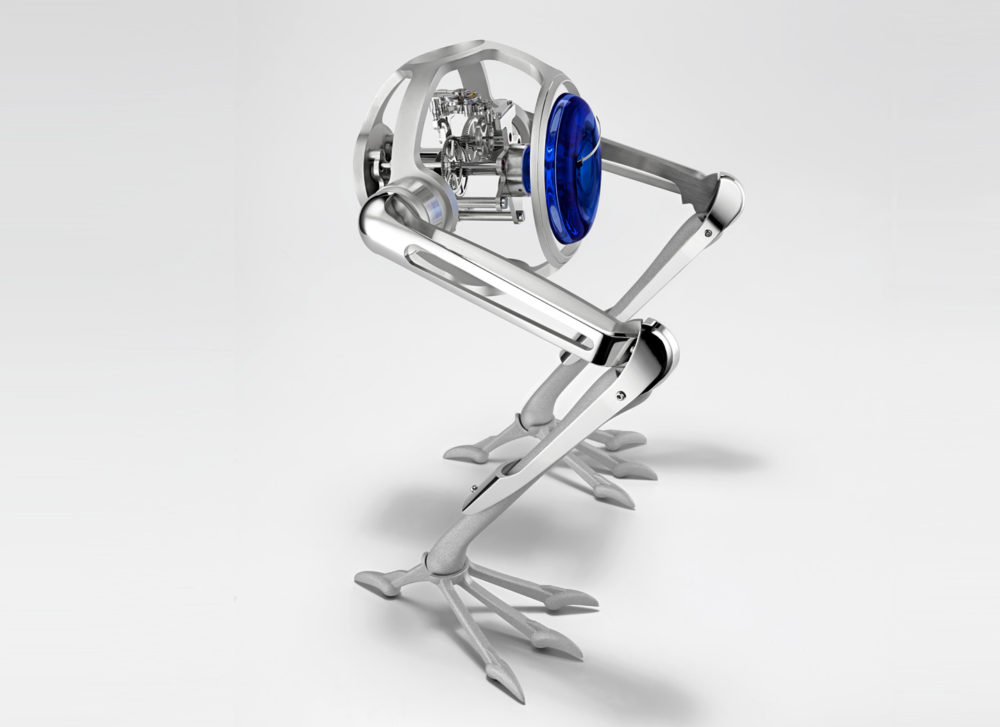
The Clock Inside Every Computer
The June 11, 2015 issue of Bloomberg was entirely dedicated to the question “What is Code?”. The article, by excellent technical author Paul Ford, puts it well:
“A computer is a clock with benefits. They all work the same, doing second-grade math, one step at a time: Tick, take a number and put it in box one. Tick, take another number, put it in box two. Tick, operate (an operation might be addition or subtraction) on those two numbers and put the resulting number in box one. Tick, check if the result is zero, and if it is, go to some other box and follow a new set of instructions.”
Paul Ford
In other words, all the dazzling complexity of the modern digital era is built on a mechanism that could have been essentially understood by 15th century monks maintaining the ringing bells of a monastery clock tower.
Not only is a computer a clock with benefits, inside every computer – every digital device of any type – is a literal clock, often just called ‘the clock’. For an Arduino Uno, the clock is a tiny piece of quartz vibrating sixteen million times a second (16 MHz). The quartz produces a regular electronic signal, the ‘tick’ Ford mentions above, and that is the tick that drives all the other operations of the Uno.
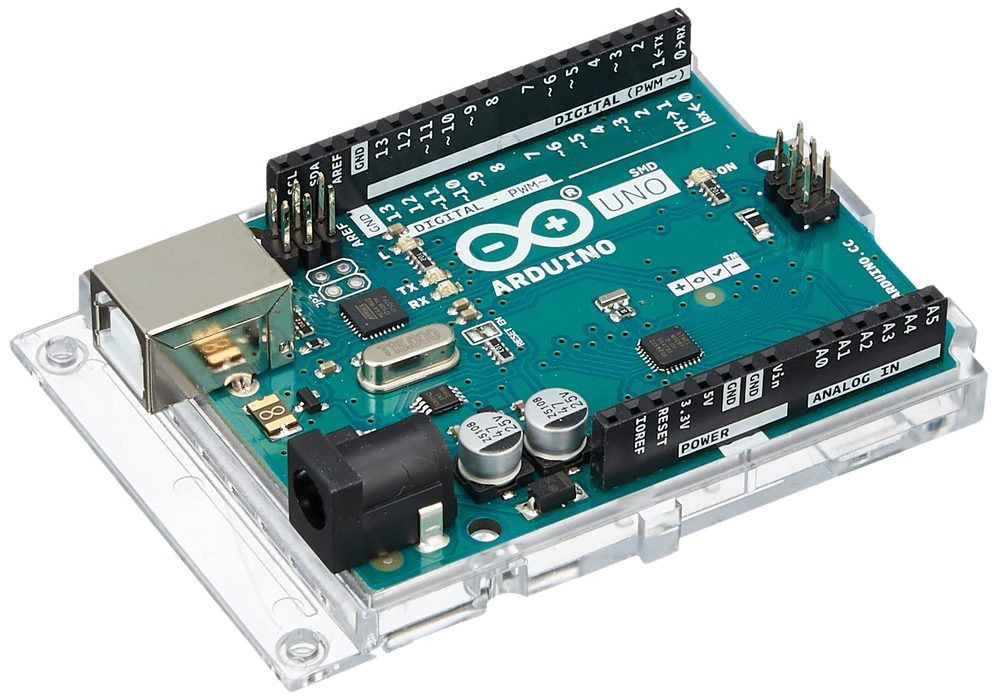
(This quartz tick shares a long history with various ingenious mechanical escapements dating back to the c.1100 Su Song Water clock.)
One function of the microcontroller is just to count those ticks, because this tells us how long the device has been running. As we saw in the module on debouncing switches, understanding elapsed time is important in even in basic attempts to resolve the word.
With an open-source platform like Arduino and an understanding of digital electronics and programming, you don’t have to take my word for it – you can interrogate these ideas using the microcontroller itself. Let’s look at the Arduino source for some time-related functions, beginning with delay(), which lives in the wiring.c file for the Atmega328 core.
Inside delay() we find a do-nothing loop (“yield”) that runs until the specified number of milliseconds has elapsed. To do this, delay uses another function micros(), also defined in the same file. In micros(), and throughout this file, we find a references to internal timers like TCNT0. This is “low level metal” – we are naming the direct memory registers that count up driven by the fundamental clock signal. This is the kind of programming that the Arduino framework largely spares us from, but I like knowing what’s “under the hood” of the tools we use. This is it!
Real-Time Clocks
Real-Time Clocks (RTCs) are electronic components that maintain a constant time. Think of them like a watch for your microcontroller – with an RTC a microcontroller can read the true current time, as opposed to the elapsed time since starting.
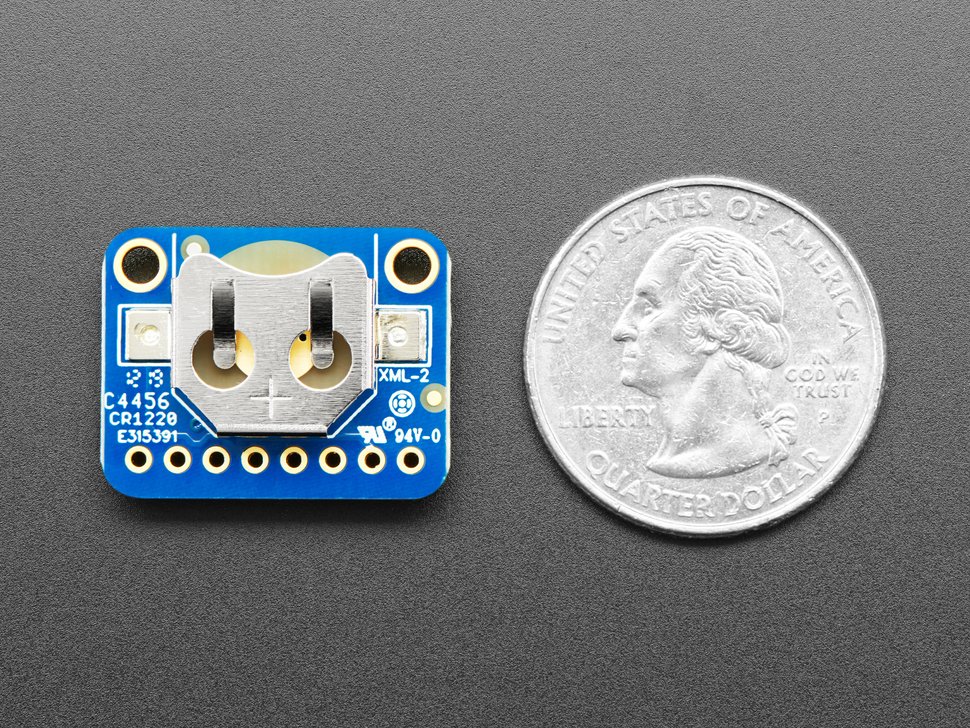
RTCs are common and extensively documented. See for example the breakout boards from Adafruit and Sparkfun with their accompanying documentation and libraries. Rather than reiterate that information here, I’ll highlight a few top-level issues when working with RTCs.
RTCs generally don’t “know” the time automatically. They need to be set, like a clock, after which they will maintain the correct time. The Arduino compiler has special directives for time (__TIME__) and date (__DATE__) that can be used to initialize an RTC with the time when code is uploaded. Alternatively, a mechanism for setting the RTC could be exposed to the end user. A networked microcontroller could use Network Time Protocol (NTP) once to set an RTC to keep local time. In theory, a system could access the atomic timing signals from sources such as the NIST-F1 Cesium Fountain Atomic Clock in Boulder, Colorado, or use GPS signals.
RTCs must maintain power at all times in order to keep a constant time. However, the have extremely low power requirements, so a single coin-cell battery can power an RTC for a long time. Many breakout boards have a coin-cell holder built in.
RTCs appear similar to system clocks in that they count pulses of a quartz crystal. However, the 32,768 Hz crystals used for RTCs are made more accurately than typical system clocks. Further, a MCU may have a lot going on right now, so it is harder than you might think to write really accurate low-level timing code. RTCs will generally outperform internal MCU timers in exacting time-keeping applications because of their higher clock accuracy and dedicated function.
RTCs may include internal temperature tracking and/or compensation to increase the accuracy of the timing, as even quartz, while very stable, has some temperature-dependency.
Some RTCs have the ability to program alarms at specified intervals or specific points in time. At the programmed time a dedicated alarm pin will toggle state. Some might have programmable timing outputs such as a very accurate 1Hz square-wave signal.
Note: Some chips used in microcontrollers have internal “RTCs”, including the SAMD21 used on the Arduino Nano IOT 33. However, unless an RTC has 1) a clock-grade external 32,768 Hz crystal, and 2) an continuous power supply separate from the main microcontroller, it may not be accurate nor maintain time when rebooting. See this forum post for some details – the MKR boards are OK but the Nano’s will loose time. ITP’s Pcomp RTC lab uses the internal Nano RTC, which is find as a demonstration of how to set and access the RTC, but not recommended for long periods of actual time-keeping.
Quartz Clock Movements
These are the basic, inexpensive mechanisms inside almost every wall-mounted non-digital clock you’ll see. The standard model has a 12-hour hour hand and a minute hand, with or without a step second hand (meaning it moves jerkily, once every second, usually audibly.) Options include: 24-hour hour hand (sometimes called ‘zulu’ or military time); higher-torque for driving longer hands; sweep second hand (smooth movement, less audible); and many others.
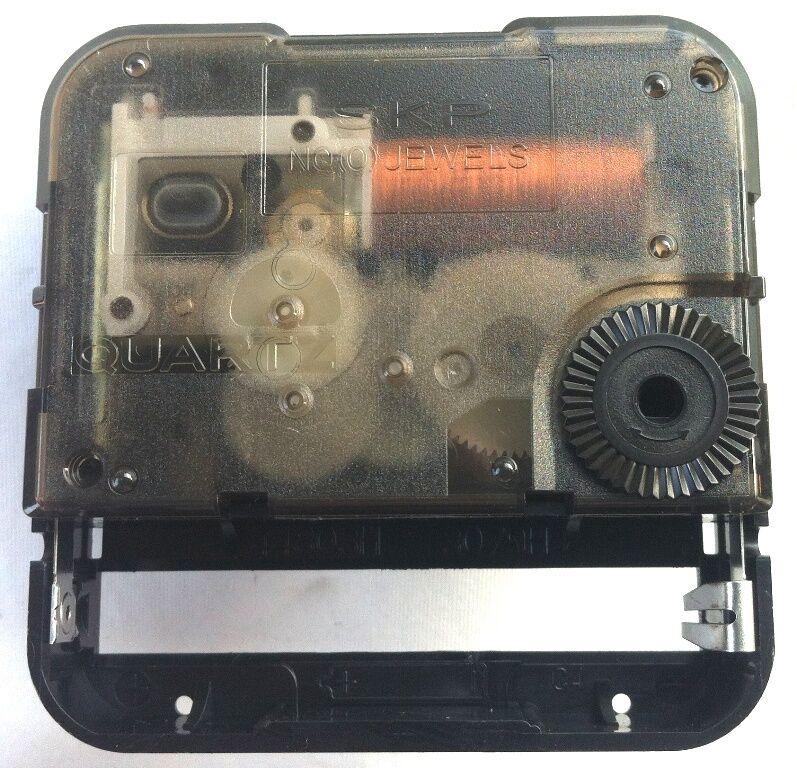
Inside a quartz movement is essentially a specialized stepper motor called a Lavet-type motor. It drives a permanent magnetic rotor 180 degrees every second, and this movement is in turn geared to the moving hands. Sweep second movements operate in a similar way with smaller, more frequent steps. The electronics in a movement are generally unhackable under a black epoxy blob, with only the quartz crystal itself exposed, but the ‘brains’ can be bypassed and a microcontroller can directly drive the stepper motor (certainly at 5V, sometimes at 3.3) for custom rates of movement. See the Clock Club notes on this topic for more detail.
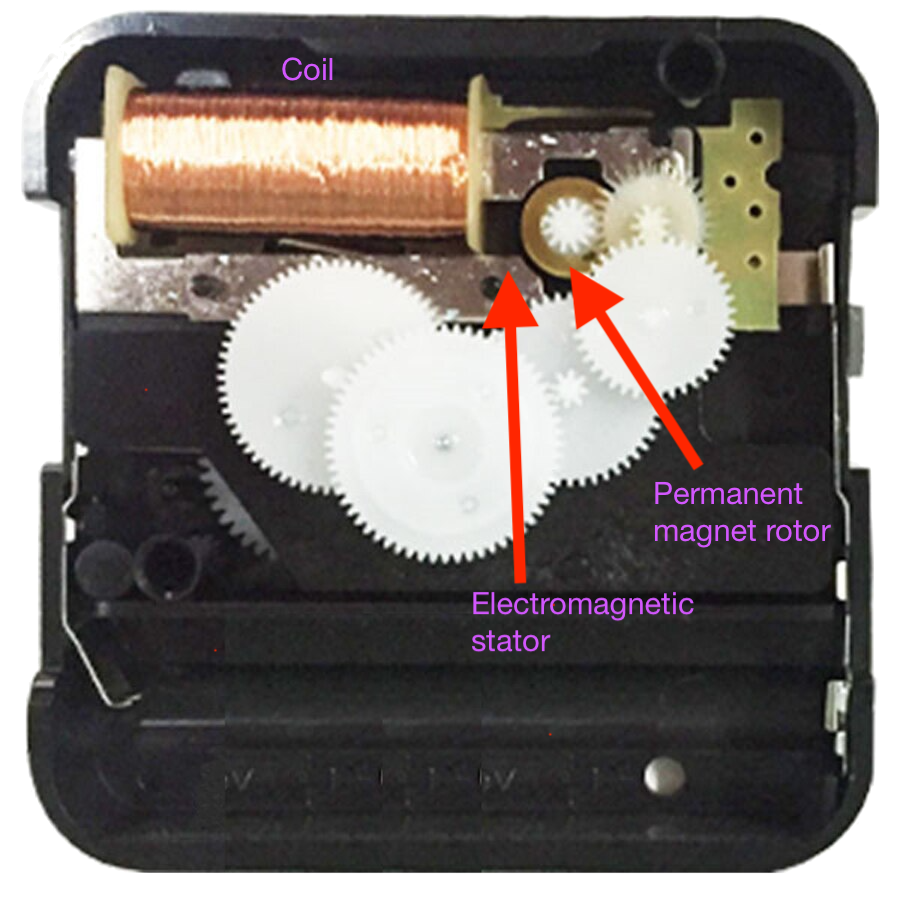
–> Very cool project alert (2021): Josh Levine (with CW&T, the tech for Time Since Launch) and Scott Thrift (Moma- and Kickstarter-star Day, Year, and Moon clocks) are collaborating to create a programmable custom interval timer. Josh has a great write up of how the Lavet motor and gearbox works in a clock, and some power calculations.
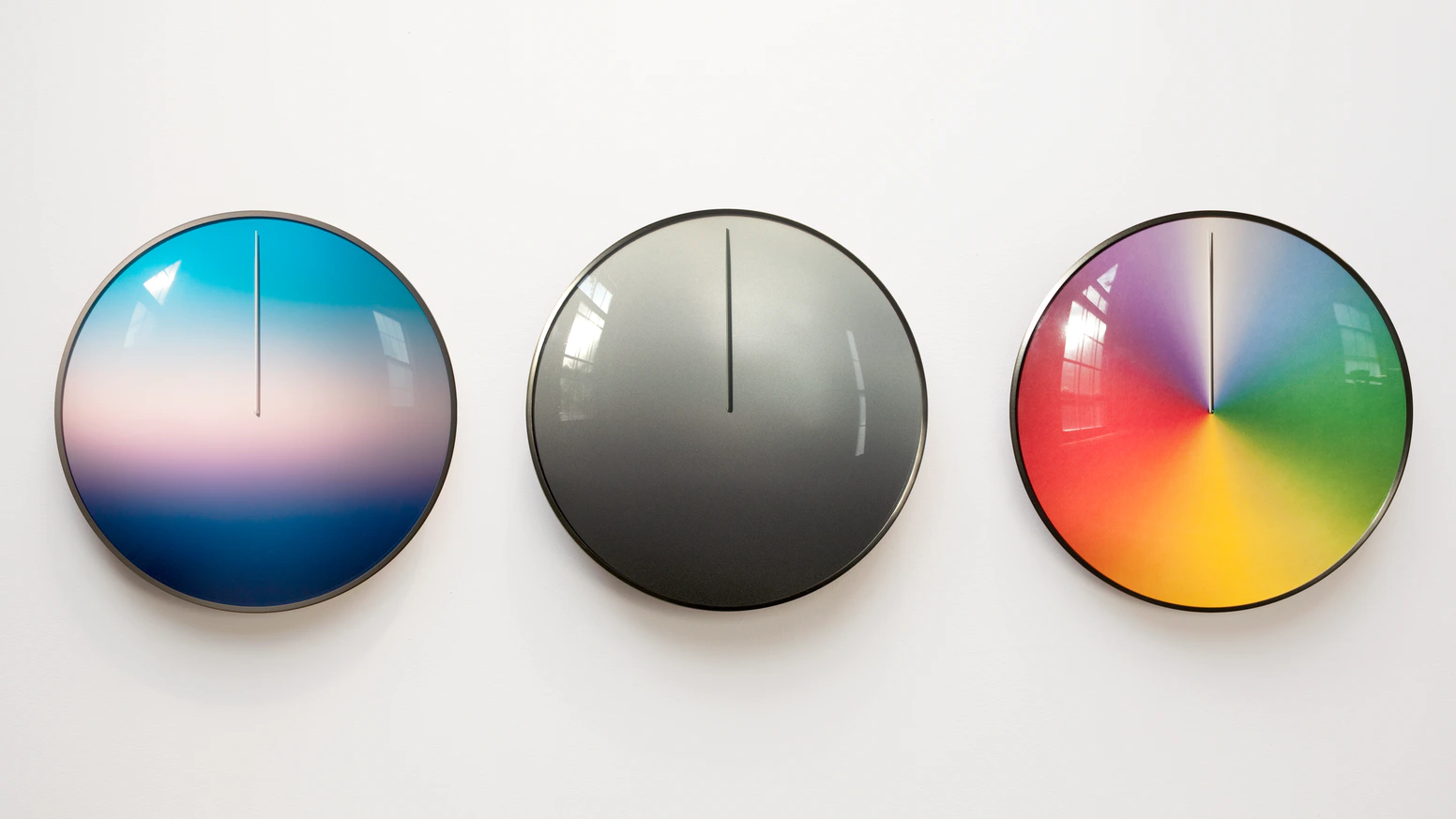
The quartz brains in a clock (or watch) are pretty ingenious. A very precise crystal oscillates 32,768 time a second. Note the power of 2 (to the 15). The beats from the crystal are input into a 15-stage binary ‘flip flop’, a common component in digital logic that toggles its output on the rising or falling edge of an input pulse. Each stage feeds into the next, so the output of each stage changes at half the rate of its input. After 15 stages, the final output is oscillating once per second, and this drives the stepper motor output. (Another way to think of this is a binary counter counting up by one to 32,768 each second. The final bit of the value changes once per second.) Steve Mould has an excellent explainer video on this, using actual flip flops.
Time class student Jason Tse did a great write-up on hacking quartz mechanisms with 555 timers.
Considerations for selecting quartz movements
Most standard quartz movements have similar dimensions and run off a single AA battery. The main considerations are the shaft diameters and shapes, which have a few different standards, and the shaft length, which determines the maximum thickness for the dial the movement is mounted in.
Stepper Motors
As described above, a common clock is basically a specialized stepper motor. You may have already encountered steppers in physical computing – these are the motors common in things like printers (ink and 3D), CNC machines, robotics, etc. They are used where precise motion is needed because they take a fixed size rotational “step” (often 1.8 degrees or 200 steps/revolution) with every input pulse from control electronics. So – steppers can be a great DIY clock component, assuming they are driven well with the right timing.
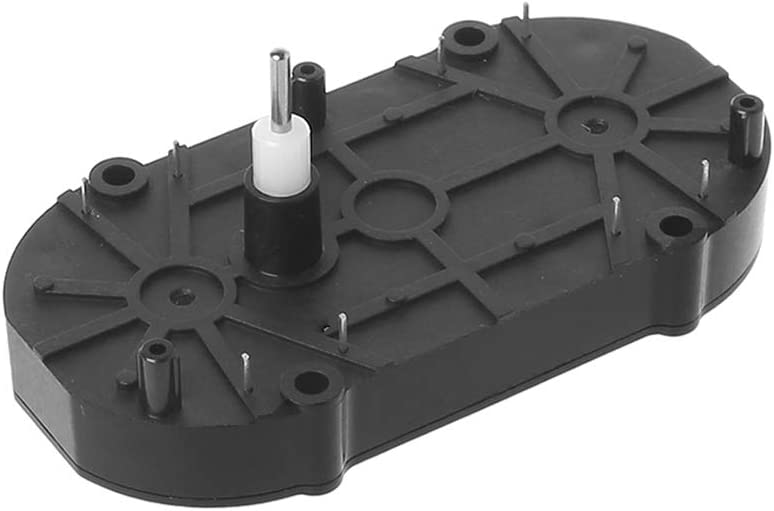
In fact, specialized dual-concentric-axis steppers (sometimes called ‘biaxial’ steppers) have been developed to drive clocks, such as those from VID and Juken, plus many copies. These came from the automotive industry (using the same components that drive physical gauges like speedometers), but have been adapted to other uses, including the popular Humans Since 1982 clock-inspired art installations. See this Hackaday log on building a clone. Arnab (2020 resident and 2019 Time student) and Tom Igoe have made adaptor boards for these motors. Camera-focus systems are also a source for pretty small steppers.
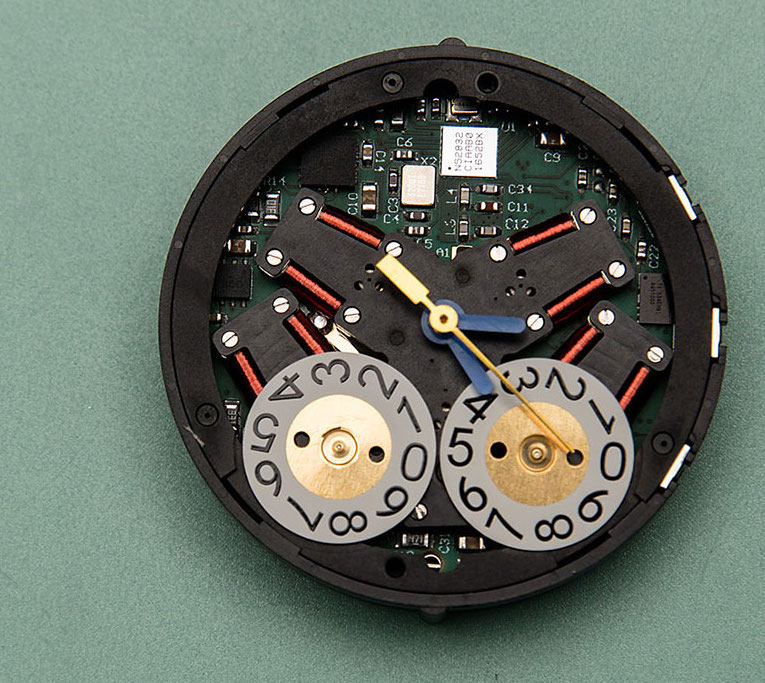
“Hybrid” smart watches with mechanical hands have ultra-tiny motors in them (see this translucent model for exaple) but so far I haven’t found a source for these. The Open Chronograph project looks promising – a custom Atmega board in a smart-watch form factor. However, it requires a donor watch for the motors (and case and hands). Refers to Soprod, a division of Citizen, as the motor source – their design is detailed a bit here.
Hackable Smart Watches
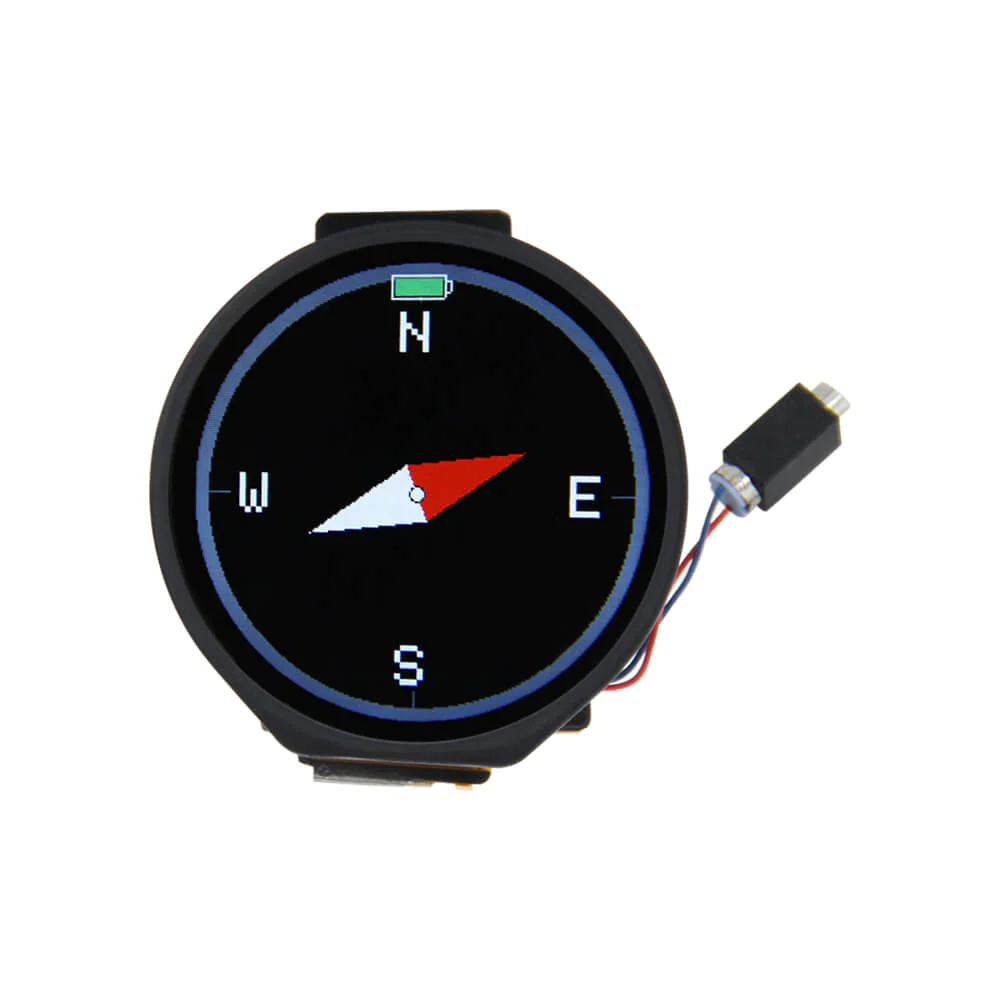
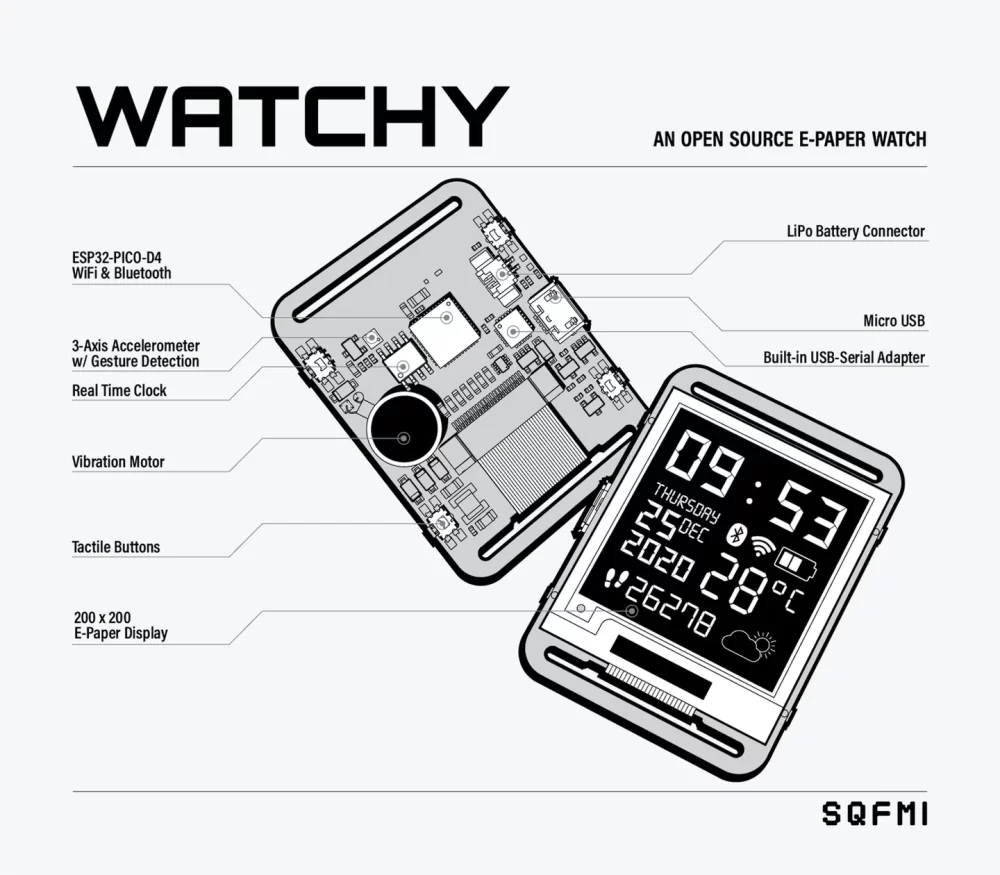
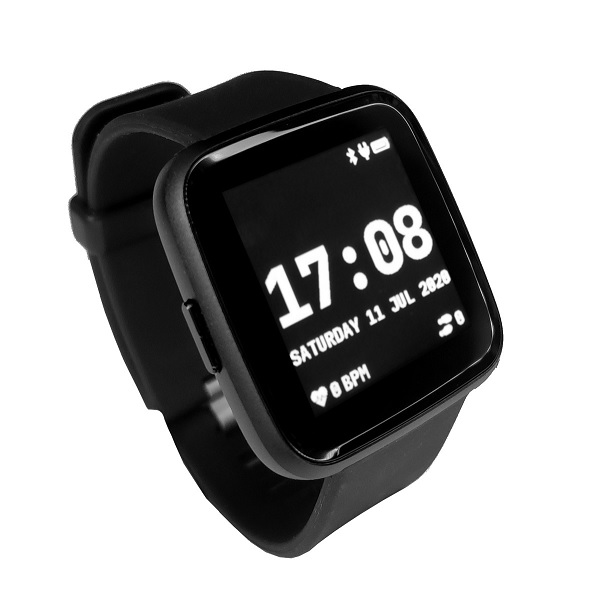
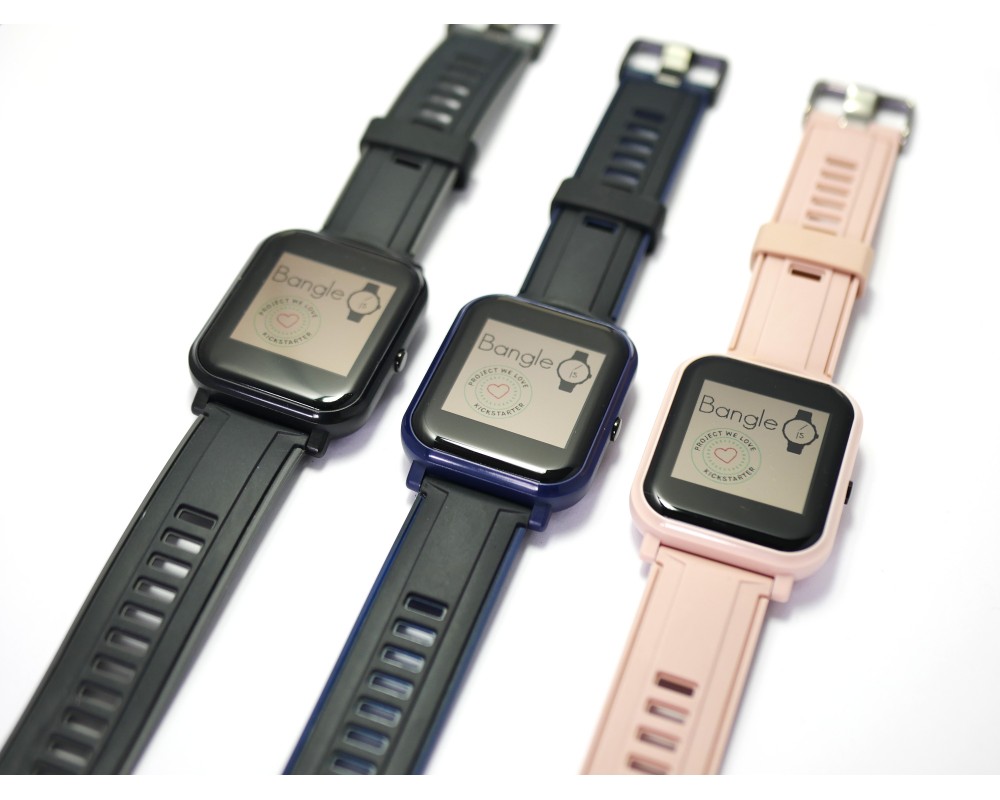
“Analog” smart watches with physical hands, like the Soprod-powered model above, are less numerous than pure digital displays such as the Apple watch, etc. Below are several models of hackable digital smart watches.
Synchronous AC Motors
The electrical grid is a very accurate timepiece. In North America, the grid operates at 60Hz, and, incredibly, the actual giant machinery of the grid – the generators – are turning in synch with each other across large interconnected operating regions. A “synchroscope” is a gauge to help keeps generators operating in unison.
The grid is well-enough regulated that the AC wave itself can drive clocks. Older kitchens in the US often have a special recessed plug meant to power and hold a wall clock. These contain simple “synchronous AC” motors to drive the hands. While these are getting harder to find (McMaster is one source for new motors; surplus motors may be available), AC sync motors can still be a great way to get reliable constant motion – see Che Wei’s piece. Also of interest – reduced power demand during the pandemic has resulted in AC clocks losing time in Hawaii.
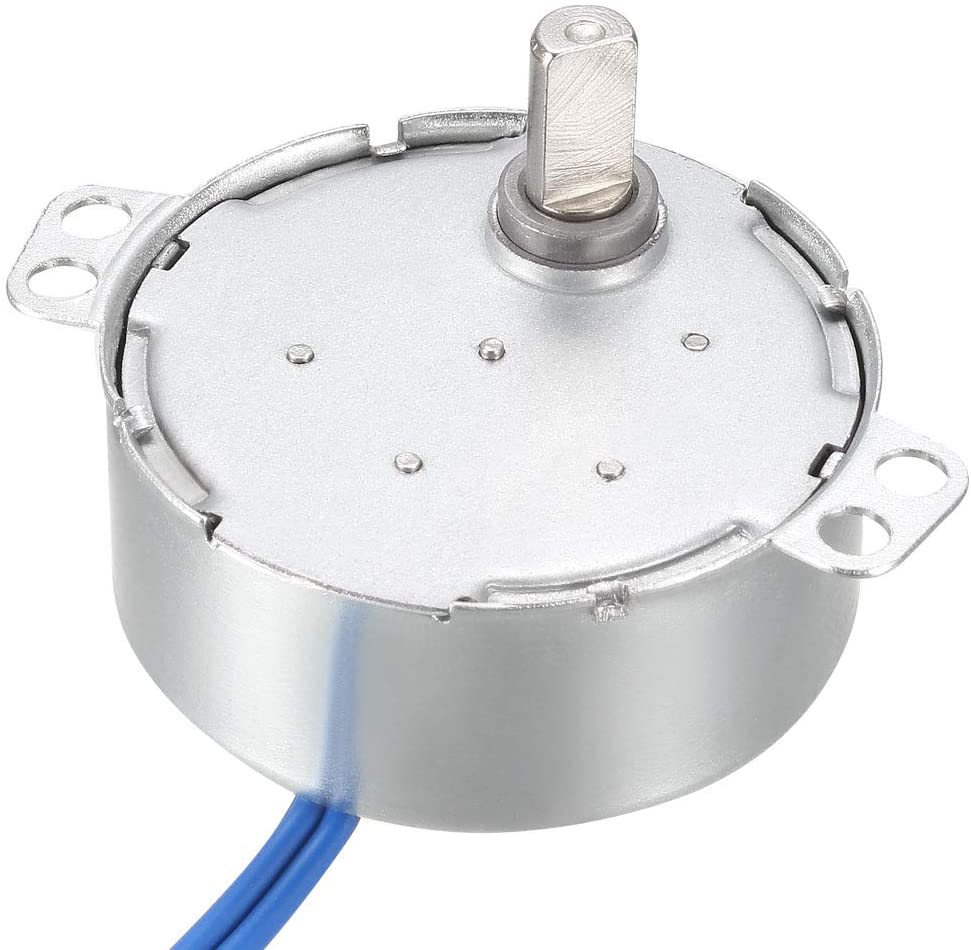
Non-smart mechanical outlet timers (for switching on and off lights automatically before IOT) are essentially 1 revolution / day sync motors that have a physical programming interface (pins) for tuning something on and off over the course of a day – could be useful.
Watch Movements
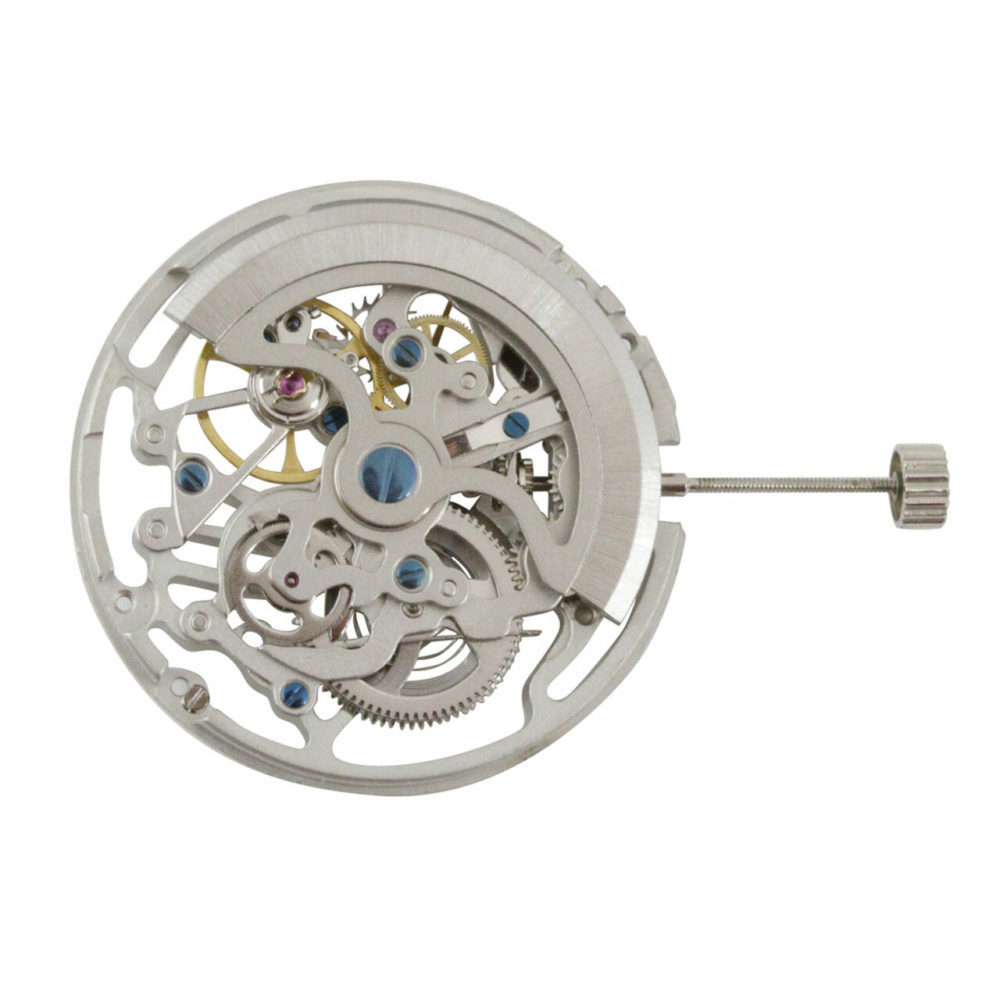
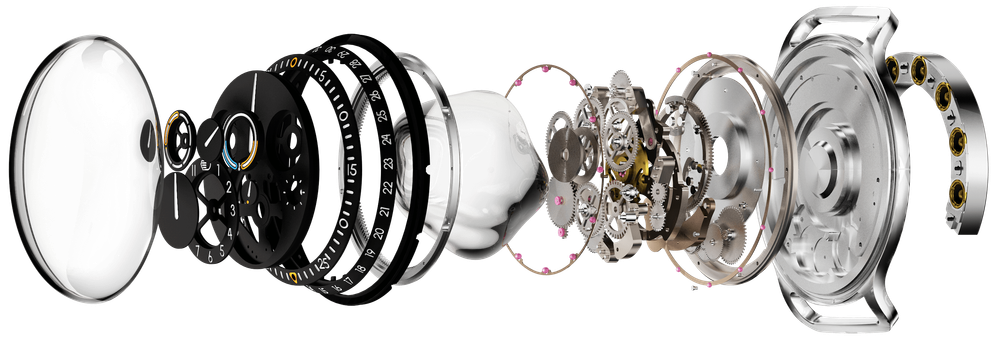
Quartz and mechanical analog watch movements are available and come in nearly endless variations. Prices vary: the cheapest quartz movements are a few dollars; mechanical movements can be hundreds or thousands of dollars. But there are also hundred-dollar quartz movements and 20-dollar mechanicals.
Few watchmakers make their own “in-house” movements, as they are prohibitively complex. Most watches vary primarily in the materials and design over a handful of movements from places like Seiko, Miyota, and ETA. But some adventurous makers use a base caliber as an input to an additional layer of complex machinery – see for example the amazing watches from Ressence (using ETA movements) and Ochs und Junior (using Ulyssee Nardin).
The primary challenge working with these is how small the parts are. Esslinger seems to be the best source for these.
More Machines
- Crystals, oscillator circuits, timers
- GPS
- Chip-Scale Atomic Clocks (CSAC)
- Unusual displays (e.g. nixie tubes) for clocks
Time Machine Links
Over the years I’ve accumulated about a thousand time-related bookmarks. In 2026, I used Claude Cowork to scan the links, eliminate duplicates and dead ends, and place the remainder in organized categories following the six sections of the syllabus. These are from that process. While I found all these links originally, I haven’t reopened each link to see how Claude did… Spot checking so far seems like this is a valuable improvement, so I’m sharing on the syllabus.
General
- Decoding the Heavens — Jo Marchant’s book-length account of the Antikythera Mechanism, the 2,000-year-old Greek geared astronomical calculator, and the century-long scientific race to decode how it worked.
- Etching Zinc, Steel & Aluminum (Saline Sulfate Etch) — A detailed nontoxic-printmaking recipe for mixing a copper-sulfate-and-salt bath that etches zinc, mild steel, and aluminum plates without acid, handy for makers etching clock dials or nameplates.
- Rectifying a Bunch of Videos — ElectroBOOM video breaking down rectifier circuits (AC-to-DC conversion) through his trademark chaotic, hands-on electronics demos.
- DC Electronic Load Tester (35W, 5A) — A bench electronic load/discharger for measuring battery capacity and stress-testing power supplies, useful for vetting the batteries or motor drivers in an electronic clock build.
- V-Slot Linear Rail — OpenBuilds’ aluminum-extrusion V-Slot rail, the structural track-and-wheel system makers use to build precise sliding linear-motion axes for CNC rigs or mechanized clock displays.
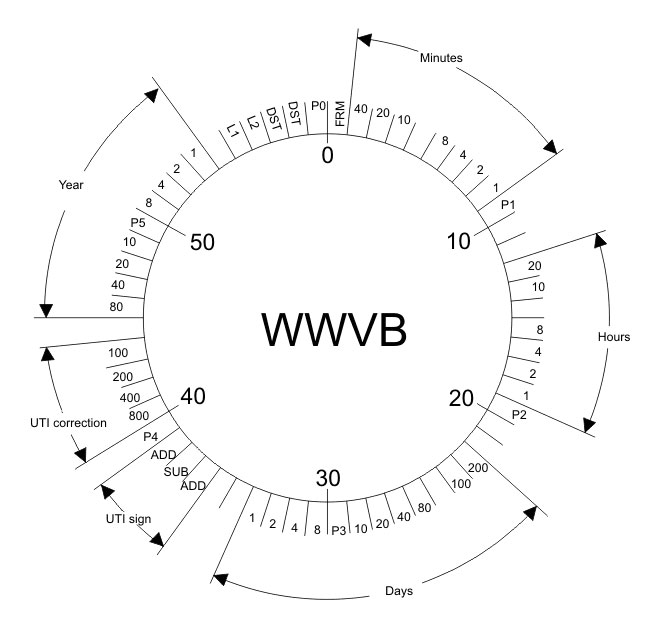
- WWVB Time Signal Diagram — A reference diagram showing how the WWVB radio time-code signal encodes minutes, hours, and date bits used to sync radio-controlled “atomic” clocks.
- What Will You Do If WWVB Goes Silent? — A Hackaday piece on what happens to radio-controlled clocks if NIST ever shuts down the WWVB time broadcast, and what alternatives (GPS, NTP) makers can build in instead.
- Open Source 3D Printed Sundial — Covers Mojoptix’s open-source, OpenSCAD-generated sundial whose perforated rotating disc lets sunlight punch through cut numerals to display the time like a digital readout.
- Hot Foil Stamping Roll Cutter — An AliExpress listing for a gold-foil hot-stamping roll slitter, a hobby tool for embossing metallic accents onto clock faces, dials, or packaging.
- Chip Scale Atomic Clock (CSAC) Datasheet — Microchip’s datasheet for its Chip Scale Atomic Clock module, a tiny low-power rubidium frequency reference for ultra-precise, drift-free timekeeping.
- Building a Lower-Power Linear Actuator with Arduino — James Bruton builds a compact, low-power Arduino-driven linear actuator from a motor and lead screw, a mechanism adaptable to driving clock hands or kinetic displays.
- Moon Phase Movements? (NAWCC Forum) — A clock-collector forum thread where members trade advice on sourcing and installing moon-phase dial movements and complications.
- 9.8mm Short Shaft Moon Phase Clock Movement — A wholesale Alibaba listing for a 9.8mm-shaft moon-phase clock movement, the geared module that drives a rotating moon disc behind a clock dial.
- Fusion 360 Internal Gear Generator — A free Python add-in for Autodesk Fusion 360 that auto-generates internal involute gear models, geometry that’s brutal to hand-draft and typically only cuttable on a wire-EDM machine.
- Time Timer (Amazon Storefront) — Amazon’s brand storefront for Time Timer, the visual countdown timers with a shrinking colored disc that shows elapsed and remaining time at a glance.
- TUH1359 Movement Search (eBay) — Live eBay search results for the TUH1359 part number, letting buyers track down that specific replacement clock or watch movement from various sellers.
- DIY Engineering Resource Page — Companion resource page for Stephen Ressler’s “DIY Engineering” video course, offering free SketchUp models and cutting patterns for 17 hands-on builds, including a full wooden pendulum clock with escapement.
- SCD40 CO2 Sensor — Product page for Sensirion’s SCD40, a miniature photoacoustic CO2 sensor module that makers can wire into a smart clock or environmental display build.
- LASERDEKO Laser-Cut Decor (Etsy) — A listing from the LASERDEKO Etsy shop selling laser-cut nerd/gadget-themed decor, useful as design inspiration for laser-cut clock cases or dials.
- HolzMechanik.de — A German-language site of wooden-clock and kinetic-mechanism building plans, with gear templates for building all-wood clockworks.
- Micro-Fabrication: Machining Tiny Watch Parts — Looks at Tornos’s SwissNano CNC lathe, a precision Swiss-type machine built to turn two-thirds of a mechanical watch movement’s tiny parts (screws, pinions, balance staffs) to micron accuracy.
- DayDisc (Kickstarter) — A crowdfunded rotating wall display (funded £232,720 against a £5,000 goal) that visualizes the passage of time as a slowly turning disc instead of digital numbers.
- Printify Clock Catalog Search — Print-on-demand catalog search that surfaces blank wall-clock products a maker can customize with their own printed dial/face design and drop-ship.
- Here by Richard McGuire — A graphic novel that depicts one fixed room across thousands of years on a single page, a striking model for visualizing time non-linearly.
- Oscilloglass Flip Timer (Makuake) — A Japanese crowdfunding page for a tabletop “mechanical hourglass” that uses a real escapement, balance wheel, and hairspring — the same regulating parts as a wristwatch — to tick out a controlled 3- or 5-minute fall when flipped.
- NASA Apollo 15 Moonphase Watches — A shop collection of four Xeric wristwatches built around a Ronda moonphase movement that tracks the moon’s 29.5-day cycle on the dial.
- German High Torque Mini Clock Movement — A compact German quartz clock motor strong enough to drive hands up to 17.5″ long, the core movement a scratch clockbuilder mounts behind any dial.
- Genuine NOS Seiko Watch Crystals — A listing of brand-new-old-stock genuine Seiko crystals in dozens of shapes and calibers for replacing scratched or cracked glass on vintage and Grand Seiko watches.
- The ClockClock Project: Physical Build — A detailed build log for a wall-mounted “ClockClock” made of 24 tiny stepper-motor clock movements, 3D-printed gears, and a CNC-cut wood face, with downloadable CAD, Arduino, and FPGA files.
- 3D Printer Controllers (Amazon) — Search results for 3D printer control boards, the electronics a maker needs to build or upgrade a printer for fabricating custom clock housings and gears.
- Traité de Construction Horlogère (AbeBooks) — Marketplace search for used and rare copies of a classic French-language textbook on clock and watch construction.
- Singing Bird Cage Diaphragm Set (Image Search) — Image search results for the replacement diaphragm/bellows part used to restore the sound mechanism in antique mechanical singing-bird automata.
- Tissot Complete Case (Welwyn Watch Parts) — A complete new-old-stock Tissot watch case — glass, case back, retainer, and spring bars included — sold as a ready-to-use replacement shell for restoring a Tissot.
- Watches of Switzerland (Email Link) — A marketing-email tracking link from Watches of Switzerland Group that redirects to a retail promotion rather than a standalone resource.
- Crystaltimes Seiko Mod Education Hub — Crystaltimes’ modder-education page walking beginners through parts anatomy, required tools, and model-specific build checklists (SKX007, SKX013, SRP Turtle) for assembling a custom Seiko dive watch from separately sourced parts.
- VK64 SII Quartz Chronograph Movement — A 3-hand quartz chronograph movement with 24-hour and minute-totalizer subdials plus a date window — the “engine” a builder installs when assembling or repairing a chronograph watch.
- WatchBase Datafeed API — A paid data-feed service delivering structured specs (CSV/XML/JSON) on over 42,000 watches and 3,500 movement calibers for anyone building a watch database or app.
- UNDONE Lab Shop — UNDONE’s “Lab” storefront selling leather goods — wallets, phone cases, strap pouches — made with collaborator Simple Union, an accessories line rather than the brand’s custom watches.
- Learn to Mod a Seiko (Watch-Modz) — A tutorial hub teaching hobbyists how to disassemble and modify a Seiko watch, swapping dials, hands, bezels, and cases to build a custom “Seiko mod.”
- Image-Music-Text by Roland Barthes — Roland Barthes’s essay collection on semiotics and narrative theory, useful here as a critical-theory text for framing how objects like clocks construct meaning.
- OpenChronograph OC-1 Devkit — A $70 open-source, Arduino-compatible circuit board that replaces the guts of a donor hybrid smartwatch (Skagen/Fossil) with programmable stepper-driven hands, a real-time clock, IMU, and pressure sensor.
- ITP/IMA Tools & Equipment — NYU ITP’s own equipment inventory page listing the 3D printers, laser cutters, CNC mills, woodshop machines, and electronics station gear students can use to fabricate clock and watch hardware.
- How to Solder Properly (THT & SMD) — GreatScott! demonstrates correct through-hole and surface-mount soldering technique for building your own PCBs.
- From Idea to Schematic to PCB — GreatScott! walks through turning a circuit idea into a schematic and then an actual manufacturable PCB.
- TMI Time Module Movements — Hong Kong manufacturer TMI’s product line and spec-sheet downloads for its mechanical and quartz watch movements (NH, VK, VD, VH, VC/VJ series).
- Belarus Caramel Brown Leather Watch Roll — A two-pocket leather watch roll from Vario for storing and traveling with finished watch builds.
- LED Optics Explained — LEDSupply’s guide to how TIR lenses and reflectors shape and focus LED beam patterns for a project.
- Mechanical Clocks Aren’t as Complicated as You Think — Engineezy breaks down gear trains and escapements to show how a mechanical clock actually keeps time.
- Optical Comparator — Wikipedia’s overview of the profile-projector machines machinists and watchmakers use to magnify and measure tiny part geometry against tolerance drawings.
- Hartness Comparator Photo — Archival photo of James Hartness’s original screw-thread optical comparator, the machine that started the profile-projector industry.
- Dagor Brushless Controller Docs — Documentation for an open-source, ESP32-based tiny brushless motor controller board aimed at hobbyist actuator and robotics projects.
- SSDs Are More Reliable Than HDDs — Tom’s Hardware reports on Backblaze’s data-center failure-rate study showing SSDs fail far less often than spinning hard drives.
- LowPowerLab — Felix Rusu’s hardware shop and blog selling Moteino microcontroller boards, RFM69 radio modules, and the CurrentRanger current meter for low-power builds.
- Cloudnola — A Dutch design shop selling modern cuckoo clocks, flip clocks, and other clock-forward home decor.
- Parmigiani Tonda PF Chinese Calendar — Parmigiani Fleurier’s product page for a luxury Swiss watch built around a Chinese lunar calendar complication.
- Echo Wall Clock FCC Teardown Photos — FCC filing containing internal teardown photographs of the Amazon Echo Wall Clock’s electronics.
- Adafruit Forums: Planetarium Project — A forum thread where a maker discusses building a DIY motorized planetarium projector.
- Ant Highway: Linear Motor for Micro Cars — An open-source PCB with etched coils and an ATtiny10 that acts as a 3-phase linear stepper motor, magnetically driving tiny cars or trains along its surface.
- Flying Sea Turtle — A free downloadable STL model of an articulated, print-in-place flying sea turtle.
- Trill Bar Touch Sensor Mount and Stand — Free 3D-printable mount and stand files for integrating Bela’s Trill Bar capacitive touch sensor into a project.
- Macrobase Bumblebee: Cheap 8-Stepper Motherboard — A project log evaluating a low-cost AliExpress 8-driver stepper motherboard as an alternative to pricier multi-motor controller boards.
- Seiko V-Series Movements Thread — A WatchUSeek forum discussion comparing the differences between Seiko’s various V-series sweeping-quartz movements.
- “Hi-Dome” Watch Crystal Search — Timesavers’ parts-search results for hi-dome replacement watch crystals.
- 16mm Watch Straps — Holben’s storefront collection of 16mm-lug watch straps in leather, Perlon, and canvas from brands like EULIT, Fluco, and Haveston.
- PrintableWatch V1 — Purchasable STL/STEP files to 3D print your own 41mm automatic watch case built around an NH35 movement.
- DIY Camera Slider — Free STL files for a WiFi-enabled, motor-driven camera slider you can 3D print and build yourself.
- SQFMI Shop — The official store for Watchy, the open-source, hackable e-paper smartwatch kit, plus its cases and accessories.
- Watchy Accessories — SQFMI’s collection of Watchy add-ons: CNC aluminum cases, straps, replacement screens, and buttons.
- Mechanistic (Patreon) — A Patreon page for a creator building 3D-printed mechanical models and sharing behind-the-scenes build content with supporters.

Quartz Movements & Oscillators
- Popular Science: 16,384 Hz Quartz Oscillator — A vintage Popular Science magazine excerpt explaining the workings of an early 16,384 Hz quartz oscillator used in timekeeping.
- Planetimer Quartz Watch — Details a hybrid quartz-mechanical chronograph concept that pairs a standard quartz oscillator and stepping motor with visible planetary gear trains instead of conventional hands.
- SN74LVC1G79-Q1 Flip-Flop Datasheet — TI datasheet for an automotive-grade single D-type flip-flop chip, the kind of edge-triggered logic building block used to divide and latch oscillator clock signals.
- Quartz Clocks — Abbey Clock Clinic — A repair technician’s photo-illustrated walkthrough of quartz clock movements from the 1970s to today, showing how the oscillator, microchip, and stepping motor evolved and where they typically fail.
- Thermocompensation: Methods and Movements — A WatchUSeek forum discussion comparing the different techniques watchmakers use to compensate quartz movements for temperature-induced frequency drift.
- Embedded Atomic Clocks — Microsemi — Microsemi’s product directory for embedded atomic clock and frequency reference modules used where quartz-level stability isn’t accurate enough.
- Timekeeping with Quartz Crystals — IQD — An IQD Frequency Products whitepaper explaining how quartz crystal cuts and resonance properties translate into practical timekeeping accuracy.
- Statek SX-1H 16.384kHz Crystal Oscillator — A store listing for the Statek SX-1H, a gold-cased 16.384kHz tuning-fork crystal oscillator of the type used in watch and clock timebases.
- Chip Scale Atomic Clock (CSAC) — Microsemi — Product page for Microsemi’s miniaturized Chip Scale Atomic Clock module, packing atomic-reference stability into a component small enough for portable equipment.
- Quartz Crystal Oscillators — Electronics Tutorials — A detailed tutorial on the piezoelectric effect, the crystal’s equivalent RLC circuit model, and how Colpitts, Pierce, and CMOS inverter oscillator circuits use a quartz crystal to set frequency.
- ISL1209 Real-Time Clock Datasheet — Renesas — Datasheet for the ISL1209, an I2C real-time clock chip that uses an external 32.768kHz quartz crystal to keep calendar time and drive alarm/interrupt outputs.
- UTS German 24hr Quartz Movement — An eBay listing for a replacement German-made UTS quartz clock movement built to display a 24-hour dial on a 16mm Euroshaft mount.
- Designing a Clock Tree — New Electronics — An engineering feature on the practical tradeoffs of clock tree design, covering crystal choice, jitter budgets, and signal distribution across a board.
- GPS-Disciplined Oscillator on the Cheap — A DIY build log for a low-cost GPS-disciplined oscillator that locks a microcontroller’s internal crystal oscillator to a GPS receiver’s 1PPS signal via a phase comparator and PWM-controlled varactor diode.
- Clock Tree — ESP32-S3 Programming Guide — Espressif’s technical reference documenting the ESP32-S3’s internal clock tree, from its RC and crystal root oscillators down to the per-peripheral module clock sources.
- Power-Saving Clock Scheme in New PCs — IEEE Spectrum explains “resonant clocking,” a technique AMD adopted from Cyclos Semiconductor that uses on-chip inductors to recycle energy in a processor’s clock distribution network.
- Clock Tree 101: Timing Basics — Mouser — A Silicon Labs primer distributed by Mouser that breaks down clock tree components—crystals, oscillators, clock generators, buffers, and jitter attenuators—and when to use each.
- Lavet-Type Stepping Motor & Quartz Clock Engine Hacks — A hands-on teardown of a quartz clock’s Lavet-type stepping motor showing how to tap its drive coil to control the mechanism with an external microcontroller.
- Casio F-91W: Weekend Die-Shot — ZeptoBars opens up the iconic Casio F-91W’s OKI chip to examine the on-die circuitry used for trimming and possibly temperature-compensating its quartz timebase.
- “Luch” Quartz Wristwatch IC: Weekend Die-Shot — A microphotography teardown of a Soviet-era Luch analog quartz watch’s IC and its tuning-fork-cut quartz crystal, including visible laser frequency-trim marks.
- Basic Quartz 1Hz Timebase Circuit — A DIY circuit that repurposes a stripped-down quartz clock PCB into a standalone precision 1Hz pulse generator for driving other projects.
Watch Kits, Movements & Shops
- Flume — UTS Clock Movements — A German B2B retailer stocking UTS-brand quartz and radio-controlled movements for pendulum, wall, and mantel clocks.
- How to Build Your Own Mechanical Watch — A step-by-step tutorial walking beginners through assembling a mechanical watch from a pre-built movement, case, dial, and hands.
- Otto Frei — Make Your Own Watch — A watch-material supplier since 1930 selling ETA/Sellita/Ronda-compatible cases, dials, hands, and tools for assembling your own mechanical or quartz watch.
- Rotate Watches — A DIY watchmaking brand selling complete beginner-to-advanced watch-building kits built around Seiko, Miyota, and Seagull movements, plus standalone movement kits.
- Build Your Own Watch — A customizable watch-kit shop where you mix and match cases, dials, and movements, with free video instructions and an optional pro-assembly upgrade.
- DIY Watch Club — A Hong Kong-based watchmaking kit retailer selling all-in-one dive, pilot, GMT, and skeleton watch kits plus separate modding parts and tools.
- Village Originals — A parts shop specializing in movements and components for modding Seiko watches.
- Grail Watch Reference — Miyota 8N24 — A technical reference-database entry detailing the specs, variants, and family tree of the skeletonized Miyota 8N24 automatic movement.
- AJuiceT — Watch Cases — A US-based Seiko-mod parts shop selling drop-in replacement watch cases for custom builds.
- Bangle.js — An open-source, JavaScript-programmable hackable smartwatch platform built on the Espruino firmware.
- LILYGO — Wearable Kits — A Shenzhen electronics maker selling ESP32-based T-Watch development boards for building your own programmable smartwatch.
- MINUS-8 — A design-watch brand selling finished dive, field, and GMT watches built around a distinctive rotating-disc time display.
- The Electricianz — A Swiss watch brand selling quartz and mechanical watches that expose their movement through visible wiring, coils, and LED lighting.
- Afternoon Light — Clocks — A curated design-object marketplace’s collection of sculptural clocks from independent studios and makers.
- Griffen’s Clock Parts — Convex Round Glass — A clock-parts supplier selling replacement convex glass lenses sized for classic clocks like Big Ben, Baby Ben, and Telechron models.
- Timesavers — 6″ Convex Glass — A long-running clock-and-watch parts distributor selling this 6-inch convex replacement glass for clock bezels and doors.
- Sensor Watch (Joey Castillo) — A maker’s project page for Sensor Watch, an open-source ARM microcontroller board that swaps into a Casio F-91W/A158W case to make a hackable digital watch.
- Pluto (GitHub) — An open-source hardware repository with schematics and a bill of materials for a programmable board that reuses a Casio F-91W’s case and LCD.
- Oddly Specific Objects — Joey Castillo’s studio site selling and documenting open-source hardware kits, including Sensor Watch and its companion boards.
- Sensor Watch on Crowd Supply — The crowdfunding/store listing for Sensor Watch Lite, a $39 open-source microcontroller board swap for a classic Casio digital watch.
Motors & Gear Parts
- Quick Connect Twisted Belts (Durabelt) — Connectable urethane round belting that hooks together on-site with steel or plastic connectors, so you can splice a drive belt to exact length without pulling shafts.
- NEMA 8 Stepper Motor, 0.9°, 20mm — A pocket-sized 20mm NEMA 8 stepper motor with a fine 0.9° step angle, suited to small clock or gauge mechanisms needing precise incremental rotation.
- NEMA 8 Micro Stepper Motor (5-Pack), 28mm — A five-pack of 28mm NEMA 8 micro stepper motors (1.8° step, 0.6A) sized for miniature kinetic-sculpture or clock-hand drives.
- NMB Micro Stepper Motor with Metal Gear, 15mm (5-Pack) — A five-pack of tiny 15mm NMB stepper motors with a built-in metal output gear, ready to mesh directly with a gear train.
- J040 LD20 Square Micro DC Gear Motor — A small square-bodied DC gearmotor (LD20 gearbox) marketed for hobbyist model-making where a slow, low-torque drive is needed.
- “Gears and Gear Cutting” by Ivan Law — A Workshop Practice series manual walking home-shop machinists through calculating and cutting their own gears on a lathe or mill.
- Brass Step Spur Gears, 50–59 Teeth, 0.5 Module — CNC-machined brass spur gears spanning 50 to 59 teeth at 0.5 module pitch, handy off-the-shelf stock for scratch-built clock gear trains.
- X40 Dual Stepper Motor — A dual coaxial stepper motor with two independently driven, concentric shafts, designed for overlapping needle displays like automotive instrument clusters.
- X40 Dual Stepper Motor Datasheet — The manufacturer datasheet spelling out electrical ratings, dimensions, and pinout for the X40 dual coaxial stepper motor.
- Use Stepper Motors for Unique, Analog-Style Clocks — A maker’s build log for a clock that swings its hour and minute hands along stepper-driven arcs instead of a round dial, with full wiring and code.
- Mocoder Magnetic Encoder Breakout Board — A breakout board for the AS5600 12-bit magnetic rotary encoder chip, sensing continuous shaft position via a spinning magnet for feedback on gears, wheels, or servos.
- Magnetic Encoder Pair Kit for Micro Metal Gearmotors — A pair of Hall-effect sensor boards and magnetic discs that bolt onto Pololu micro metal gearmotors to add 12-count-per-revolution quadrature position feedback.
- PRO Rack and Pinion Drive, NEMA 23 — A low-backlash rack-and-pinion drive kit, with pulley, belt, and a replaceable gear cartridge, that converts NEMA 23/34 stepper rotation into precise linear motion.
- Biaxial Stepper Rotation Motor, 360° — A dual-shaft 360° stepper motor pulled from car instrument clusters, sold as a direct replacement for automotive gauge-needle drives.
- Concentric Stepper Motor for Clocks (Image Search) — An image-search shortcut for scouting concentric/coaxial stepper motors that can drive multiple clock hands independently from one shaft axis.
- Peng Jun Stepper Motor Store — An AliExpress storefront stocking a wide range of small stepper and gear motors sold individually or in bulk lots.
- “Motor” Search Results (Timesavers) — A clock-parts supplier’s search results listing their in-stock replacement clock movements and motors.
- TMC2208 Stepper Driver: Pinout, Datasheet and Circuit — A reference page breaking down the TMC2208 stepper driver chip’s pinout, application circuit, and its silent StealthChop2 current-control mode.
- SilentStepStick Driver Documentation — Documentation for the open-source SilentStepStick driver board, which wraps Trinamic TMC2100/2130/2208/2209/5160 chips for whisper-quiet stepper motor control.
- SilentStepStick (GitHub) — The open-source hardware and firmware repository for the SilentStepStick, including schematics and Arduino example code for the Trinamic-based driver.
DIY Clock Build Projects
- 3D-Printed Holo Clock — A single geared stepper motor drives two concentric 3D-printed gear rings, each carrying a pointer arm, so one ring ticks off hours and the other minutes.
- Holo Clock STL Files — Download the free files behind that gear clock design: print the rings and posts yourself, then drive them with a single surplus stepper motor and an ATtiny-based controller.
- RoboClock — Two worm-geared stepper motors sweep a pair of hands around rings of seven-segment digits, letting one clock face flip between showing the time, room temperature, and humidity.
- 3D-Printed Gear Clock Build — An ATtiny2313 nudges a stepper motor forward once a minute, advancing the printed gear train just enough to walk two orange indicator posts to the correct hour and minute.
- 3D Printed Doodle Clock — A robotic arm scrawls the time by dragging small magnets through an Etch-A-Sketch-style magnetic doodle board using solenoids, replacing an earlier version that used a real marker.
- Clayton Boyer Wooden Gear Clock Plans — A catalog of dozens of downloadable plans for all-wood gear-driven clocks, from the classic “Simplicity” to whimsical designs like the Toucan and Scissors clocks, all cut from plywood with a scroll saw.
- Hand-Carved Da Vinci-Style Worm Gear — Wrap a paper template around a wooden dowel to lay out the thread, then hand-saw and file a wooden worm gear that meshes with a 60-tooth plywood wheel for a 60-to-1 mechanical advantage, just as Leonardo sketched it.
- Clock Clock Clone — A homage to Humans Since 1982’s iconic piece, this build wires up dozens of automotive dashboard-style dual-shaft stepper motors so their clock hands sweep in sync to spell out digital time.
- Lunchtime Clock — A hacked clock quietly speeds up by 20% every day right before 11:00, then slows back down after lunch, secretly stretching your midday break.
- Mechanical CPU Clock — An all-mechanical model CPU — complete with its own ALU, buses, registers, RAM, and control unit — physically executes a program of instructions whose only job is to keep time like a wall clock.
- Mesmerizing Magnetic Wall Clock — Skipping traditional gears and escapements entirely, this build hides electronics and magnets behind the face to glide the hands smoothly around, faking the look of fine mechanical clockwork.
- Flying Tourbillon Model 5.2 — A fully 3D-printed, spring-driven tourbillon based on George Daniels’ independent double-wheel escapement, spinning its whole balance-and-escapement carriage once a minute to cancel out gravity’s pull on timekeeping accuracy.
- The Magic Lever From Seiko — A 3D-printed recreation of Seiko’s clever pawl-and-ratchet “magic lever,” the mechanism that converts a swinging weight’s back-and-forth motion into one-directional winding energy without a full rotor.
- 3D-Printed Swiss Lever Escapement — A free, printable Swiss lever escapement — balance wheel, hairspring, anchor and all — offered as the starting piece of a fully 3D-printed watch movement, with the coiled hairspring being the notoriously tricky part to print successfully.
- Quartz-Movement Perpetual Calendar Clock — A cheap quartz clock movement powers an entirely 3D-printed mechanical perpetual calendar that uses a gravity-driven weighted arm to correctly track month lengths and leap years all the way to March 2100.
Open-Source Smartwatches
- Best Open Source Smartwatch 2021 — A roundup blog post profiling four open-source smartwatches (Watchy, PineTime, ESP32, Bangle.js) with specs and links for anyone who wants to hack their own watch.
- SQFMI Watchy Dev Board — Mouser’s electronic-component listing for the Watchy kit, the ESP32-based open-source e-paper watch board, sold as a purchasable part number.
- Watchy by SQFMI — The official site for Watchy, a certified open-source ESP32 e-paper smartwatch with a 200×200 display that you program yourself in Arduino, MicroPython, or ESP-IDF.
- PineTime — PINE64’s product page for its low-cost, fully open-source smartwatch built around an nRF52832 chip, with heart-rate sensing and community-built firmware you can swap out entirely.
- ESP32-Smart-Watch (Bellafaire) — A GitHub repo with complete hardware files (3D-printable case, PCB design) and Arduino-compatible firmware for building your own ESP32 smartwatch from scratch, now on its 5th hardware revision.
- An Open Source Smart Watch You’d Actually Wear — Hackaday’s writeup on the Open-SmartWatch project, an ESP32 watch with a round display that ships as a $24 kit from LILYGO.
- Smart Watch Tag Archive — Hackaday’s tag page collecting dozens of its smartwatch hacking articles and reader-built projects going back years.
Hardware Sourcing
- Bronze Worm Gear Set, 60:1 Ratio — An eBay listing selling a matched bronze worm wheel and steel worm gear (60:1 ratio, 32 pitch, 1/4″ bore) for $35.
- NH35 Movement Specification Sheet — A manufacturer’s PDF spec sheet detailing dimensions, accuracy, and features of the NH35 automatic watch movement.
- Clock Parts & Clock Hands — Esslinger’s storefront for clock movements, hands, winding keys, and repair tools used by clockmakers and hobbyists.
- Teensy 4.0 — SparkFun’s product page for the Teensy 4.0, a compact, high-performance ARM development board popular for precision-timing and DIY electronics builds.
- Stopping Time: The Photographs of Harold Edgerton — An Amazon listing for Estelle Jussim’s book documenting Harold Edgerton’s pioneering high-speed stroboscopic photography that first froze motion invisible to the naked eye.
DIY Oscillator Circuits
- The Simplest DIY Audio Oscillator? Not a 555 Chip. Reverse Avalanche — A LOOK MUM NO COMPUTER video building an audio oscillator out of a transistor run in reverse-avalanche breakdown instead of a 555 timer chip.
- How to Build a Relaxation Oscillator with a Transistor — A step-by-step tutorial for building a relaxation oscillator from a single NPN transistor, resistor, and capacitor that makes an LED flicker on and off.
- Simplest Oscillator — Look Mum No Computer’s project page documenting his build of the simplest possible electronic oscillator circuit.
- 555 Oscillator Tutorial: The Astable Multivibrator — An in-depth tutorial on wiring a 555 timer chip as an astable oscillator, complete with worked frequency and duty-cycle calculations.