What we make of time
Who owns time? Who decides what time it is? What day? What year? What does it mean to dwell in the past or look to the future? To “do time”? To kill time?
A Sideways Look
Jay Griffiths wrote “A Sideways Look at Time”, one of the best books about everything other than how to make a good clock. She beautifully covers time in culture(s) and the feeling of time. The book is challenging to read in order (I think by design, to challenge a too-rigid linear structure) but I’ve come back to it over the years and always find something new and valuable.
I liked what she said so much I extracted the text from the caption file of her interview in the film Keeper of Time.

“To me, a clock is not a synonym for time. If anything, it’s the opposite of time.
“The whole history of clockwork and the obsessive nature of time measurement has led people to think that that is the only place that we can look for time. And to me, it’s a bit like looking at a landscape, and instead of seeing the hills and the rivers and the valleys, of just saying, well, that’s three kilometers. That’s 15 acres. Measuring a landscape. You wouldn’t say that you had understood a landscape if you just told somebody its lengths and measurements and dimensions. And to me, time is like that, that it’s actually this full, other, and deeply, profoundly, natural thing.
“The animals that you see, the seasonality of migrations, all of this contains time. Bees have their own internal clocks. When bees are moved, they in effect experience jet lag. There’s time in the seas, the time of tides, the time of waves. But also there’s a human instinct to spend time by the sea, which is a different psychological experience… That sense that the sea is creating these endless hours. There are centuries in trees. There’s a kind of, there’s a past, there’s a future. There’s a present, in every bud, in every acorn. There’s time in every flower. Even the daisy.
“It’s one of the most beautiful etymologies. The daisy, that humble little flower, is actually from the phrase, the day’s eye, because it opens its eyes in the morning and it closes them at night.
“Having a standardized clock and calendar, obviously it’s very useful. But I think the artifice of clockwork creates its own kind of theater, its own demanding, coercive, and very stressful experience. People have alarms set to shock them out of sleep. And then the first question in so many people’s minds is, what’s the time? Am I late? How fast do I have to be? How much do I have to do? And this compression of time, and that coercive sense of being trapped by the clock, and not feeling your own pace through your own day, is extremely stressful for people. High blood pressure, ulcers, heart disease, all of these things are known to have come from it.
“I think our most natural guardians of the sense of the depth of time is actually children. Children live absolutely (indistinct) [JF note: “kairologically”, from kairos vs chromosome, as in counter to “chronologically”]. They’re in their own time. They hate punctuality. They have to be taught the clock like it is their enemy. And for a lot of children, it is. Adults strain to live mindfully in the present moment. Children’s grandeur of time, their depth of presence in the moment is something that we, I think, should all learn from. The imagination works much better when it’s not being told what to do with itself at what point, where there’s just roaming room, and there’s a kind of mental sovereignty. They own their own time. They own their own minds. And they put those two together and who knows what mayhem may come out of it, but creative mayhem.”
Logical Calendars
I am a Tuesday.
The International Fixed Calendar was a proposal to “rationalize” the Gregorian calendar proposed by Moses B. Cotsworth in 1902. In Cotsworth’s calendar, every month would have 4 weeks (28 days); the year would have 13 months, adding a new month, Sol in the middle. A new holiday, “Year Day”, would be added after December 28th, with no day of the week (likewise, a Leap Year would include the 29th of Sol and have no associated day).
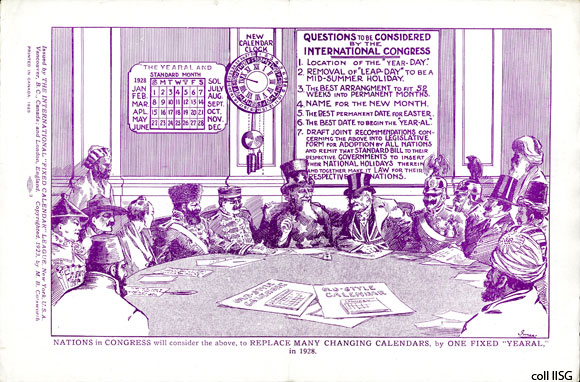
One consequence of such a calendar is that every date always falls on the same day of the week every year. My birthday, July 11, is Sol 24 in the IFC, and that date is, and always will be, a Tuesday. Riffing with LowRes Time student Anney Norton in 2023, we hit on the fun idea that having your birthday on the same day of the week every year would affect your personality. Imagine the difference between a Tuesday (such as myself) and a Friday or Saturday. Every year their birthday aligns with the weekend; while mine falls in the dreary weekday. How would that shape our lives? How outgoing and fun-loving they must become; and how dull for me.
(Also – as there are non-named holiday days like Year Day, it’s possible that your birthday falls on one of those…)
With that in mind, I adapted some code I found to convert your birthday to it’s IFC equivalent. What day of the week are you?
(BTW – my two kids and spouse loved this, as they determined that they are Thursdays, Fridays, and Saturdays, and immediately began lording it over me.)
Calendars and Computus
How else to divide a year? There are many, many calendars in the world, most of them less rigidly rational than the IFC but responding to some specific challenge or puzzle. The two obvious sky objects – the sun and the moon – do not neatly divide the year into equal segments, or align with each other. Various traditions emphasize the primacy of the sun (solar calendar) or the moon (lunar calendar).
There are 365.2422 days in a year (hence leap years…) and 29.53 days between two new moons (a lunar month). There are 12.37 lunar months in a solar year, which means that 19 solar years is almost exactly 235 lunar months. This 19 year correlation – the Metonic Cycle – was known to the makers of the Antikythera mechanism and reflected in it’s calendar.

The Islamic Hijri calendar is purely lunar, a reform directly from Muhammad that removed the politically fraught calculation of leap months.
The number of months with Allah has been twelve months by Allah’s ordinance since the day He created the heavens and the earth. Of these four are known as forbidden [to fight in]; That is the straight usage… Verily the transposing (of a prohibited month) is an addition to Unbelief: The Unbelievers are led to wrong thereby: for they make it lawful one year, and forbidden another year, of months forbidden by Allah and make such forbidden ones lawful. The evil of their course seems pleasing to them. But Allah guideth not those who reject Faith.
at-Tawba 9, 36-37
12 lunar months is about 354 days, so annual holidays will “travel” or “walk” through the seasons, occurring about 11 days earlier each solar year. In approximately 33 years, a given holiday will return to the same season. Ramadan, which proscribes fasting from dawn to dusk, will feel viscerally different in a short New York winter day of 9 hours compared to a long summer day of 16, and those differences will themselves change with the latitudes. A person in her 30s will begin to experience the holiday seasons of her childhood, and again in their late 60s – marking distinct phases of a human life.
Some calendars try to reconcile the sun and the moon (a lunisolar calendar). Jewish holidays fall in the same season, but may be “early” or “late” because of the addition of occasional 13th months to the calendar which keep the solar and lunar cycles aligned. The Chinese Lunar New Year is similarly adjusted. The exact algorithm is different, but the result is the same: both calendars follow a 19-year Metonic pattern.
The Gregorian calendar (which could be a whole chapter of it’s own) is solar, and the basis for much of the civil calendar around the world (May Day), US holidays (4th of July), and many Western Christian holy days (Christmas).
Many but not all. Some very important holidays are “moveable feasts” – dates that, like Passover, are adjusted to coincide with both solar and lunar cycles. Easter is a moveable feast, somewhat like Jewish or Chinese dates that move in accordance to both the moon and sun, and additionally, must fall on a Sunday.
https://www.timeanddate.com/calendar/determining-easter-date.html
A “computus” clock or watch calculates the date of Easter. This is hard!
https://www.hodinkee.com/articles/patek-philippe-caliber-89-easter-problem
https://www.hodinkee.com/articles/watchmakings-unsolved-problem-with-the-date-of-easter
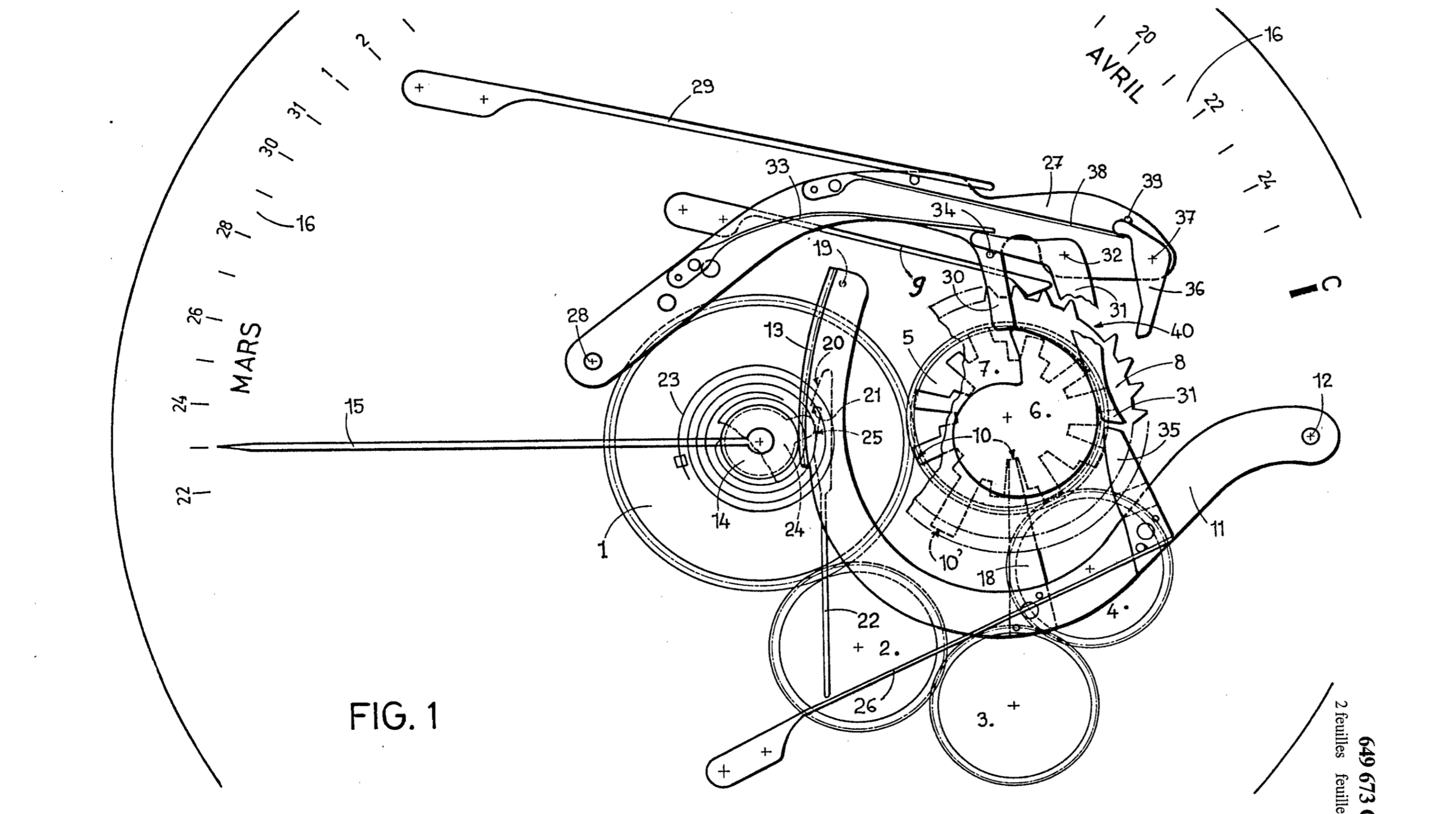
Here’s a famous and amazing astronomical clock with a computus complication:
https://en.wikipedia.org/wiki/Strasbourg_astronomical_clock
The Russian Computus info (Eastern Orthodox follow a different calendar but have similar moveable feast calendars)
The maker is https://chaykin.ru/en/
Who also makes Minion-themed watches?? (12-month waiting list, >$40K – a sign of the end times?)
Parmigiana makes Gregorian, Hijri (pure lunar), and Chinese calendar watches (this is a huge flex on their part):
https://www.parmigiani.com/en/stories/cultural-calendars
More on Calendars
HS-NY has several volumes on calendars, as written up by Dr. Marraccini for Hodinkee.
A Path to Eternity
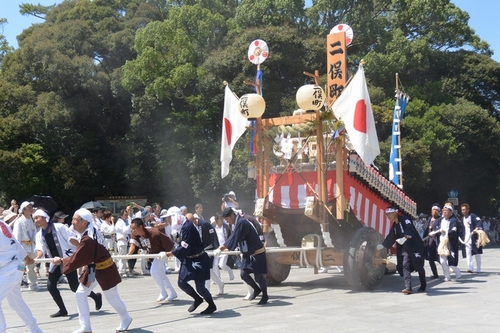
How do you make something that will last forever? One way is to create a lasting culture of care that perpetually rebuilds, like this continuously-rebuilt temple in Japan:
Time Zones
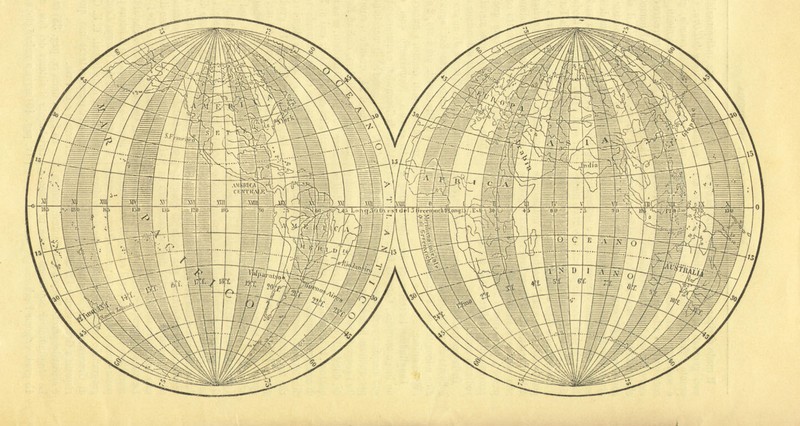
Time zones means a central authority declares your local noon is not actually noon. Can you imagine this passing today?
The Future of Nostalgia
Svetlana Boym, in the “Future of Nostalgia”, identifies two types of nostalgia: restorative and reflective (and she notes “Two kinds of nostalgia are not absolute types, but rather tendencies”). Reflective nostalgia dwells in “algia, in longing and loss, the imperfect process of remembrance. A reflective nostalgist might wistfully visit a ruin.
Restorative nostalgia “characterizes national and nationalist revivals all over the world, which engage in the anti-modern myth-making of history by means of a return to national symbols and myths and, occasionally, through swapping conspiracy theories” – the “nostos” (homecoming). A restorative nostalgist wants to rebuild or even invent monuments to an imagined, purer past.
This is khaki-pants-and-tiki-torch nostalgia. (Tan Dockers paired with home-store tiki torches was the preferred uniform for the white nationalists protesting the removal of Confederate statues). Boym was writing two decades before January 6th, 2021, of historical examples “from pogroms to Nazi and Stalinist terror to McCarthy’s Red scare”, but her text reads like a how-to for Q-Anon and the modern right:
‘To conspire means literally to breathe together—but usually this collective breath doesn’t smell very good. Conspiracy is used pejoratively, to designate a subversive kinship of others, an imagined community based on exclusion more than affection, a union of those who are not with us, but against us. Home is not made of individual memories but of collective projections and “rational delusions.” Paranoiac reconstruction of home is predicated on the fantasy of persecution. This is not simply “forgetting of reality” but a psychotic substitution of actual experiences with a dark conspiratorial vision: the creation of a delusionary homeland. Tradition in this way is to be restored with a nearly apocalyptic vengeance. The mechanism of this kind of conspiracy theory is based on the inversion of cause and effect and personal pronouns. “We” (the conspiracy theorists) for whatever reason feel insecure in the modern world and find a scapegoat for our misfortunes, somebody different from us whom we don’t like. We project our dislike on them and begin to believe that they dislike us and wish to persecute us. “They” conspire against “our” homecoming, hence “we” have to conspire against “them” in order to restore “our” imagined community. This way, conspiracy theory can come to substitute for the conspiracy itself.
From the section “Restorative Nostalgia: Conspiracies and Return to Origins”. Boym, S. (2018). The Svetlana Boym Reader. Bloomsbury Academic & Professional. Available through NYU library.
The Precession of the Autumn Noshes
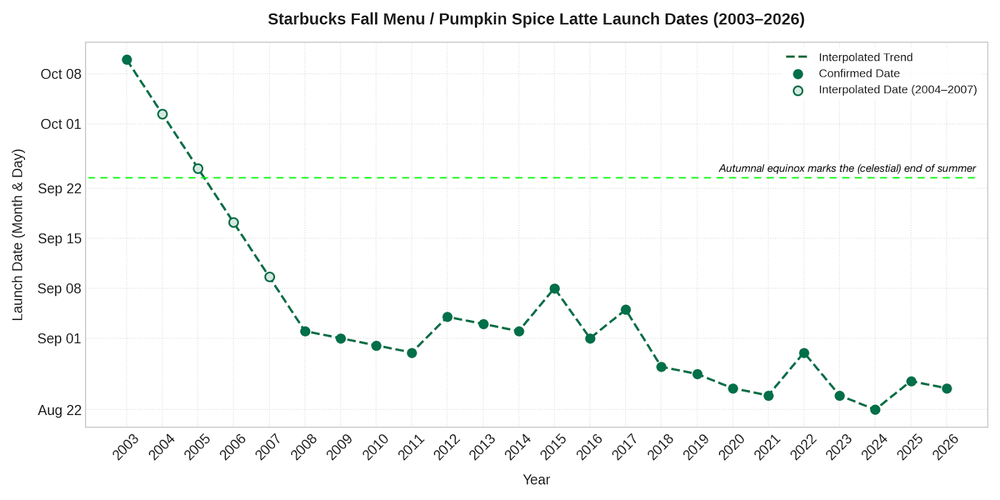
Since it’s introduction in 2003, the Starbucks Pumpkin Spice Latte and accompanying Fall Seasonal Menu has appeared earlier and earlier. Launched in October 20 years ago, it now starts in late August. Future historians may have to contend with this and adjust dates accordingly.
Weekdays
The names of the days of the week in different languages is a fun subject to explore. Many but not all weeks follow a seven-day pattern inherited from the Babylonians, and the echos of their system are found around the world. Along the way, gods from various cultures got partially substituted into the naming conventions, resulting in fascinating hybrids of planets, Roman gods, and Norse mythology. Other systems simply number the days, but disagree on where to start – the classic computer science 0/1 debate.
Further topics
- Winter Counts
- Cahokia, the Chako Canyon Star Map, and SN1054
- Star map relics
- Uraniborg, Jantar Mantar, and the Dadu Observatory
- Stonehenge, Woodhenge
- Unetanneh Tokef
- Hindu units of time
- Mnemosyne, Aion, and Moirai
- Huginn and Muninn, Hygge
- Temporal Hyperobjects
- The Paris Meridian
- Time Theft
- Born sexy yesterday trope
- Ahora, ahora mismo, ahorita
Culture Links
Over the years I’ve accumulated about a thousand time-related bookmarks. In 2026, I used Claude Cowork to scan the links, eliminate duplicates and dead ends, and place the remainder in organized categories following the six sections of the syllabus. These are from that process. While I found all these links originally, I haven’t reopened each link to see how Claude did… Spot checking so far seems like this is a valuable improvement, so I’m sharing on the syllabus.
General
- Astronomy in Culture — An Adler Planetarium event page exploring how societies across history have woven astronomy into mythology, calendars, and daily ritual.
- Shanzhai: China’s Collaborative Electronics-Design Ecosystem — An Atlantic feature on shanzhai, the improvisational, quasi-open-source knockoff culture that drives Shenzhen’s electronics manufacturing.
- Benjamin Banneker — A short blog profile of the self-taught Black astronomer who hand-carved America’s first fully wooden clock and predicted a solar eclipse from borrowed books.
- Benjamin Banneker: Invented America’s First Clock — A biography site (with FAQ) covering Banneker’s wooden clock, his almanacs, and his part in surveying Washington, D.C.
- Time for a Change: EU Lawmakers Vote to Scrap Clock Shifts in 2021 — A Reuters news report on the European Parliament voting to end mandatory biannual clock changes across the EU.
- 50 Things That Made the Modern Economy: The Clock — A BBC World Service radio episode on how the mechanical clock rewired work, trade, and daily life.
- NY to Chicago: The High-Frequency Trading Cable Map — A map image tracing the microwave and cable relay route built solely to shave milliseconds off trading data between New York and Chicago.
- Heat and Humidity Slow Down High-Frequency Trading Due to Microwave Links — A Slashdot discussion on how weather physically bends and degrades the microwave links that carry Wall Street’s fastest trades.
- The Calendar — A 99% Invisible podcast episode tracing the calendar’s messy history, from Julius Caesar’s reforms to Kodak’s forgotten 13-month “Sol and Year Day” experiment.
- Benjamin Banneker — A Brookhaven National Lab education page on Banneker’s self-taught astronomy and how he saved the D.C. survey by redrawing the capital’s plans from memory.
- Benjamin Banneker: Life, Clock & Inventions — A Biography.com profile detailing Banneker’s wooden clock, his six years of almanacs, and his pointed letter challenging Thomas Jefferson on slavery.
- The World Is a Mess. We Need Fully Automated Luxury Communism — A New York Times opinion piece arguing that automation and climate crisis demand a radical rethink of work, ownership, and abundance.
- Norway Islanders Want to Go ‘Time-Free’ When the Sun Doesn’t Set — A wire story on residents of an Arctic Norwegian island petitioning to ditch the clock during the 69 days when the sun never sets.
- 1969 Apollo 11 TV Transmission from Halfway to the Moon — Raw NASA television footage of the Apollo 11 astronauts eating, exercising, and showing off Earth from deep space.
- How to Map Time: A Visual History of the Timeline — An Atlantic piece surveying centuries of attempts to draw history itself as a chart, chain, or river.
- Edward Tufte: Writings, Artworks & News — Data-visualization pioneer Edward Tufte’s own site showcasing his large-scale sculpture and landscape art alongside his design writing.
- Inner Space and Outer Space: Carl Sagan’s Letters to Timothy Leary (1974) — Archived 1974 prison-visit letters in which Carl Sagan and Timothy Leary swap notes on interstellar travel, consciousness, and psychedelics.
- Why Is Copernicus So Celebrated in Science? — A physicist’s Quora answer unpacking why the flawed heliocentric model still counts as a turning point in scientific thought.
- Being Busy Is Eliminating the Joys of Shared Free Time — An Atlantic essay on how “busy” became a status symbol that quietly destroyed unstructured time with friends.
- MTA: Six Time Clocks Damaged Amid OT Crackdown — A news brief on employee time clocks getting sabotaged after the MTA cracked down on overtime abuse.
- The 2010s Have Broken Our Sense of Time — A BuzzFeed News essay on how algorithmic feeds, streaming, and the Trump news cycle scrambled Americans’ feel for what year it even is.
- Twenty-Eight Mansions — A Wikipedia entry on the ancient Chinese lunar zodiac that divides the sky into 28 “mansions” tracking the moon’s monthly path.
- Why Making a Calendar Is So Hard — An HTME minisode explaining why the mismatch between 365.24 days and lunar cycles has broken calendar-makers for millennia.
- Study: ‘Time’ Is the Most Often Used Noun — A short AP wire piece on an Oxford dictionary corpus study finding “time” beats every other noun in English usage.
- Computer Memory: History and Timeline — A ThoughtCo timeline tracing computer memory from mechanical relays and vacuum tubes to modern RAM.
- NYU Returns: COVID-19 Testing and Quarantining Procedures — NYU’s official 2020 memo laying out testing, quarantine, and early-arrival timelines for returning to campus mid-pandemic.
- Simple Microprocessor Simulator — An IEEE Spectrum interactive that lets you click through how the first microprocessor actually executed instructions.
- This Game Boy Doesn’t Need Batteries, But Shuts Off Every 10 Seconds — A Verge report on a solar-powered, battery-free Game Boy research project that only runs in short bursts to study sustainable electronics.
- A Minor History of Time Without Clocks — A Cabinet magazine timeline of pre-clock timekeeping, from sundials and tide tables to sunflower clocks and a 177-day cave isolation experiment.
- 4 / 24 / 72 Seasons in Japan — A blog post cataloguing Japan’s poetic 4-24-72-part seasonal calendar, naming each five-day micro-season after events like “fish rise from the ice.”
- 72 Seasons — The (now-discontinued) Japanese app site that paired photos, illustrations, and haiku with each of the year’s 72 five-day micro-seasons.
- The ‘Degrowth’ Movement to Fight Climate Change, Explained — A Vox explainer on the argument that saving the planet requires deliberately shrinking, not growing, the economy.
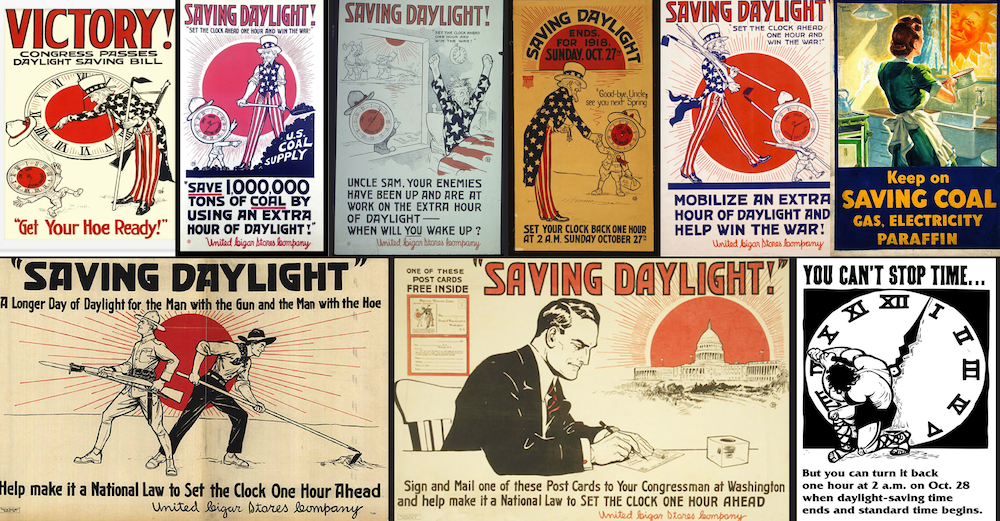
- The Contentious Visual History of Daylight Saving Time — A Print magazine gallery of vintage posters and cartoons used to sell, and fight, Daylight Saving Time from WWI through the 1960s.
- Dolly Parton’s Squarespace Super Bowl Ad Is Really About the American Dream — A FEE op-ed defending Dolly Parton’s “5 to 9” ad against critics, framing gig-economy side hustles as entrepreneurial opportunity rather than exploitation.
- Titus Maccius Plautus — A brief biography page on the ancient Roman playwright whose comedies shaped Western theater for centuries after him.
- Employers Are Spying on Americans at Home with ‘Tattleware’ — A Guardian op-ed on the keystroke-logging, screenshot-taking software companies use to monitor remote workers minute by minute.
- Why I’m a Proud Solutionist — An MIT Technology Review essay arguing history’s biggest crises were beaten not by optimists or pessimists but by “solutionists” who named the problem and hunted for fixes.
- China Only Has One Time Zone—and That’s a Problem — An Atlantic piece on the political reasons China runs a single time zone across a country that spans five geographically.
- This Map of Time Zones Reveals the Strange Ways We Carve the World — A Vox explainer and map showing how politics, not geography, actually draws the world’s time zone borders.
- Russia Invades Ukraine: Live Updates and Video — The New York Times’ minute-by-minute live blog from the opening day of Russia’s full-scale invasion of Ukraine.
- It’s 2020 and You’re in the Future — A Wait But Why post using jarring timeline comparisons, like Jurassic Park sitting closer to the moon landing than to today, to show how warped our sense of history is.
- Slowing Down a Stock Exchange with 38 Miles of Cable — A Tom Scott video on why one exchange deliberately coiled 38 miles of fiber cable just to slow high-frequency traders down.
- With the Clock Running Out, Humans Need to Rethink Time Itself — A Wired feature arguing that the accelerating pace of news and elections is outrunning democracy’s capacity to deliberate.
- How the Internet Is Like a Dying Star — An Atlantic newsletter essay on how algorithmic social feeds trap users in a self-reinforcing “reactionary doom loop” of outrage.
- Slow Manufacturing: A Sustainable Solution — A watch-industry feature on brands like Rolex and anOrdain deliberately slowing production as an environmental and craft strategy.
- Meet the Extropians — Wired’s 1994 profile of the Extropians, an early transhumanist subculture chasing immortality, AI, and space colonization.
- Animate Your Old Photos with This AI: Deep Nostalgia — A Pocket-lint report on MyHeritage’s Deep Nostalgia tool, which uses AI to animate still photos of deceased relatives and historical figures.
- Facebook Built a Powerful AI Model to Simulate Entire Social Media Networks — A TNW report on Facebook’s bot-populated shadow version of its own platform, used to test new features before real users ever see them.
- #DeepNostalgia Hashtag — A live Twitter/X hashtag feed of people sharing AI-animated photos of relatives and historical figures made with MyHeritage’s Deep Nostalgia tool.
- Calendars Used Around the World — A WorldAtlas rundown of the Hijri, Hebrew, Buddhist, and other calendar systems still governing holidays and dates today.
- Japan’s 72 Microseasons — Nippon.com’s full reference table of Japan’s 72 microseasons, listing the poetic five-day names, like “bush warblers start singing,” across the year.
- Ferris Jabr on the Cultural Relativity of “The Four Seasons” — A science writer’s Twitter thread questioning why Western culture treats the four-season year as a universal fact rather than a regional convention.
- Full Moon Names — A month-by-month rundown of the folk names behind each full moon — Wolf Moon, Harvest Moon, Blood Moon — and the seasonal lore that produced each one.
- Full Moon Calendar: When Is the Next Full Moon? — A running almanac of exact full moon dates and times paired with their traditional Native American names.
- Watch How AI Accessing a Huge Face Database Can Create Better Restorations — A short demo of an AI model (DFDNet) sharpening and colorizing blurry old photos of Che Guevara, Marilyn Monroe, and Charlie Chaplin by drawing on a massive face database.
- Lenape Moons — A community forum post laying out the 13-moon Lenape lunar calendar, tying names like Shad Moon and Long Night Moon to specific signs in nature.
- Daylight Saving in the US — A state-by-state tracker of the push to end the twice-yearly clock change, plus the full legislative history of DST since 1918.
- History of Calendars — Wikipedia’s overview of how civilizations from ancient Egypt to the Gregorian reform have divided, tracked, and argued over the year.
- AI Turns Ancient Portraits and Statues Into Eerily Smooth Facial Expression Clips — A roundup of MyHeritage’s “Deep Nostalgia” AI animating mummy portraits, statues, and paintings of Napoleon, Queen Victoria, and more into unsettling moving clips.
- The Other Svetlana Boym — The story of the Harvard nostalgia scholar who spent years burying her Soviet childhood, then raced to fictionalize it after a terminal cancer diagnosis.
- Nostalgia: Svetlana Boym — An encyclopedia-style entry from the Atlas of Transformation defining “nostalgia” through Boym’s split between restorative and reflective nostalgia.
- China Bans Time Travel — A New Yorker column on China’s ban on time-travel TV dramas and what it reveals about the state’s anxiety over who gets to rewrite history.
- “No More Time-Travel Drama,” Authority Says It Disrespects History — Coverage of China’s broadcast regulator halting time-travel dramas for treating history “frivolously,” with stills from banned hits like Myth.
- Time Ain’t Money: Stop Punching the Industrial Age Clock — Media theorist Douglas Rushkoff’s manifesto arguing that digital “presentism” has broken the industrial-age link between time, money, and work.
- North Korea Changes Its Clocks to South Korea’s Time — How Pyongyang moved its clocks 30 minutes to match Seoul as a symbolic first gesture toward reunification after the 2018 inter-Korean summit.
- Unearthing a Maya Civilization That Punched Above Its Weight — A New York Times report on a newly uncovered Maya civilization in Mexico and what its scale reveals about the ancient Maya world.
- These Coffin Chairs Illustrate Work “Slavery” — An interview with the anonymous designer behind viral coffin-shaped office chairs, a satirical jab at grind culture and “voluntary slavery” to the 9-to-5.
- How to Prepare for Daylight Saving Time — A New York Times explainer on adjusting your body and schedule ahead of the twice-yearly clock change.
- Remaining Awake Through a Great Revolution — The full text of Martin Luther King Jr.’s 1965 Oberlin commencement address on the danger of sleeping through historical change, built around the parable of Rip Van Winkle.
- The Rememory Library — An art and archive project built on Toni Morrison’s concept of “rememory,” collecting materials on how displaced Black and Indigenous communities haunt the places that erased them.
- Time Has Been Codified and Commodified. Jenny Odell Wants to Set It Free — A New York Times profile of artist Jenny Odell on her book arguing that clock time has been packaged and sold under capitalism.
- “The Avant-Garde and Kitsch,” 1939 by Clement Greenberg — A close reading of Greenberg’s landmark essay defining “kitsch” against the avant-garde, written against the backdrop of fascist propaganda art.
- When Is Ramadan 2023 and How Is the Moon Sighted? — An infographic explainer on how moon-sighters determine the start of Ramadan each year and why the date shifts by country.
- Crescent Moon Visibility for Ramadan 2023 — The UK Nautical Almanac Office’s technical report predicting exactly where and when the Ramadan 2023 crescent moon would first become visible worldwide.
- Searching for Lost Time in the World’s Most Beautiful Calendar — An interactive New York Times feature on the “Très Riches Heures,” a lavishly illustrated medieval calendar manuscript often called the most beautiful book in the world.
- How India’s Single Time Zone Is Hurting Its People — A BBC report on how one nationwide time zone creates a mismatch between clock time and daylight that disadvantages India’s easternmost regions.
- Calendar Converter — An interactive tool that converts any date across a dozen calendar systems at once, including Gregorian, Hebrew, Islamic, Persian, Mayan, and French Republican.
- Labor Allocation Software — A payroll-software product page for tracking labor costs and hours in real time, a small window into how tightly modern work is measured against the clock.
- Peter Dukes Shares the Story Behind Starbucks’ First Pumpkin Spice Latte — The product manager behind the PSL tells how it was invented in a secret “Liquid Lab” in 2003 and became an autumn ritual.
- When Britain Was Gripped by “Fairy Mania” — A BBC Culture piece on the Victorian craze in which even respected scientists believed photographs proved fairies were real.
- The Thorny Problem of Keeping the Internet’s Time — A New Yorker feature on the surprisingly fragile infrastructure, and the engineers, that keep the internet’s clocks synchronized to the millisecond.
- Introducing PhotoDater: Find Out When Old Photos Were Taken — MyHeritage unveils an AI tool that estimates the decade an old family photo was taken by reading clues in clothing, hairstyles, and furniture.
- “Let’s See You at 21” Instagram Prompt Puts a Fun Spin on the March of Time — A New York Times look at the Instagram photo-dump trend and what it reveals about how social media stages the passage of time.
- Three Problems With Time — An essay arguing that clock time itself is broken, tracing overwork, disrupted sleep rhythms, and algorithmic control of time as three linked crises.
- Magnifying the Macroverse: LEGO Under the Microscope — A macro-photography deep dive into LEGO bricks that reveals printing flaws, trapped air bubbles, and mold numbers invisible to the naked eye.
- The Bureau of Suspended Objects — An art and research project that catalogs discarded objects to reconstruct the personal histories embedded in things people throw away.
- The White House Just Set a Lower Discount Rate. Here’s Why It’s a Big Deal. — Vox explains the obscure economic formula the government uses to value the future, and why changing it affects how much we spend fighting problems like climate change today.
- Programmed Visions: Software and Memory — A PDF excerpt of Wendy Hui Kyong Chun’s MIT Press book arguing that software has reshaped how we understand memory, causality, and time itself.
- Going Cyberpunk and Riding the Vaporware: A Look at Retrofuturism — A design-history tour from Fritz Lang’s “Metropolis” to cyberpunk and vaporwave, showing how designers imagine the future through a nostalgic lens.
- After Corporate Memphis: What Comes Next — A design-trend analysis on what replaced those bouncy blue-people illustrations everywhere, and how design trends cycle in reaction to economics and nostalgia.
- Mathematician Predicted Violent Upheaval in 2020 Back in 2012 — A profile of Peter Turchin’s prediction, based on 50-year cycles of U.S. political violence dating to 1780, that 2020 would bring major upheaval.
- Rise and Shine: The Daily Routines of History’s Most Creative Minds — A Guardian feature on Mason Currey’s “Daily Rituals,” cataloging the eccentric schedules, coffee habits, and superstitions of famous artists and writers.
- Mason Currey: Articles — Author Mason Currey’s own archive of writing, including his viral Slate series on the daily routines of history’s most creative minds — early risers, night owls, and drug habits included.
- The Conquest of Ubiquity by Paul Valéry — A 1928 essay, reposted in full, that eerily predicts on-demand streaming media and the “home delivery of Sensory Reality” decades before the internet existed.
- The Vault of the Atomic Space Age — A Tumblr archive of Cold War-era “Atomic Age” ephemera: retro ads, magazine art, and futuristic imagery imagining life powered by the atom.
- What Constellations Mean to Different Cultures — A PBS “Storied” video on how different cultures across history have looked at the same night sky and told entirely different stories about it.
- How Government Learned to Waste Your Time — An Atlantic essay arguing that the bureaucratic hassle of paying U.S. taxes is a deliberate policy choice, not an accident, that costs Americans billions of hours a year.

Calendars & Almanacs
- Kalachakra — A Tibetan Buddhist tantric tradition whose “Wheel of Time” teachings embed an entire cosmological calendar system, astrology, and prophecy of the mythical kingdom of Shambhala.
- Dendera Zodiac — The story of an ancient Egyptian temple-ceiling star map so coveted that a dealer sawed it out of the wall in 1821 to ship it to Paris, where it still sits in the Louvre.
- Seleucid Era — Traces the “Year of the Greeks” dating system launched in 312 BC that Yemenite Jewish communities kept using on legal contracts well into modern times.
- The Gregorian Calendar — Walks through the leap-year formula, the 1582 papal reform, and why Britain’s 1752 switch made September 2 jump straight to September 14.
- Dog Days of Summer and the Dog Star Sirius — Explains why the muggiest weeks of summer got named after a star, tracing “Dog Days” back to Sirius’s dawn rising in ancient Egyptian and Roman skywatching.
- Indian Calendar for Indian Festivals and Holidays — A live, auto-updating almanac tool listing Hindu, Buddhist, Jain, Sikh, and Christian holiday dates across India for the current year.
- Mars Clock and Calendar — A reprinted 1954 Sky and Telescope article on an actual mechanical clock built to run Martian and Earth time side by side, complete with a proposed 668-day Mars calendar and its own leap-year rule.
- Jewish Calendar: Solar and Lunar — Lays out how the Hebrew calendar squares lunar months with the solar year using a 19-year cycle with seven leap months, and why Jewish days start at sundown.
- Calendars and their History — A NASA-hosted reference reprinted from the Astronomical Almanac that works through the mechanics of the Gregorian, Hebrew, Islamic, Indian, and Chinese calendars plus Julian day numbering.
- The Chinese Calendar — Breaks down the lunisolar math behind Chinese New Year, the 60-year stem-and-branch naming cycle, and why leap months (not leap days) keep it in step with the seasons.
- Chinese Calendar Online — A daily-updating lunar calendar and Tong Shu almanac tool that flags auspicious and inauspicious activities, lucky directions, and zodiac data for any date you pick.
- August 4, 2022 Almanac Calendar — A single day pulled from the Tong Shu almanac, breaking August 4, 2022 into hour-by-hour lucky and unlucky windows for activities like travel or construction.
Time Zone & Calendar Politics
- The Day of Two Noons — Library of Congress guide on how, on a single day in 1883, every U.S. railroad clock was reset at once to launch the standard time zones we still use.
- How The Soviet Union Tried to Abolish Weekends — The strange true story of Stalin-era “nepreryvka,” a color-coded five-day work calendar that scrapped Sundays and left friends and families with no shared day off.
- Map: How Wrong Is Your Time Zone? — Slate breaks down a world map of how far local clocks drift from true solar noon, from Spain’s Franco-era time shift to Western China’s two-hour gap.
- Noon Shift — Interactive map you click anywhere on to see exactly how many hours that spot’s clock time is offset from true solar time.
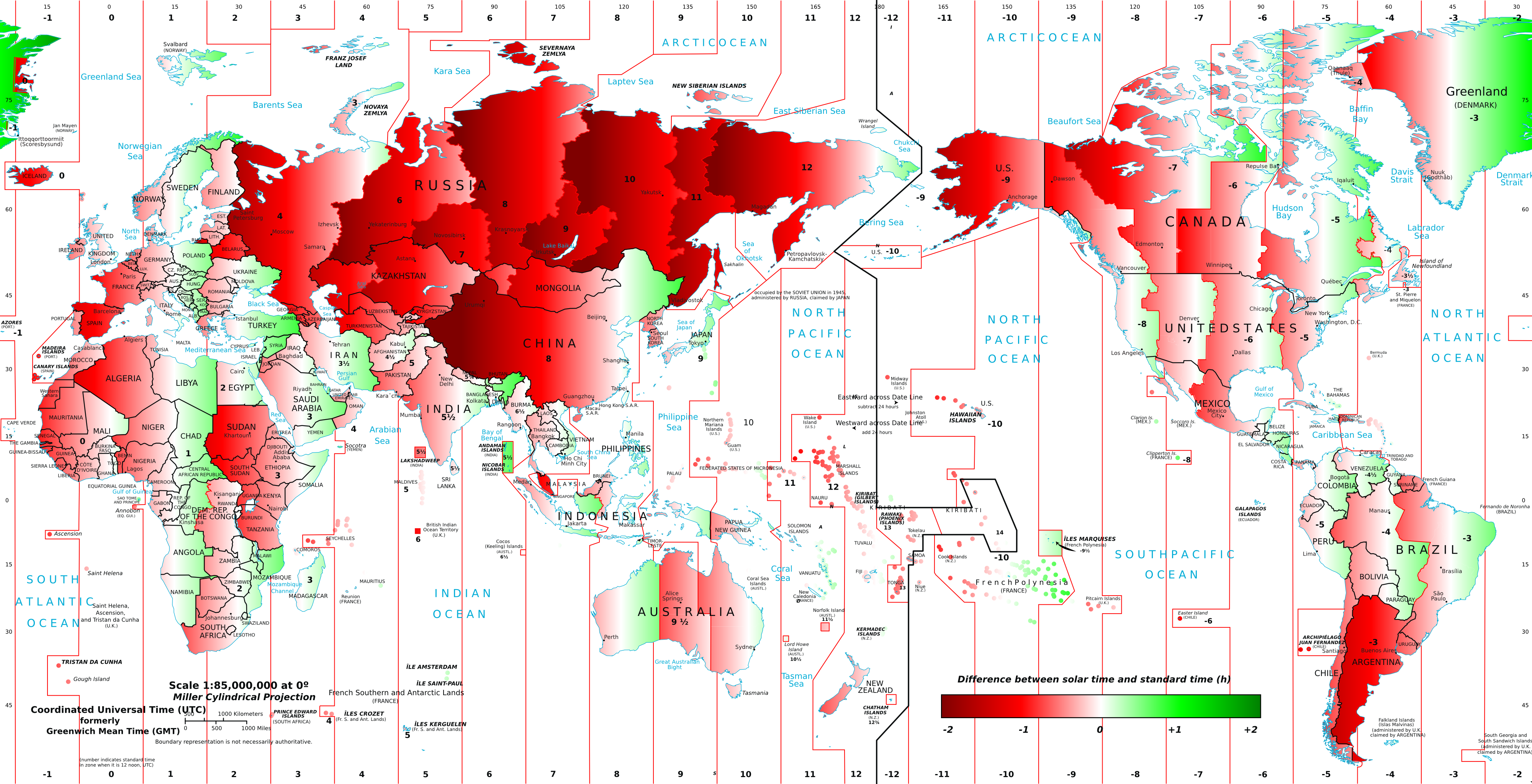
- Solar Time vs. Standard Time Map — The full-size version of the color-coded chart (built by math blogger Stefano Maggiolo) behind Slate’s “wrong time zone” story, showing every region’s drift from solar time.
Indigenous Moon Calendars
- Ojibwe Word of the Day: Webinige-giizis (The Throwing Away Moon, February) — Short language-lesson video from teacher James Vukelich Kaagegaabaw on the Ojibwe name for February’s moon.
- Moons & Days — Side-by-side table of Ojibwe moon names in Western and Eastern dialects, tied to the traditional 13-moon Anishinaabe calendar and week-day terms.
- The Thirteen Moons and Turtle’s Back (Worksheet) — Printable turtle-shell activity sheet where students move a stone across 28 plates a day to track the Anishinaabe 13-moon calendar and its Nanaboozhoo origin story.
- Cree Moon Calendar Instructional Sheet — Illustrated handout, from the Let’s Find Out podcast, showing how to read and use a traditional Cree lunar calendar.

Meng Po & Forgetting Mythology
- Hell’s Bittersweet End: Meng Po, Goddess of Forgetfulness — Profiles the Chinese underworld goddess who serves souls a memory-wiping soup before rebirth, tracing her folklore origins and modern pop-culture life online.
- The Jade Guidebook: Appendices — Grandmother Meng — Full bilingual translation of the classic Daoist underworld text describing Grandmother Meng, her Terrace of Drunken Oblivion, and the Bridge of Sorrows souls cross before rebirth.
- 忘 (wang) — “To Forget” — Interactive dictionary entry for the character 忘, with stroke-order animation, pinyin audio, and example words and sentences.
Labor & Crunch Culture
- The Extreme 996 Work Culture in China — A VICE Asia video following workers trapped in China’s grueling “9am-9pm, 6 days a week” tech-industry grind.
- How Crunch Became Legal — Traces how decades-old overtime-exemption loopholes, from the 1938 Fair Labor Standards Act to 2000s California rules, let studios legally work game developers into “crunch” for free.
- Rich Tax Breaks Bolster Video Game Makers — Investigates how a wildly profitable video-game industry has also collected millions in state and federal tax subsidies.
High-Frequency Trading & Time
- The Gazillion-Dollar Standoff Over Two High-Frequency Trading Towers — Chronicles the bizarre real-estate and legal feud over two rival microwave relay towers built solely to shave milliseconds off trades between exchanges.
- Putting the Brakes on High-Frequency Trading With Physics — Explains how a 2018 East Coast heat wave literally slowed the microwave signals linking Wall Street data centers, costing speed-obsessed traders real money.
- Intentional Access Delays, Market Quality, and Price Discovery: Evidence from IEX Becoming an Exchange — An SEC staff research paper crunching the data on whether IEX’s 350-microsecond “speed bump” actually made markets fairer.
Douglas Rushkoff
- Escape Fantasies of the Tech Billionaires — Rushkoff recounts being flown in to advise five ultra-wealthy men on their private apocalypse-survival bunkers, and what it revealed about the billionaire “escape” mindset.
- Present Shock — Publisher page for Rushkoff’s book arguing that 24-hour feeds and always-on connectivity have collapsed narrative into a disorienting, permanent “now.”
- Turtles from the Shells — Rushkoff essay tracing humanity’s arc from present-tense hunter-gatherers to future-obsessed farmers and capitalists, and back again in the digital present.
Doomsday & Climate Clocks
- A New York Clock That Told Time Now Tells the Time Remaining — Tells the story of Union Square’s giant digital “Metronome” display being reprogrammed to count down the years, days, and seconds left to act on climate change.
- Climate Clock — The activist project’s official site, featuring a live countdown to the climate “deadline” alongside physical and digital clocks anyone can install to spread the same urgency.
- Pandemic Time: A Distributed Doomsday Clock — A philosophical essay arguing COVID-19 shattered shared, global clock-time into millions of local, subjective countdowns shaped by each place’s own stage of outbreak.
Daily Routines & Rituals
- Daily Routines — Mason Currey’s original blog compiling firsthand accounts of how famous writers, artists, and thinkers structured their workdays, the project that grew into his book “Daily Rituals.”
- Daily Rituals: Life-Hacking Tips from Novelists, Painters, and Filmmakers — Currey introduces his Slate series mining 161 creative lives for the routines, superstitions, and compromises behind their work, from early risers to night owls.
- Daily Rituals (Slate series index) — A full index of Currey’s 15-part Slate series, ranking everything from Balzac’s 50-cups-a-day coffee habit to Kafka’s naked calisthenics.
Chinese Time-Travel TV Ban
- Chinese Censors Ban Time-Travel TV Shows — Reports on China’s 2011 broadcast-regulator crackdown outlawing time-travel dramas for treating history frivolously and undermining “correct” values, sparking a comment-thread debate about censorship.
- SARFT Criticizes Dramas for Fabricating History and Reincarnation/Time-Travel Plots — The original Chinese-language state-media report on the regulator’s notice condemning productions that randomly rewrite history and push reincarnation and time-travel storylines it called ideologically empty.
- SARFT Notice on March 2011 TV Drama Production Approvals (archived) — An archived copy of the actual regulatory notice from China’s broadcast authority listing which historical and costume dramas were cleared for production that month, the primary document behind the ban.