Our schedule this semester!
- Structure & Teaching Methodology
- Office Hours
- Student Documentation
- Assignments
- Weekly Schedule
- 1: The Gnomon, Sept 14
- 2: The Escapement, Sept 21
- 3: Time Travel, Sept 28
- 4: Time Machines, Oct 5
- 5: Time Code, Oct 14
- 6: The Obliquity of the Ecliptic, Oct 19
- 7: Midterm Review, Oct 26
- 8: Seeing Time, Nov 2
- 9: Time $ Nov 9
- 10: The Cosmic Distance Ladder, Nov 16
- 11: When Are We?, Nov 23
- 12: Final Workshop, Nov 30
- 13: Finals 1, Dec 7
- 14: Finals 2, Dec 14
- Class Policies
Structure & Teaching Methodology
This is a production course about big ideas. I’ve tried to organize the syllabus to interlace conceptual and technical topics, as I want to provide new tools for interesting work along with thought-provoking ideas to fuel your creativity. As often as possible, classes will have both, with an emphasis on creative discussions during class meetings (as technical issues can be addressed in office hours). There is so much a Time class could cover; I’ve tried to filter for material that is actionable, inspiring, and important. That sill leaves way more than can fit in fourteen weeks. Nevertheless…
This is a 14-week course that meets once a week in person. During class we will discuss conceptual and technical information related to time, provide feedback on assignments, and have opportunities for hands-on technical practice with hardware and software. Weekly prompts will guide work outside of class and build toward a final project, while weekly time-themed readings will stimulate discussion. The course will cover both hardware and software, and students will have the flexibility to design their final project around material availability.
Office Hours
I have an NYU office hour calendar and will be posting hours there when the semester begins. Generally this fall I’ll be at ITP Tuesdays and Thursdays, and am happy to arrange times to meet in person those days, or online other days.
Student Documentation
As is typical at ITP, please document your work for this class online. Set up a URL that shows only work for this class – if you’re using a blog, have a tag or category for the class, for example. In the first half of the class, your weekly assignments should be documented on your site. In the second half, post progress reports on your final. Midterm and final presentations should be on the site, including references.
I will use a shared class spreadsheet to compile things like links to your documentation. Access the doc through your NYU account.
Assignments
Details about all assignments are on the 02026 Assignments Page
Overview
The first half of the semester there are weekly production assignments that lead to creating a midterm timekeeper. The second half of the semester you will continue developing your final project, which will be presented in weeks 13 and 14.
Throughout the semester, students will take turns facilitating weekly discussions.
Deliverables
- Sundial, due week 2, Sept 21
- Mood board and potential midterm 2D designs, due week 3, Sept 28
- HSNY Mood board addition, animated 2D design, due week 4, Oct 5
- Hardweare/Software study, due week 6, October 19
- Midterm timepiece, presented week 7, Oct 26
- Final, presented weeks 13 and 14, Dec 7 and Dec 14
- One week as discussion facilitator, dates to be assigned.
For full detail on assignments, refer to the 2026 Assignments Page.
Readings
I’ve collected most of the readings (and in some cases, longer source materials from which they are taken) in a class reading packet accessible through your NYU account. Weekly short readings will be assigned throughout the semester and discussed the following week.
(Pssst – I’ve also uploaded most of the reading sources to this NotebookLM. Is that useful? Can anyone get value from that? I’d love to know. I think I have to add access individually. If you want it and don’t have it email me.)
There are also a lot of materials in the syllabus under the Ideas and Resources categories. I’m reorganizing these pages (2026) and hope to continue to expand on the material as I draw inspiration from our semester together. You will review this material at the outset of class, as they will form a common set of vocabulary and reference points for ongoing course discussions. I also maintain an expanding glossary of time-related terms, and expect you to become familiar with, and use, the terms that most interest you.
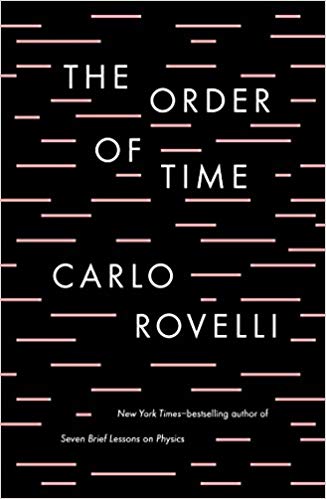
In the past I have assigned one of two complete texts: Carlo Rovelli’s small, beautiful book, The Order of Time, or Jay Griffiths’ wide-ranging and thought-provoking work A Sideways Look At Time (also known as “Pip Pip” in the UK). Both remain highly recommended, but this year I will assign a wider-range of shorter readings from more authors, including selections from Griffiths and Rovelli.



Weekly Schedule
1: The Gnomon, Sept 14

Timekeeping is a deep, ancient technology with a thread running from prehistory to modern compute. Time is a mysterious subject that has occupied many minds. Thinking about time can result in yearning to build interesting, long-lasting artifacts. Specific time-related technical topics in hardware and software can improve your skills as creators.
Icebreaker: What is a week?
Presentation: Course overview. Gnomon. Previous class work.
In-class activity: human planetarium.
Reading:
- Eno The Long Now
- Brand – Long Now Chapter 2 (packet)
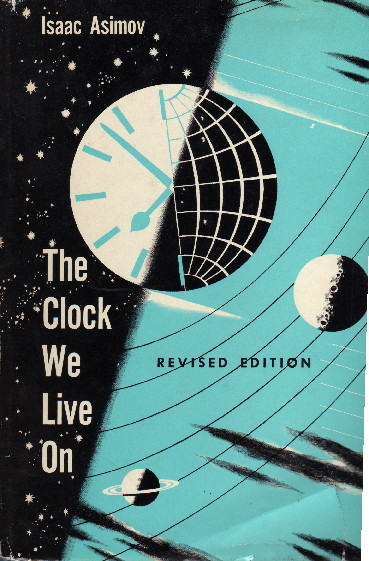
- Asimov – The Clock We Live On, Chapter 1, Follow the Sun (packet)
- Plautus on sundials
Lookahead reading:
- Syllabus escapement and movement material
- Su Song in Nature (packet)
Assignments: Make a sundial and document it online. Refer to the Assignments page for details.
Special Resources: Sundial software. Stellarium
2: The Escapement, Sept 21
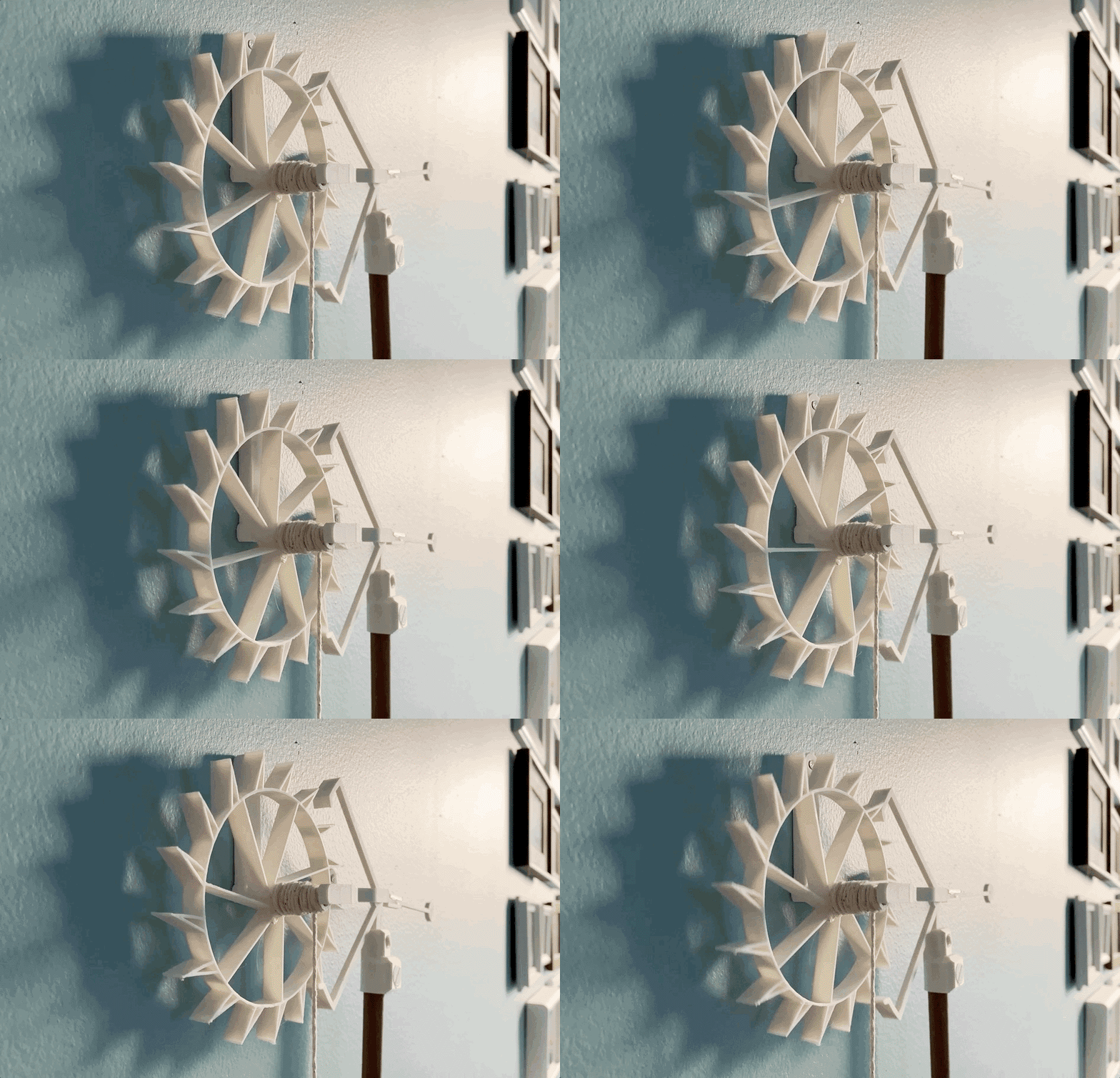
Sundials (and hour glasses, clepsydras) flow. They are analog – a continuous changing value. Starting around the time of Su Song’s water clock, this flow was converted into a countable “tick” – a discreet “digital” value. Once you have a uniform countable tick, the rest is math (typically implemented via gears). We will also begin a design discussion of how this information, once calculated, is displayed (data visualization).
Ice breaker: Why is clockwise clockwise?
In-class activity: Review your sundials.
Presentations:
- Escapements and movements from Su Song to now
- Design 1
Reading:
- Brand, Long Now Chapter 3 and Chapter 4 (packet)
- NIST, “Sundials to Atomic Clocks” – scan Chapters 1 and 2 to reinforce Asimov and preview some technical topics. (Packet)
Lookahead reading:
- Syllabus on dial designs
- Look around the HS-NY catalog
Assignment:
- Mood board. Find prior time-related art that inspires you. Prototype 2 versions of a 2D Memento Mori / Memento Viveri Design.
Special Resources:
- Escapement and kinetic art links.
Note: Our next class (week 3) will meet at the Horological Society of NY Library at 3:45 PM.
3: Time Travel, Sept 28
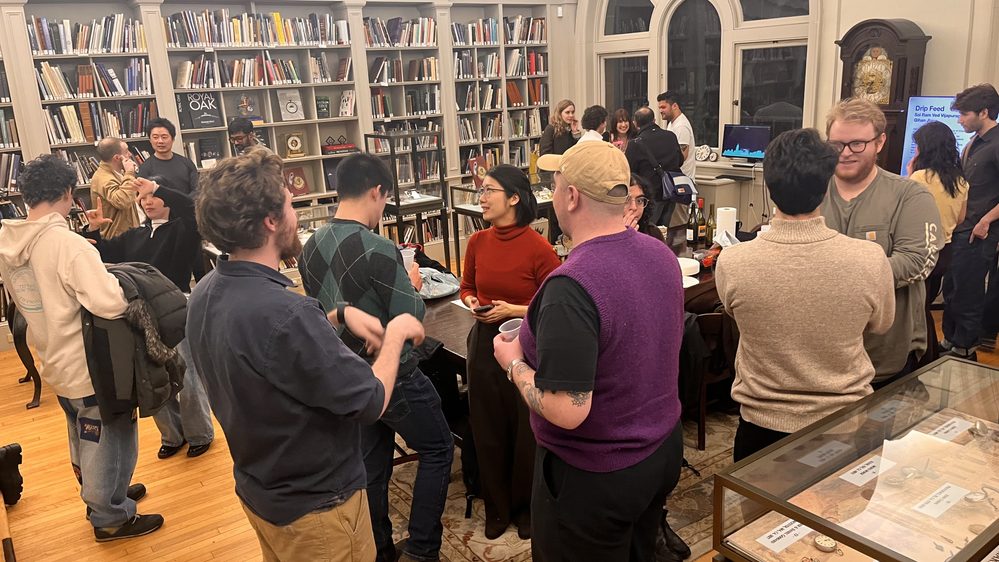
Meet the librarians at the Horological Society and draw inspiration from the rich history of timekeeping.
In-class activity: Explore the library.
Presentation: Design 2 (time/library permitting)
Reading:
- Brand, Chapter 6 (packet)
- Ochs und Junior – Design of a date complication, overview and detail.
- HSNY’s Dr. Marraccini on Calendars.
Lookahead reading:
- Syllabus hardware component notes.
Assignment: While at HS-NY, photograph (or carefully sketch) one or more examples to add to your prior art/mood board. Animate one of your 2D designs using software or animation techniques.
Special resources:
- HS-NY catalog
- Oechslin’s design process, from this collection of videos.
4: Time Machines, Oct 5
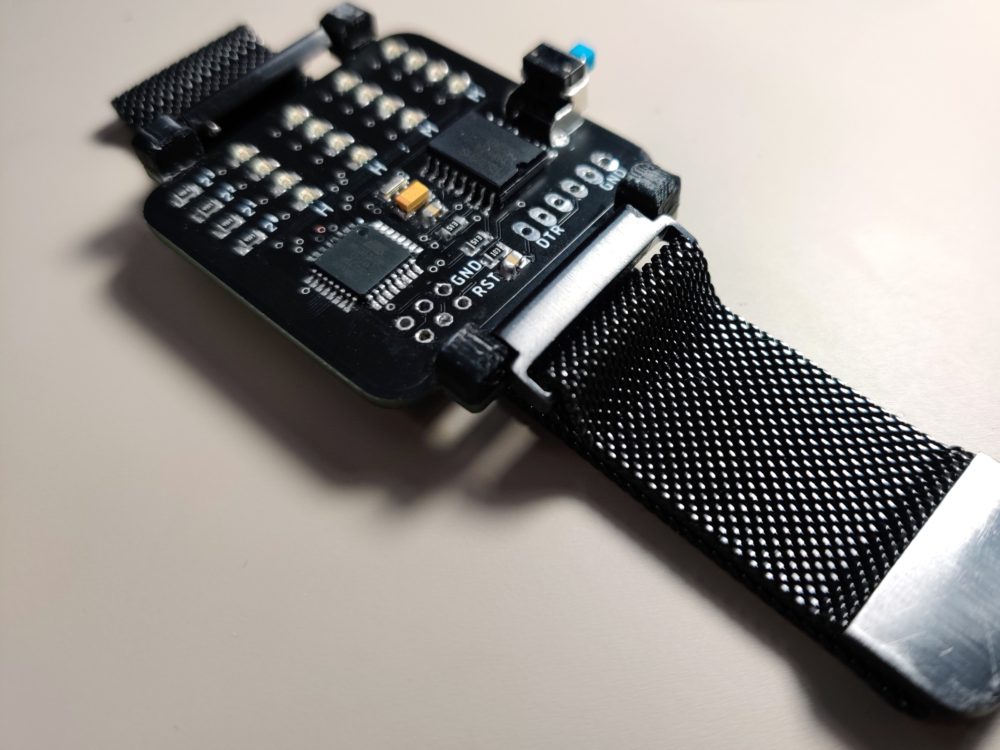
Generalize from the escapement to digital systems and “The Clock”. RTCs. Steppers. Non-blocking delay. Hardware and timer interrupts. Polling vs interrupts.
In-class activity:
- Discuss pieces discovered at HS-NY
- See midterm plans
- Wednesday meeting poll (end of class)
Presentation:
- Time hardware components and libraries.
- Design 2 – close out.
Reading:
- Read or listen to this excellent interview with linguist Lera Boroditsky interview (podcast audio, or transcript)
- Paul Ford, Code, sections 1 and 2. (Note, there may be issues accessing the Bloomberg issue. There used to be a mirror but it was taken down. LMK if you have trouble accessing. )
- The Aruino interrupt documentation
Lookahead reading:
- Syllabus code in time and software temporal design pattern notes.
Assignment:
- Expand on the Blink w/o Delay, Ramp/Tasker examples. Alternate: explore hardware interrupts, or stepper motor control.
5: Time Code, Oct 14
NOTE: NYU’s so-called “Legislative Monday” – this is a WEDNESDAY
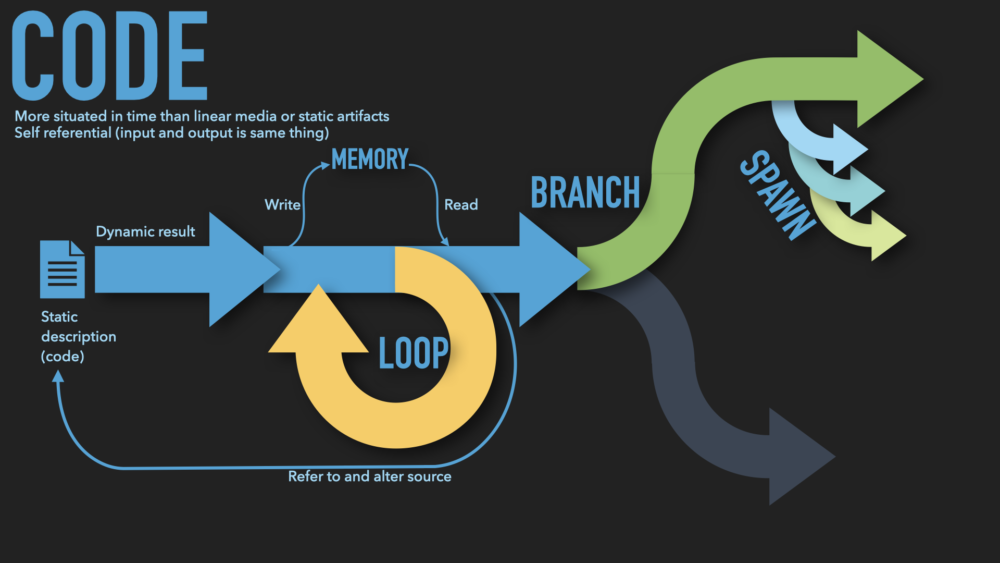
Overview: Follow the tick from the system clock “up” to higher levels of software. Software as hyper-temporal art form. Software design patterns for time management: easings, callbacks, timelines, simulations, state machines
In-class activity:
- Discuss “Wednesday meeting” results, Boroditsky reading
- Review hardware concepts, IRQs
Presentation:
- Code as time-based art
- Design patterns for time management.
Reading:
- Buonomano/Rovelli “Bridging the Neuroscience and Physics of Time” (Packet)
Lookahead reading:
- Asimov, “The Clock We Live On” – Scan chapters 3, 4, and 5 to get familiar with the astronomical material coming next week (packet)
Assignment:
- Finalize concepts for your midterm timepiece and integrate one or more temporal software design patterns or hardware time components.
6: The Obliquity of the Ecliptic, Oct 19
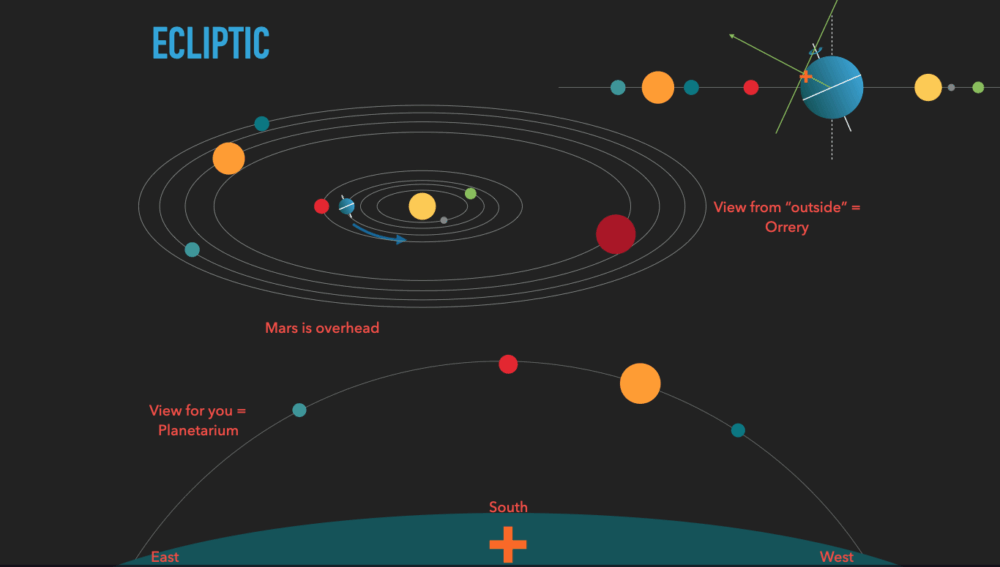
Overview: The patterns we (and all past people) see in the sky come from the particulars of our planet, our sun, our moon, our neighboring planets, and the stars. These are reflected in many of the timepieces we’ve seen so far, especially the astronomical complications. We’ll look deeper into how this works.
In-class activity:
- Review software design pattern work
- Brains vs Physics
- Midterm plan, discussion facilitator plan
Presentation:
- The Clock we Live On
Reading: none
Assignment: Finish your midterm timepieces.
7: Midterm Review, Oct 26
8: Seeing Time, Nov 2
9: Time $ Nov 9
10: The Cosmic Distance Ladder, Nov 16
11: When Are We?, Nov 23
12: Final Workshop, Nov 30
13: Finals 1, Dec 7
14: Finals 2, Dec 14
Class Policies
In addition to the university-wide syllabus policies mentioned on the main site, here are some specific policies for the 2026 class:
Grading
The most important thing you can do is arrive to each class on time and be prepared to actively, civilly participate with your peers and engage with the material. Please put your best effort into assignments and readings, and keep a record of your work online. ITP is pass fail, but the equivalent of a B or higher is required to pass.
- 20% In-class work and participation, readings, discussions.
- 30% Production assignments 1-5/midterm review/final proposal
- 10% Discussion facilitator
- 30% Final project
- 10% Documentation
Participation & Attendance
On-time attendance and active participation required. After the first two weeks of the add/drop period, effective in week three onward, students are permitted 2 absences. There are no excused absences and unexcused absences. There are only absences. Any more than 2 of absences will affect your grade. Two late arrivals (more than 10 minutes after start time) will count as 1 absence.