Great thinking on time
Here is a growing list of books, podcasts, videos, and groups related to the class.
Bibliography
The first two books: Rovelli’s “The Order of Time” and Griffiths’ “A Sideways Look At Time” are required for the course.
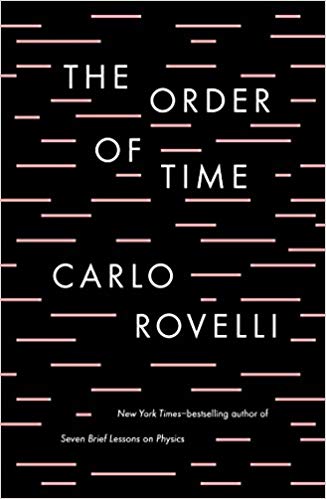
The Order of Time
2018, Riverhead Books. A small gem of a book, Rovelli does a perfect job distilling what the most recent interpretations of physics tell us about the reality of time. Available online through NYU.

A Sideways Look at Time
2014, TarcherPerigee. A challenging book that forgoes the typical account of time through human history, in favor of a poetic approach. Not perfect, but few books combine as many thought provoking topics under one roof. Recommended by Ariel Hein. An excerpt is available online. An excerpt is preserved in the course packet.
Here are several other books on Time I’ve come across. I have copies of most of these, and am happy to lend them out; several are available online through NYU’s library.
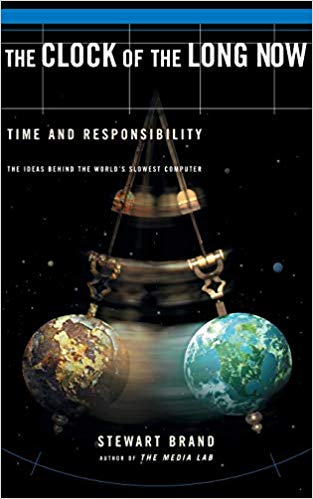
The Clock of the Long Now
I’ve followed the Clock of the Long Now project for a long time. Here, Brand and other authors offer reflections on time, including the useful distinction between chronos and kairos. Available online. Brand’s Ted Talk. Available online via NYU.
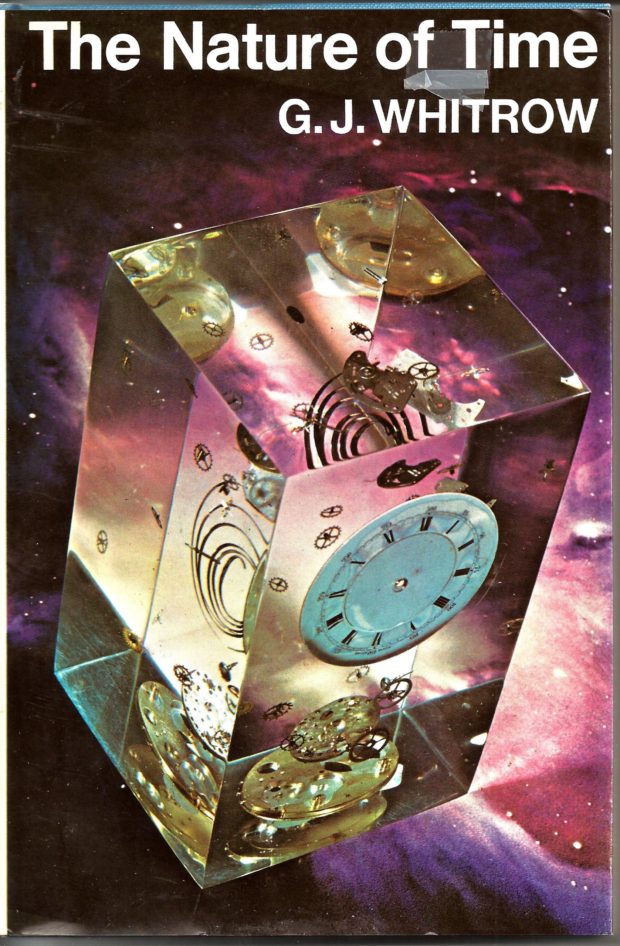
The Nature of Time
1975, Holt, Rinehart and Winston. Whitrow gave a series of BBC lectures about time, and published a number of books expanding those lectures (“What is Time?”, “Time in History”, etc.). I really like the broad perspective of these books – this one in particular balances historical, cultural, technical and scientific ideas about time nicely. Physical copy at the library.
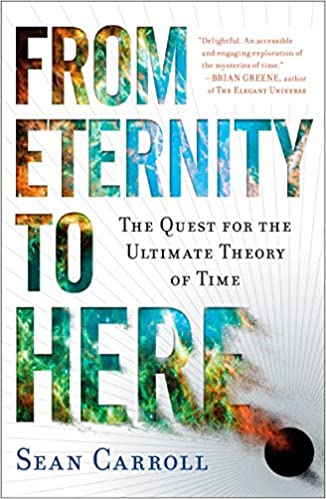
From Eternity To Here
2010, Dutton Press. Carroll (along with Brian Greene, see below) is at the forefront of physicists tackling big ideas and bringing them to the public. See also Carroll’s podcast and video series. He also authored a Great Courses class in Time. Carroll’s more recent book “The Biggest Ideas in the Universe: Space, Time, and Motion” is available through NYU online.
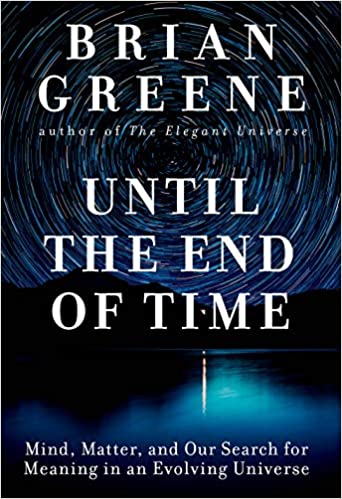
Until the End of Time
2020, Knopf. Like Carroll, Greene vividly ties together cosmology and entropy to get at the nature of time.
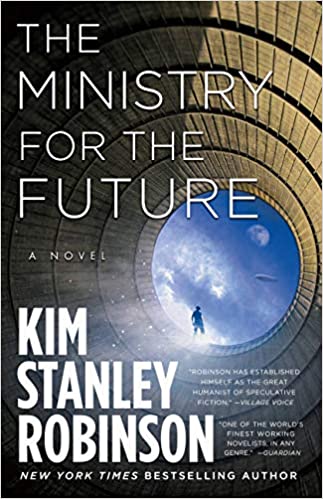
The Ministry for the Future
2020, Orbit. If I were to generally include science fiction titles this list could be nearly infinite. However, Robinson’s Ministry for the Future stands out for its intense focus on charting the immediate near-term future and humanity’s response to climate change, itself a challenge on multiple timescales, most hard for humans to grapple with. Available online through NYU library.
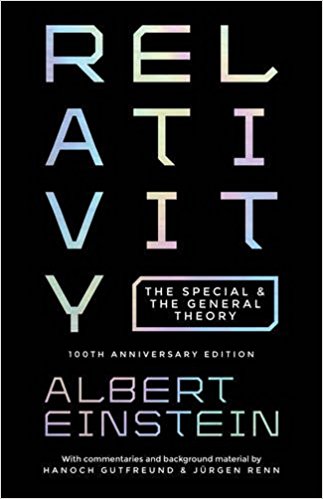
Relativity
2015 edition, Princeton University Press. Turns out Einstein’s own popular science account of relativity is one of the best. He begins with Euclid, and a reader with solid geometry can follow the arguments at least through Special Relativity. Up until this point great minds had speculated as to the true nature of time; Einstein, using his imagination, reached tangible conclusions. This edition is available online through Bobst and includes extensive supplemental material.
I also recommend checking out the paper that started it all: On the Electrodynamics of Moving Bodies (1905). Einstein published three other papers that year, all significant, earning the year a name: Annus Mirabilis, or the Miracle Year. And the famous Einstein’s Dreams by Alan Lightman.
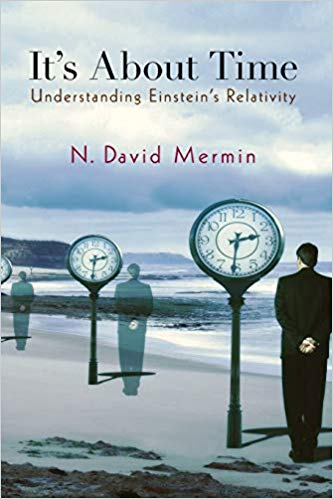
It’s About Time
A very useful and lucid companion to Relativity. Available online.
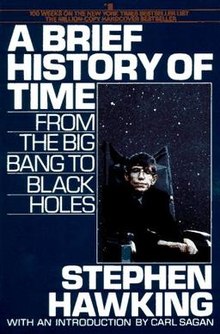
A Brief History of Time
Begins with the Big Bang. Interesting notes about Entropy. See also Hawking’s discussion of time here.
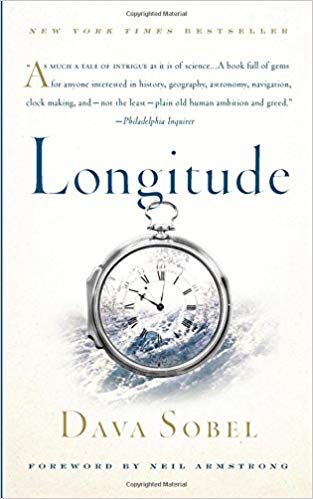
Longitude
A master writer telling the story of the invention of the Harrison H4 chronometer that won the X-prize of its day by keeping accurate time at sea. Find the illustrated edition! The “regular” addition is available online through NYU.
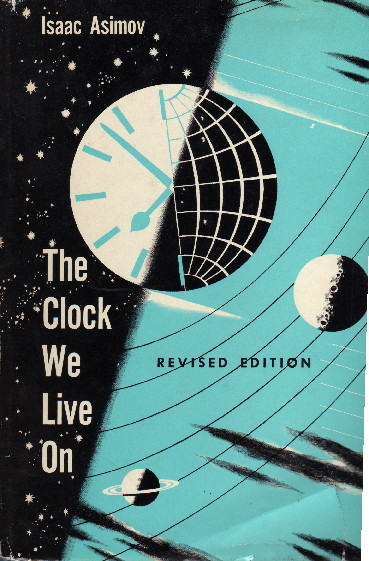
The Clock We Live On
Love this book because a) it’s Asimov the science teacher before he became Asimov the science fiction author, and b) it’s written for intelligent children so I can more or less follow it. If you adjust to the sort of 50’s pipe smoking vibe there’s a lot of useful information on how the peculiarities of our situation (a planet tilted just so rotating and revolving at certain rates etc) leads to various calendars and timekeeping methods through history.
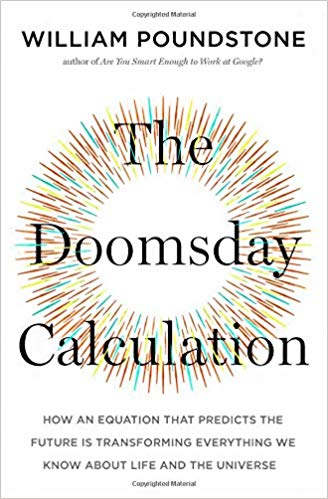
The Doomsday Equation
Astronomy is a long progression disabusing us of the idea that we are at all special. The sun doesn’t revolve around us, and even our solar system and galaxy are unremarkable. This is known as the Copernican Principle – there’s nothing particularly unique about where we are in the universe. So what if we apply this idea to time? Where, in the timeline of all humans who will ever exist, are you?
Related listening: The End Of The World
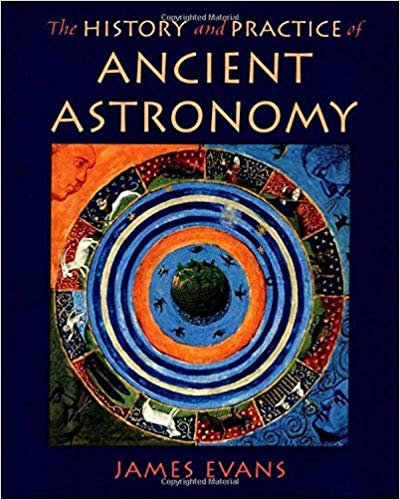
The History andPractice of Ancient Astronomy
A good read after Asimov for going into more depth as to how ancient civilizations reckoned the motion of the stars and planets. Available online through the NYU library.
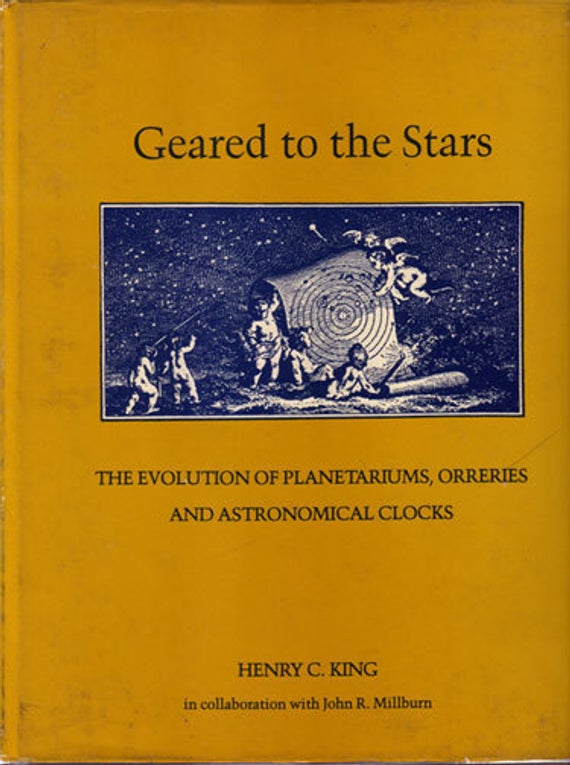
Geared to the Stars
An account of astronomical machines, especially orrerys, through the ages. Mainly focused on Europe starting in the Renaissance, omitting most Chinese and Arabic developments, but otherwise exhaustive within its focus. Out of print 🙁 but semi-available through archive.org (and I have a copy if you want to see!)
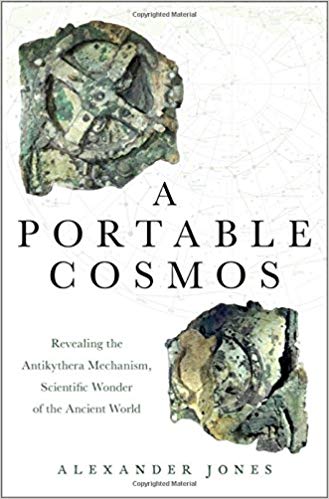
A Portable Cosmos
Vivid historical setting as well as technical details of the Antikythera Mechanism. Dr. Jones is a member of NYU’s Institute for the Study of the Ancient World, and has created a number of resources concerning time in antiquity, including a recent exhibit Time and Cosmos. Available online through NYU library.
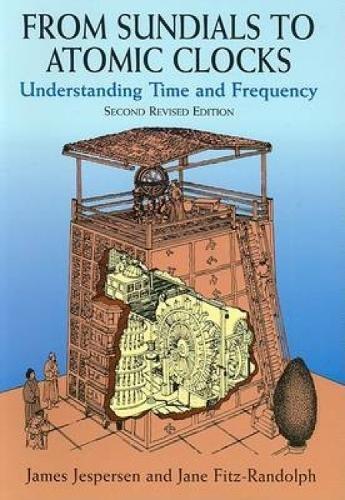
From Sundials to Atomic Clocks
Published by the NIST, this pamphlet/book is, if a bit dated, a good account of the physics underlying timekeeping. Don’t be thrown off by the goofy illustrations – good content. Available as a PDF along with many other time-related online resources from NIST.
Handbook of Archaeoastronomy and Ethnoastronomy
Just found this resource while researching the oldest gnomon, a painted stick at the Taosi archaeological site. A wealth of information, beginning with the essay “Concepts of Space, Time, and the Cosmos” by Stanisław Iwaniszewski. Available online through NYU. Or $700 on Amazon…
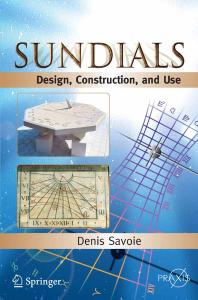
Sundials – Design, Construction, and Use
Denis Savoie, Praxis 2009. A detailed technical explanation for making all manner of sundials, available online through the NYU library.
More recent reads to be added here: Burkeman’s “4000 Weeks”, Loomans’ “I’ve Got Time”, “Dilla Time” by NYU’s Dan Charnas, several books on sundials. R. N. and M. W. Mayall’s excellent work on Sundials was serialized in Scientific American in the 1930s, and available through NYU Library. Time: A Very Short Introduction by Jenann Ismael is also available online.
So many other possibilities! For more inspiration see Maria Popova’s list of 7 Books on Time and her Atlantic piece on Visualizing Timelines.
Julian Barbour argues in a book and this essay that time does not exist.
Ted Chiang’s short stories often feature imagery from horology and space exploration, and his story Exhalation is specifically about the relationship between entropy and time. The Story of Your Life (the basis for arrival) is also about time.
Several non-books or online texts: This guide to the History and use of Astrolabes, by Darren Hayden. Or if you prefer, Chaucer’s. The beautiful design of Asa Smith’s Illustrated Guide to Astronomy (also via Archive.org). A visual guide to general relativity.
Video and other media
Check out these time-specific TED videos. There are physics explainers, like this short one:
As well as valuable insight into cultural aspects of time such as:
PBS’ excellent digital series, Space Time, deals with things like understanding the speed of light and causality. Start here:
Other Space Time videos include:
- The Doomsday Argument
- Do the Past and Future Exist?
- Why Do You Remember The Past But Not The Future?
- How We Know The Universe is Ancient
- Entropy Playlist (Time adjacent)
Sean Carroll is one of physics’ best popular communicators. In addition to his trade books mentioned above, he has an excellent podcast, Mindscape, as well a a regular blog.
His “Biggest Ideas in the Universe” series includes several entries on Change, Time, Spacetime, Entropy and Information
He spoke with the Long Now Foundation on “The Passage of Time & the Meaning of Life.”
What Is Time? | Professor Sean Carroll explains the theories of Presentism and Eternalism.
He also posts his podcasts on youtube if that’s how you get your long-form audio. Here are some excellent time-related episodes:
- Mindscape 158 | David Wallace on The Arrow of Time
- Mindscape 89 | Lera Boroditsky on Language, Thought, Space, and Time <—- Highly recommended!
- Mindscape 140 | Dean Buonomano on Time, Reality, and the Brain
- Mindscape 12 | Wynton Marsalis on Jazz, Time, and America
- Mindscape 2 | Carlo Rovelli on Quantum Mechanics, Spacetime, and Reality
Our author, Carlo Rovelli, has several talks on Youtube:
The Q&A for above is here. He also spoke with New Scientist on Time.
Briane Greene (book mentioned above) interviews Lera Boroditsky (also mentioned above, with Sean Carroll) on Language and Time.
Steve Mould on how a quartz watch works – its heart beats 32,768 times a second. This is a great video!
Imagining a Time-Literate Society — Marcia Bjornerud at Long Now (which itself has a youtube channel with great time content.)
Kurzgesagt is a thought-provoking channel with several entries on time.
- When Time Became History – The Human Era
- The Past We Can Never Return To
- A New History for Humanity 12, 017 – The Human Era
- The 12,020 Human SPACE Era Calendar
- Time: The History & Future of Everything – Remastered (Original)
- Optimistic Nihilism
Deep inside quartz clocks.
Chronogram – exploring the past.
Some 99% Invisible podcast episodes deal with time:
- Waiting – How design can influence our experience of waiting.
- 10,000 years – How do we design a message that will be understood 10,000 years from now?
- Calendars – Why calendars are weird and the wild story of the attempts to promote a rational one.
Radiolab too, of course.
NPR’s series “Finding Time.“
Organizations
ITP’s own Clock Club on Github! Lot’s of code and electronics resources as well as links to inspiring projects, compiled from a few years of ad-hoc clock club meetings!
Oxford’s Future of Humanity Institute. Papers on subjects like the Drake Equation, the Great Filter, and the Aestivation Hypothesis. See in particular Nick Bostrom’s work, e.g. The Vulnerable World Hypothesis and The Future of Humanity.
The Long Now Foundation is building a 10,000 year clock deep inside a mountain, and hosting occasional salons to talk about it.
Designing Interactive Systems (DIS) “Time, Temporality, and Slowness” workshop organized by William Odom.
The National Institute of Standards and Technology (NIST) maintains the US reference atomic clock (tune in to their WWVB broadcast with something like this) and has published this history of timekeeping. NIST (a government agency) also gave the world this animated, spoken-word video poem about time.
Reference
General
- URBAN-X Team — Bios of the founders, mentors, and industry experts running this BMW/MINI-backed accelerator for urban-tech startups.
- Lunar Month — Breaks down the five distinct astronomical lunar months — synodic, sidereal, tropical, anomalistic, and draconic — each with its own precise length.
- A Walk Through Time — An archived NIST essay, first written in 1975, tracing timekeeping from ancient calendars and sundials to atomic clocks.
- Time — Wikipedia’s sweeping overview of time as a concept, spanning philosophy, physics, and the history of its measurement.
- Second — Traces how the SI second went from a fraction of the solar day to a fraction of the year to today’s caesium-133 atomic definition.
- Reading and Writing Electronic Text — Schedule — The session-by-session syllabus for Allison Parrish’s NYU ITP course on generating text with code.
- Chronon — Explains the chronon, a hypothesized smallest indivisible “atom” of time proposed for quantum-gravity theories.
- POSIX General Concepts — Seconds Since the Epoch — The official POSIX specification defining Unix time and the exact formula for converting a calendar date into seconds since the Epoch.
- Jiffy (time) — Shows how “jiffy” became a real technical unit meaning different exact durations in electronics, computing, and physics.
- List of HTTP Header Fields — A reference table cataloging standard HTTP request and response headers with their definitions and governing RFCs.
- Fermat and Pascal on Probability — Translated 1654 letters in which Fermat and Pascal work out the “problem of points,” the correspondence that founded probability theory.
- Handbook of Archaeoastronomy and Ethnoastronomy — An NYU-library-gated SpringerLink reference work surveying how ancient and indigenous cultures tracked the sky.
- Finding Our Place in the Cosmos: About This Collection — Library of Congress overview of its Carl Sagan/Ann Druyan archive paired with rare books and artifacts spanning the history of cosmology.
- North Jersey Astronomical Group — Homepage of a roughly 100-member New Jersey astronomy club running public telescope nights and stargazing events since 1981.
- Seats + Resource Booking — NYU ITP/IMA help page on reserving huddle rooms, phone booths, the podcast studio, and the documentation lab.
- How Long Is a Moment? — A pop-science rundown of nine wildly different definitions of “a moment,” from a medieval 90-second unit to Planck time and relativistic dilation.
- PrzemysĹ‚aw PaweĹ‚czak’s Publications — A TU Delft professor’s personal site listing his papers on battery-free and intermittent computing, including the widely-covered Battery-Free Game Boy project.
- CSEM Homepage — Homepage of a Swiss applied-research institute that develops microelectronics, photonics, IoT, and precision-manufacturing technology for industry partners like Swatch and ESA.
- ProQuest Ebook Central Reader (NYU) — A login-gated NYU Library e-reader link to one specific e-book on ProQuest’s platform; the page is a JavaScript app that renders no content without an active library session.
- Frame Builder Tool — An interactive online tool from a custom picture-framing company for designing and pricing a made-to-order frame.
- Ellen Nickles’ Personal Site — A personal/portfolio website for someone named Ellen Nickles, built as a JavaScript app with no server-rendered text to describe further.
- Auburn Systems Engineering Slides (NASA) — A NASA-hosted PDF slide deck covering systems-engineering fundamentals, developed in connection with Auburn University.
- NPR’s “Finding Time” Series — An NPR editorial series of articles and radio segments on how humans perceive and measure time, from COVID-warped time perception to atomic clocks and circadian rhythms.
- DuckDuckGo: “Gnomonic Projection” — A DuckDuckGo instant-answer search page giving a quick definition of the gnomonic map projection.
- Gnomonic Projection (Wikipedia) — A detailed technical article on the gnomonic map projection, the oldest known map projection, in which every great circle appears as a straight line, useful in navigation, astronomy, and crystallography.
- Meet the Constants (NIST) — NIST’s explainer on the seven fundamental physical constants, such as the speed of light and Planck’s constant, that now formally define the metric system’s base units.
- New Larousse Encyclopedia of Mythology, Part 7 — A large plain-text excerpt (part 7 of a multi-part scan) from the New Larousse Encyclopedia of Mythology, an illustrated reference work cataloguing world mythological traditions.
- Feature Visualization Appendix: GoogLeNet 3a — An interactive appendix to Distill’s “Feature Visualization” paper, showing a gallery of computer-generated images that reveal what individual neurons in GoogLeNet’s layer 3a “see.”
- Distill — The archive of Distill, a now-dormant peer-reviewed journal known for interactive, visually rich explanations of machine learning research such as feature visualization and graph neural networks.
Standards & Reference Bodies
- Smith’s Illustrated Astronomy — A digitized 1855 astronomy textbook for U.S. public schools, fully viewable page-by-page (or downloadable as PDF/EPUB) through Internet Archive’s book reader.
- United States Naval Observatory — The Navy’s official portal for the USNO Master Clock, precise time distribution services, and astronomical data, serving as the Department of Defense’s standard of time.
- ISO 8601 Date and Time Format — ISO’s own explainer page for the ISO 8601 standard, laying out the YYYY-MM-DD format that eliminates ambiguity between international date conventions.
- NIST-F1 Cesium Fountain Atomic Clock — NIST’s technical page on its cesium fountain atomic clocks (the retired NIST-F1 and its successors F3/F4), the instruments that realize the official U.S. definition of the second.
- Time & Frequency — NIST’s topic hub aggregating its atomic clock news, explainer articles, videos, and links to the official U.S. time service.
- Time and Frequency from A to Z — A multi-page NIST glossary defining technical time-and-frequency metrology terms, from A440 and accuracy to Allan deviation.
Course Syllabi & Materials
- Homemade Hardware — Syllabus — A 14-week ITP hardware-design course syllabus covering PCB fabrication, soldering, and Eagle software, provided as a comparison example of course organization.