- Office Hours
- Student Documentation
- Deliverables
- Assignments
- Weekly Syllabus [ITP]
- 1. Hi! Introductions (Jan 26)
- 2. Making Things Move (Feb 2)
- 3. Capturing with Capacitors (Feb 9)
- 4. Big Kinetic (TUESDAY Feb 17)
- 5. Kinetic Presentations (Feb 23)
- 6. Special Topics (March 2)
- 7. Solar, Voltaic Trip (March 9)
- [ Spring Break ]
- 8. Battery Storage (March 23)
- 9. Advanced Solar (March 30)
- 10. Solar Presentations (April 6)
- 11. Special Topics (April 13)
- 12. Research Presentations (April 20)
- 13. Final Workshop (April 27)
- 14. Final Presentations (May 4)
Note – this is a living document, weekly homework and reading prompts will be added as the semester goes, and any adjustments to the schedule and topics will be reflected here.
Office Hours
This is my online office hour calendar. If you don’t see hours available or that work for you, just email me and we can set up a time to meet.
Student Documentation
Please post links to your class documentation in this shared spreadsheet (NYU access required).
Deliverables
- Kinetic Project, Week 5,
Feb 23Update: March 2 - R&D Group 1, Week 6,
March 2Update: March 30 - Solar Project, Week 10, April 6
- R&D Group 2, Week 11, April 13
- R&D Group 3, Week 12, April 20
- Finals projects, Week 14, May 4
Additional week-by-week prompts and readings will be in the syllabus below and should be responded to on your documentation site.
We are tentatively scheduled to visit the solar and battery company Voltaic in the Navy Yard on class 7 (March 9) and depending on projects, possibly again class 13 (April 27). These dates are not yet confirmed. The March 9th visit is confirmed.
Assignments
Detailed explanations of each assignment can be found in the Project Briefs.
Kinetic project
Turn motion into electricity.
Solar project
Turn light into computation.
Research project
Working together for a brighter future
The research project is a chance to dig into a subject of your choice. You will research a topic of interest, and distill it into a ~10-15 minute presentation that you will give to the class to educate us.
This year I’ve grouped the research into the following themes:
- Energy and Art (March 2)
- Emerging Energy Tech (April 13)
- Energy Trends (April 20)
We will organize groups around those themes. Students interested in a given topic shouold coordinate the research and presentation. This could be as minimal as simply discussing with each other what specific areas you’ll cover (so as to avoid overlap) to treating the research as a group project, and presenting together.
Final
Between weeks 10 and 14, you will have the opportunity to develop a final project that engages with the material of the class. More details will follow, but in general, I encourage this project to build on the kinetic or solar projects, or the research presentation subject. Put another way, you can plan a semester-long project about energy and use the solar and kinetic projects to workshop components of that final. You are also free to do a completely new final.
Participation
Your engaged participation in class (both listening and speaking) is extremely important. The class works best if you actively work to get information out of me! A distant second best is if you passively receive information I present. And worst of all is not receiving the information at all by missing the class, arriving late, or not paying attention. (Tip – this is true of most classes.)
If you have any issues and can’t join class meetings, please let me know before the class so I can plan accordingly. Two or more absences is grounds for failure. Chronic lateness or early departure may also affect your grade.
A note on Zoom: A hybrid class is, at best, a suboptimal experience for the remote participants. I want to avoid using zoom during our class sessions whenever possible in favor of in person meetings. However, in cases where students are positive for Covid and cannot come to class, I will allow them to join via zoom. Other reasons (hung over, traveling for work, attending a wedding, etc…) are not cause for Zoom.
Grading
The most important thing you can do is arrive to each class on time and be prepared to actively participate and engage with the material. Two or more unexcused absences will result in failing the class. Excessive lateness is considered an absence. Please put your best effort into assignments and readings, and keep a record of your work online.
ITP is pass fail, but the equivalent of a B or higher is required to pass.
- 30% In-class work and participation, readings, discussions
- 10% Documentation – project docs and weekly updates
- 15% Kinetic project
- 15% Solar project
- 15% Research Project
- 15% Final (expanded solar, kinetic, or alternate)
Weekly Syllabus [ITP]
1. Hi! Introductions (Jan 26)
Introductions – who are you, who am I? Origin, purpose and organization of the class. Blackout stories.
In class: Jump! (subject to revision for online class)
Read: This syllabus! Actually – maybe don’t read every word, but scan over it to learn what lives where. Look over our schedule, the projects and deliverables, and the resources for readings, materials, measurement techniques etc. What are you particularly interested in? Anything you expected to see that you don’t?
For the kinetic assignment, pay particular attention to my notes on motors and steppers under Resources/”Energy Converters“, as well as the videos related to generating and conditioning electricity.
Listen:
So much is happening right now in the US and globally related to energy. Latitude Media publishes an excellent weekly podcast on energy technology and business. To start, let’s listen (or read the transcript) to their recap of energy news from 2025. The good stuff is towards the end of podcast, so feel free to skim the beginning.
For next week:
- Add your documentation link to class spreadsheet.
- Complete the brief intake form covering your interest and experience.
- Get the Smil text. (NYU link)
- Find a DC gearmotor and/or a stepper motor to use as a first generator. As a general rule, about fist sized is good, and you should be able to turn the shaft by hand (or with pliers if there is a large gear reduction).
- Bring to class next week: multimeter, breadboard, gearmotor and/or stepper.
- Begin to brainstorm what kind of motion you can capture for your kinetic project. Post a sketch of what you might make for the project. If you want to work in a group, form one.
Presentation Materials:
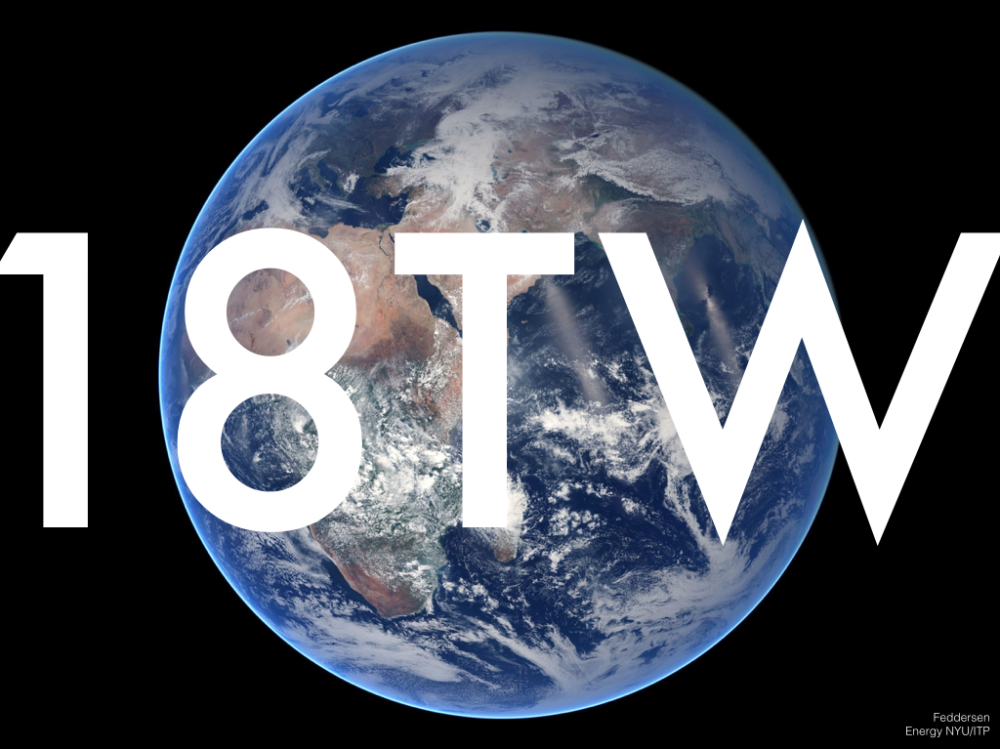
This video is a sort of overview of all the steps necessary for a basic kinetic->electricity->light activity. More notes on Vimeo.
2. Making Things Move (Feb 2)
Intro to Kinetic Energy
Topic: The energy of moving things. The history of energy since the Big Bang. Kinetic and potential energy formulas. The First and Second Law of Thermodynamics.
Presentation: Kinetic Energy, 15 minute energy.
15 Minute History of Energy Download
Kinetic Energy Overview Download
For next week:
- Test at least lighting up LEDs with your generator. Do you need to rectify, condition, or store energy for your project? Plan for (and get) any additional components you need. Post a progress report to your blog.
Reading/Listening:
- “Inside Meta’s Massive Nuclear Push“, Open Circuit podcast. For discussion next week.
- Stuart McMillen’s illustrated essay about energy in terms of the human body. This idea traces back to Buckminster Fuller, and is the basis for former Energy Secretary Steven Chu’s concept of energy servants. Content note: this work uses the image of fictional ‘energy slaves’ as a central metaphor for this comparison.
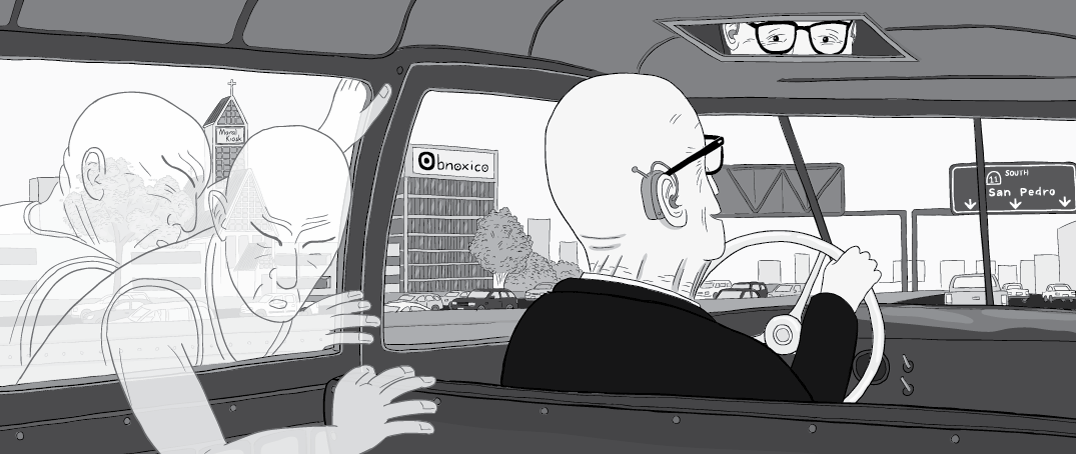
Several additional written essays by McMillen discussing the work and the ideas behind it are great optional resources for additional material. Thanks go to Todd Whitney from Energy 2021 for finding this excellent resource.
- This paper about scavenging power for mobile electronics from MIT. Old, but still sets the boundaries for what is possible with basic physics. This paper by the same authors covers the same material in a different form. Scan both as a resource for what real-world constraints apply to your systems.
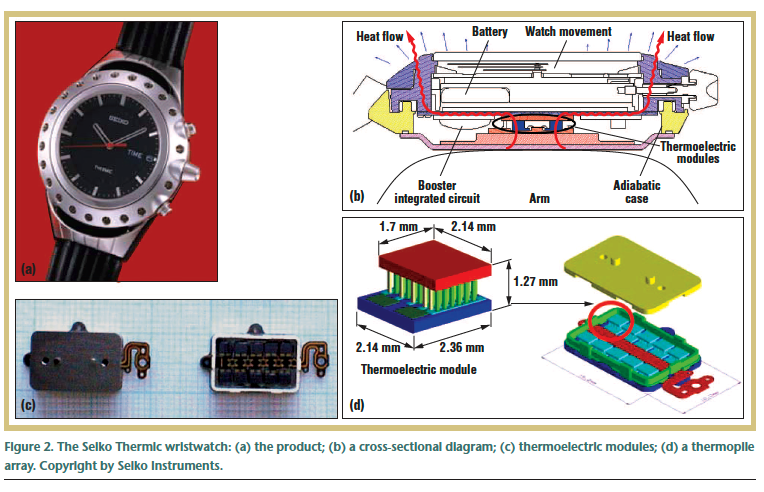
More background material: Note, I’m front-loading a lot of links to material here. We won’t get to all of it in this class immediately, but we will cover this material over the next several weeks, so look at it at your own pace and use it for questions and project support.
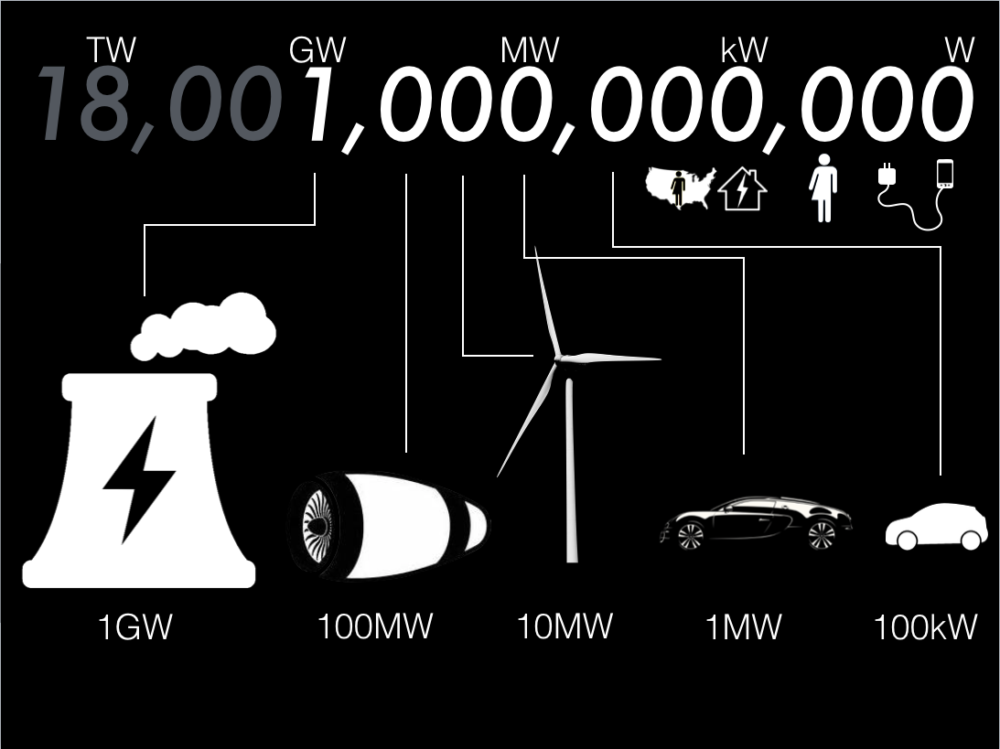
Orders Of Magnitude slides Download
Check out Mathura’s documentation of a great kinetic-electrical car (from 2016). So many LEDs!
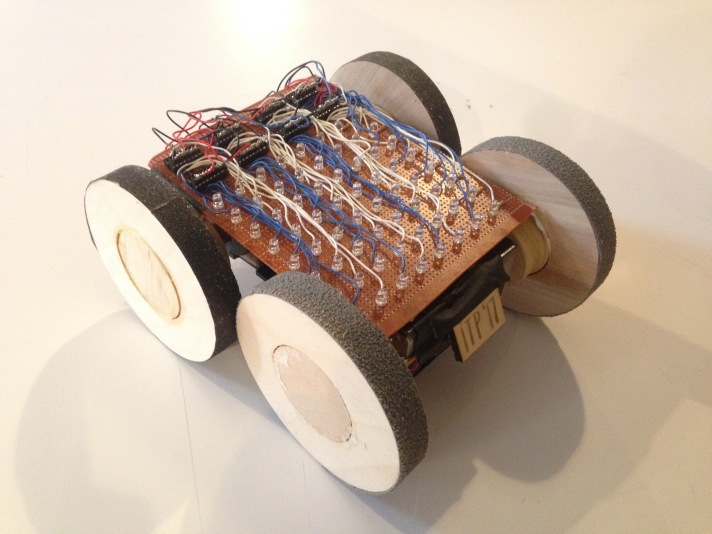
See also – Daniel Ryan Johnston’s tear down of a shower head that lights up from the motion of water.
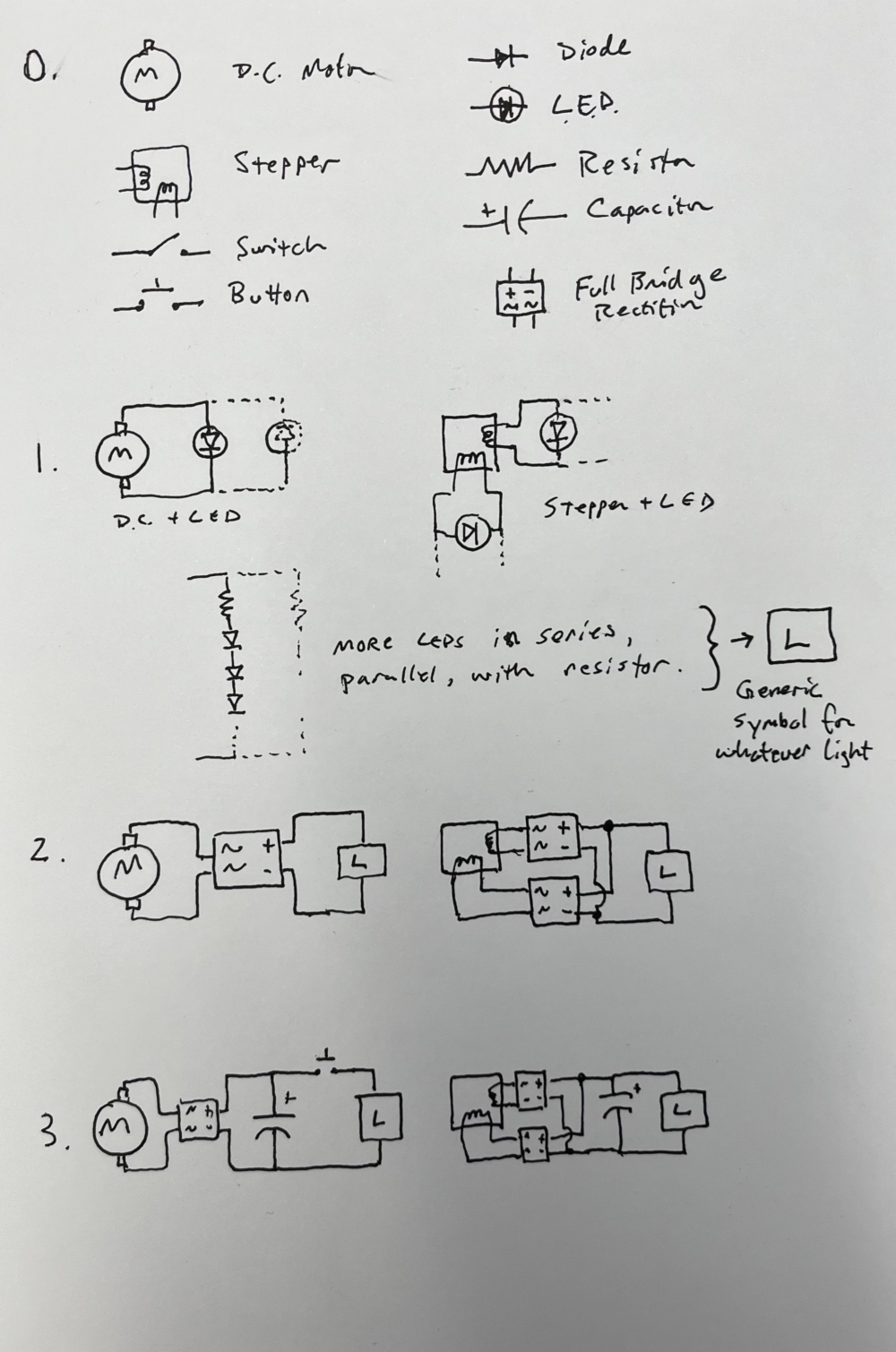
Rectification circuit – where we’re headed by next week.
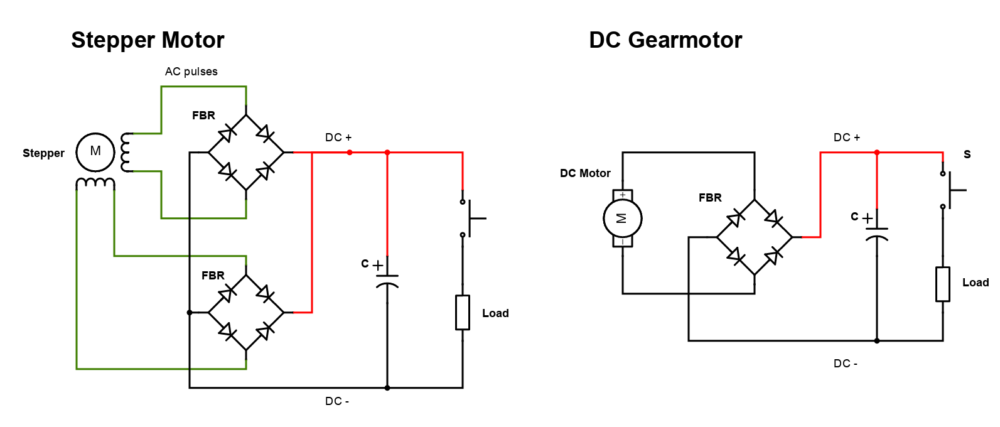
Here’s the circuit again as a vector PDF:
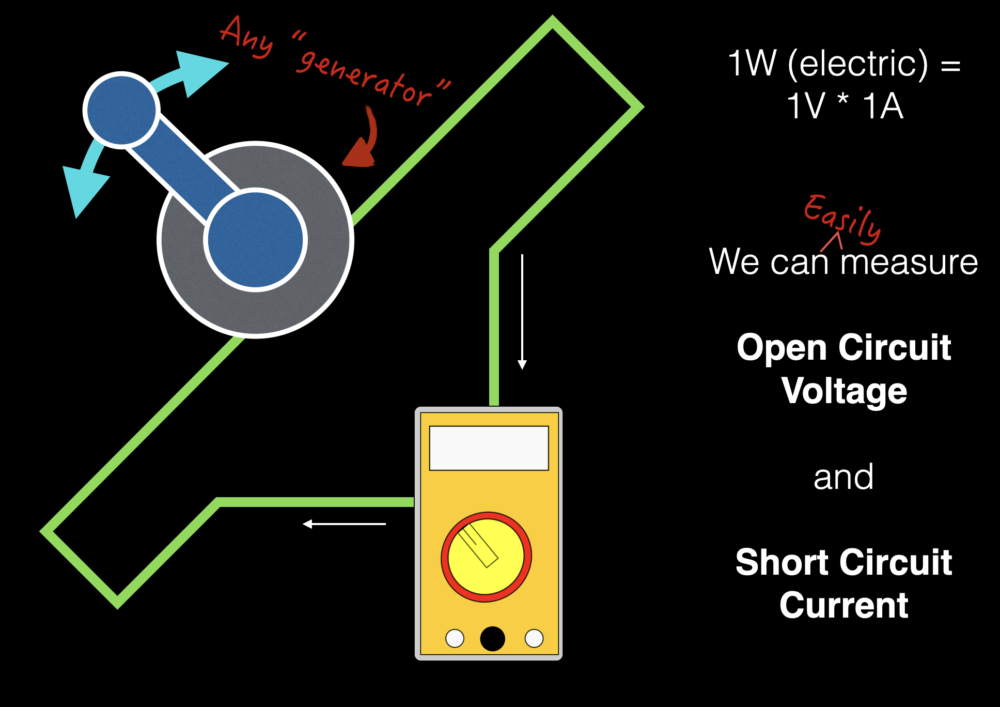
KineticHandsOnMaterial Download
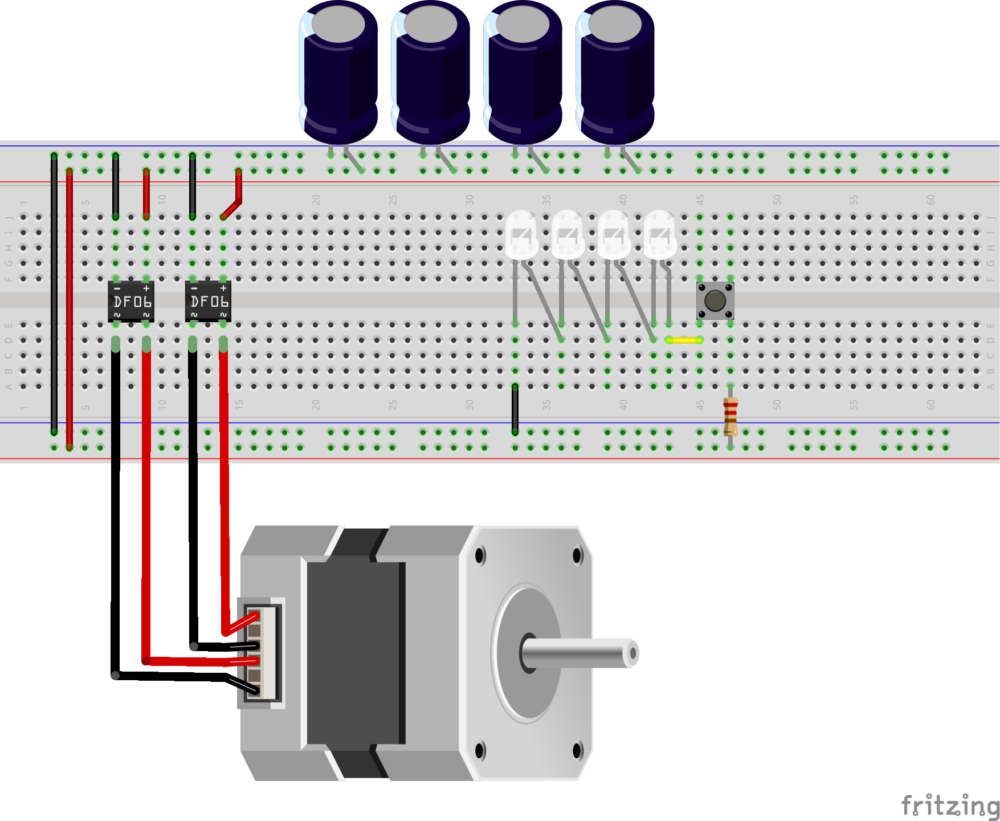
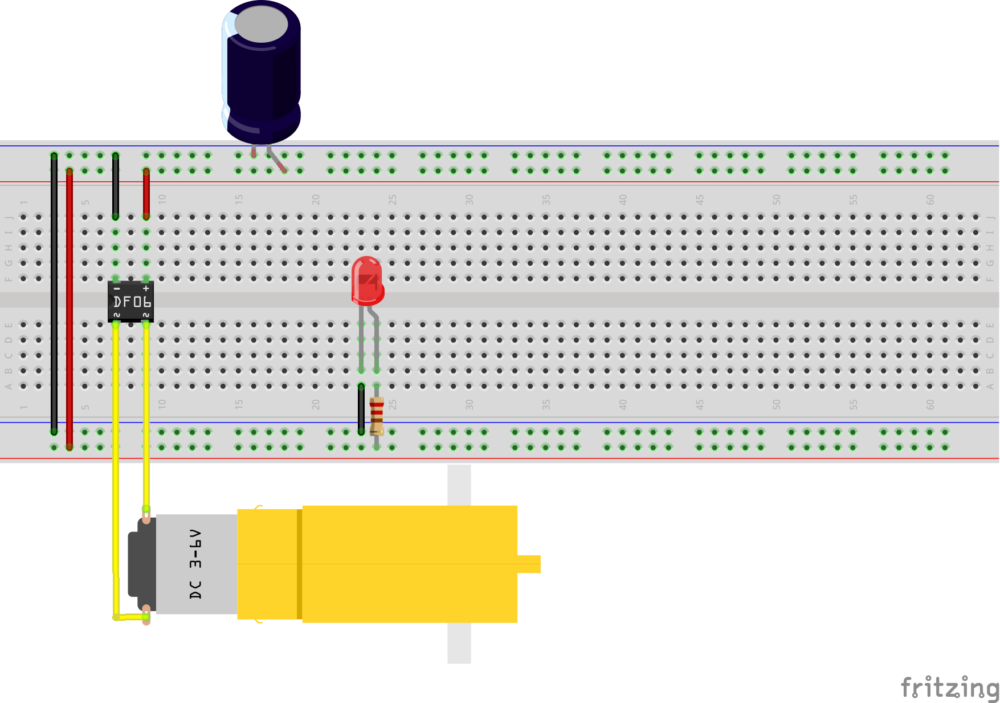
3. Capturing with Capacitors (Feb 9)
We’ll look at a familiar component, the capacitor, in sizes (~1 Farad, or more) where they begin to function as energy storage devices.
In class:
- Discuss McMillen, Paradiso & Starner
- Activity:
- Finish rectifiers
- Add capacitors
- See oscilloscopes
- Technical:
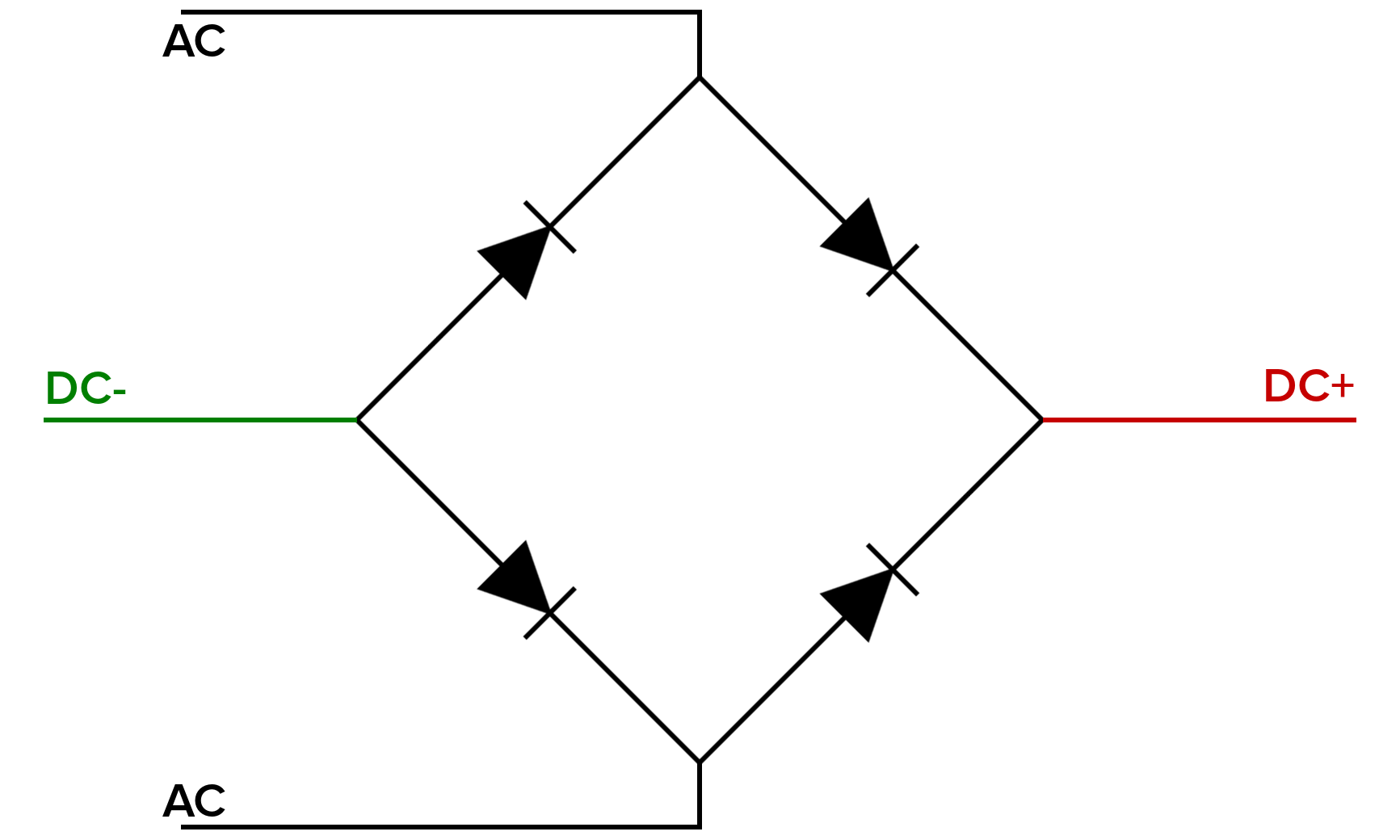
- Rectification and capacitor storage
- Big Picture:
- Energy Storage general concepts
- Orders of Magnitude 1, Koomey’s Law
For next class:
Continue KE for presentation in two weeks (week 5)
Look at solar resources in prep for Solar project (starting in week 5)
See these Hackaday notes on Rectifiers.
For next week:
- Read Smil chapter 1 & 2
- Finalize kinetic mechanism and circuit, begin final fabrication.
Presentation Materials:
For further reading/watching (as we won’t be able to cover all this in class:)
4. Big Kinetic (TUESDAY Feb 17)
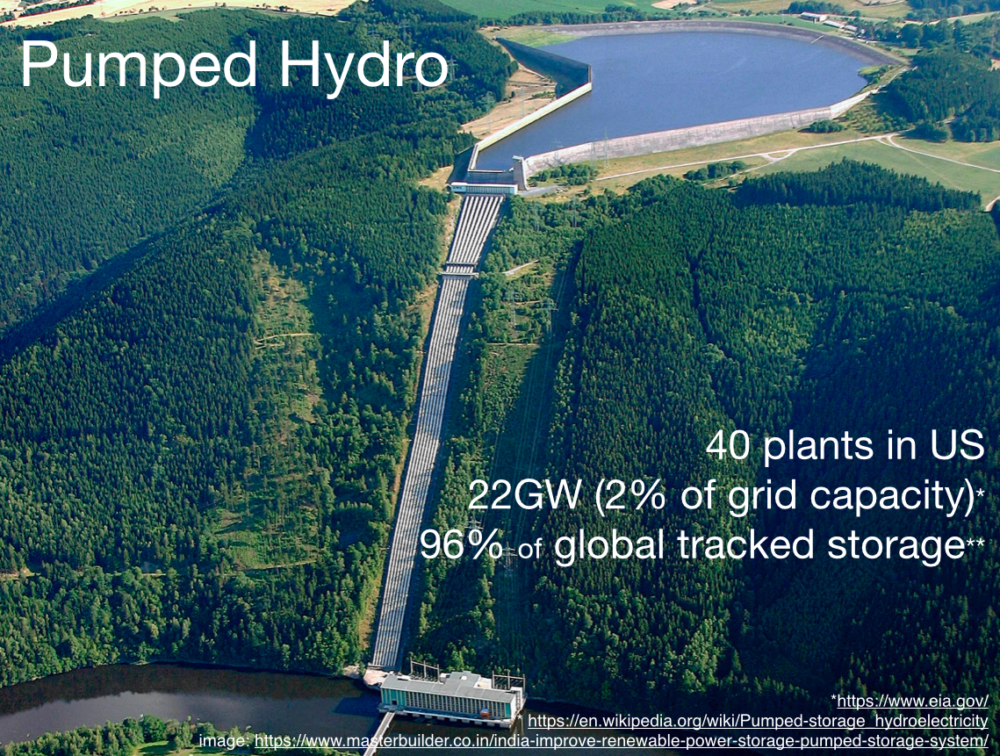
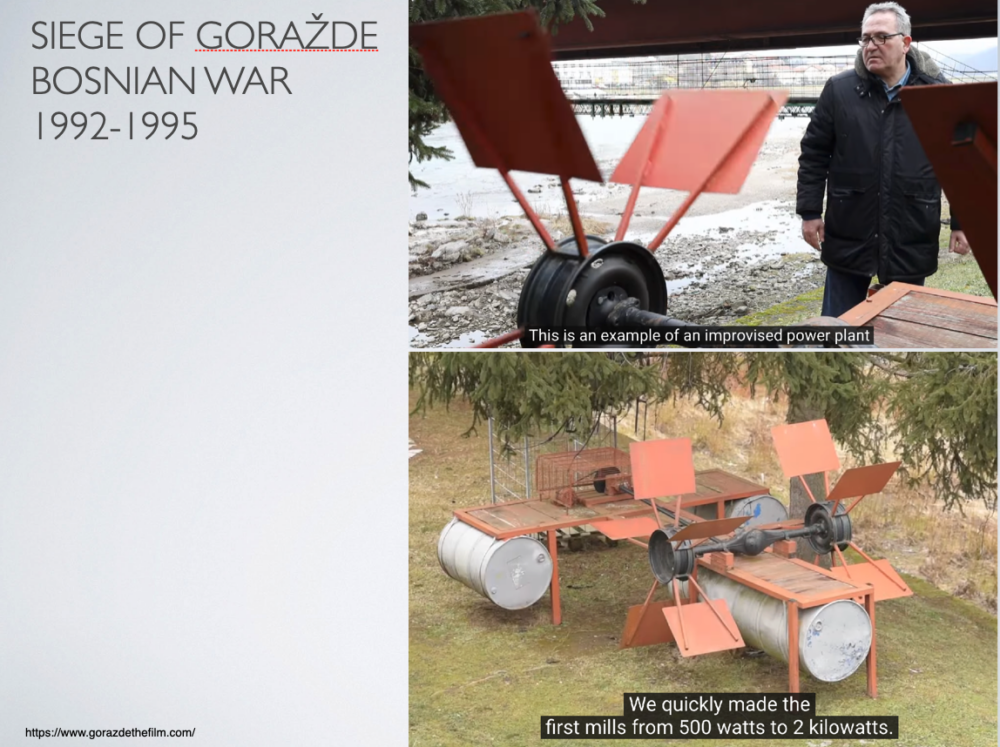
Grid-scale kinetic energy devices, kinetic art examples.
Note: This class meets on a Tuesday, as NYU observes a “legislative Monday” Feb 16.
Assignments:
- Finish Kinetic Projects for presentation next week
- If in R&D Group 1 (Art & Energy) list topics in class spreadsheet and plan for week 6 presentation
5. Kinetic Presentations (Feb 23)
We see what you made!
In class: Present Kinetic Projects
6. Special Topics (March 2)
7. Solar, Voltaic Trip (March 9)
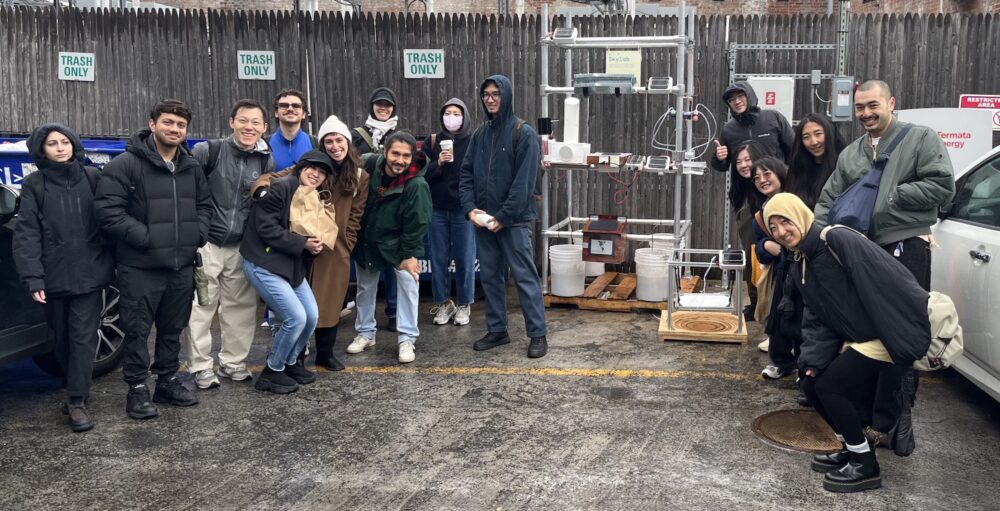
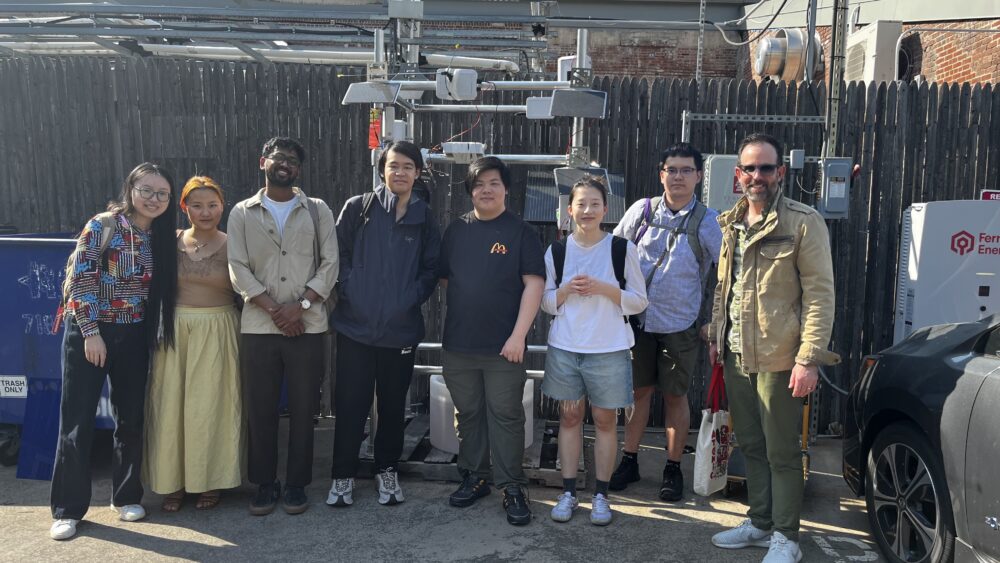
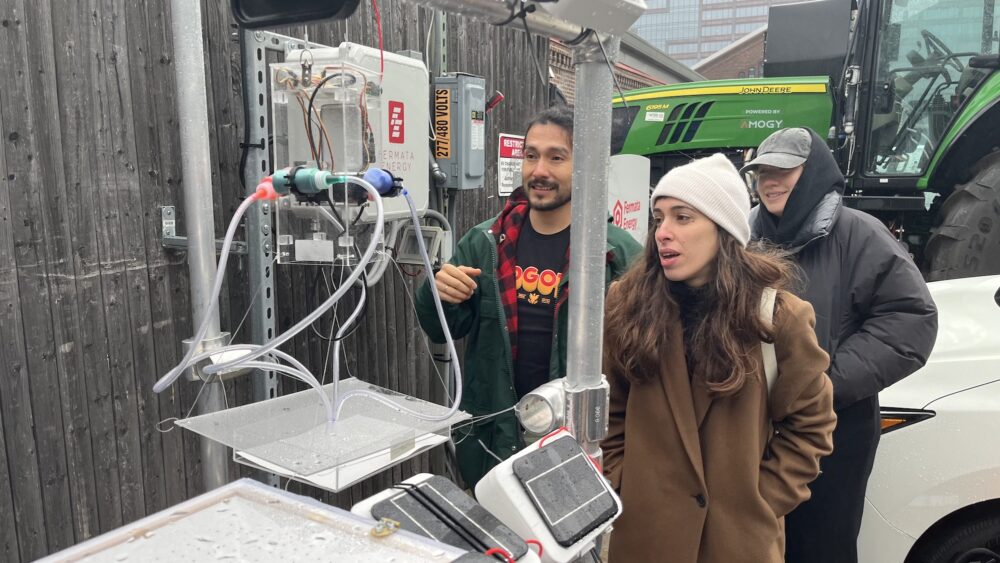
Final ddate, to be confirmed. This may change. We’ll meet at solar panel and battery company Voltaic today! We have the existing aluminum structure to support out projects, which can live safely outside. Your solar and maybe final projects can live there. We’ll review on-site networking options, shade analysis, and project power requirements as they relate to solar availability and battery capacity.
Some useful links and projects:
- Kai’s notes on networking from the 2024 class.
- Tom’s MQTT examples
- Current student Jinnie is working with Tom to set up an MQTT service hosted on Tom’s site. Look to more notes on how to access that service soon!
- How much light could we expect out site to receive? This ShadeMap tool is the answer.
- Did you know Professor Allison Parish did an amazing, low-power solar project? It uses the AEM10941 Solar Harvesting IC available in this product on Tindie and also from Voltaic.
- IDM Professor Alex Nathanson literally wrote the book on solar art. On sale now – let me know if you want the discount code! Also available (real and digitally) through the NYU library.
- This product lets you monitor the charge on the Voltaic batteries.
[ Spring Break ]
8. Battery Storage (March 23)
9. Advanced Solar (March 30)
Advanced solar topics
10. Solar Presentations (April 6)
Demonstrate your projects running (at least a bit) off of light
In class: Solar Presentations